Upcoming Events

There are currently no events to display.

View more events

Spacer

Upcoming Application Deadlines

Upcoming Application Deadlines

Application Deadline: Obermann International Fellowships (Spring 2027) promotional image

Application Deadline: Obermann International Fellowships (Spring 2027)

Friday, September 18, 2026 11:59pm
111 Church Street

The UI Obermann Center for Advanced studies is accepting applications for Spring 2027 Obermann International Fellowships. This program offers dedicated space, time, and funding for interdisciplinary scholars to collaborate on innovative research at the University of Iowa. Up to eight international fellowships will be granted every academic year. Applicants must be active researchers at an accredited institution of higher learning outside of the United States or independent researchers/artists...

Application Deadline: Book Ends, Obermann Book Completion Workshop promotional image

Application Deadline: Book Ends, Obermann Book Completion Workshop

Wednesday, September 23, 2026 5:00pm
Virtual

Books Ends supports University of Iowa faculty from disciplines in which publishing a monograph is required for tenure and promotion. The award is designed to assist UI faculty members with significant research responsibilities turn promising manuscripts into important, field-changing, published books.

Book Ends brings together a panel of senior scholars for a candid, constructive three-hour workshop on a faculty member’s book manuscript. The award provides a $500 honorarium for two external...

Application Deadline: Obermann Interdisciplinary Research Grants (Summer 2027) promotional image

Application Deadline: Obermann Interdisciplinary Research Grants (Summer 2027)

Wednesday, October 7, 2026 5:00pm
111 Church Street

Obermann Interdisciplinary Research Grants (IDRG) foster collaborative scholarship and creative work by offering recipients time and space to exchange new ideas leading to invention, creation, and publication. IDRG groups work at the Obermann Center for two weeks, usually in July and/or August. Applicants propose work on a project with colleagues from across the University, across disciplines within their own department, or with colleagues from other parts of the country or the world. Projects...

Application Deadline: Obermann Symposium Directorship (2027–28) promotional image

Application Deadline: Obermann Symposium Directorship (2027–28)

Wednesday, October 28, 2026 5:00pm
111 Church Street

Is there a burning topic in your discipline or a topic that cuts across disciplines that we should bring to campus? Is there a format for the conversation that can energize an intellectual community around that topic? That might be the perfect topic for an Obermann Symposium!

In addition to a compelling topic, we invite co-directors to propose national and international speakers who can offer richly diverse perspectives on the symposium theme. We also want to highlight the work of UI and local...

Application Deadline: Obermann Working Groups (2027–30) promotional image

Application Deadline: Obermann Working Groups (2027–30)

Wednesday, April 7, 2027 5:00pm
111 Church Street

Obermann Center Working Groups provide space, structure, and discretionary funding for groups led by faculty that may include advanced graduate students, staff members, and community members with a shared intellectual interest.

Groups have used this opportunity to share their work in progress or draw up a set of readings they want to undertake and discuss. Others have organized conferences, applied for grants together, written articles together, designed new courses, taken field trips, organized...

News

Archival photo of Iowan women

Jeannette Gabriel to Discuss History of Iowa's Jewish Communities

On Tuesday, March 1, Jeannette Gabriel, Director of the Schwalb Center for Israel and Jewish Studies at the University of Nebraska Omaha, will present the annual Women’s History Month Lecture, “Welcoming the Immigrants: Refugee Resettlement in Jewish Iowa.” The lecture, hosted by the Iowa Women’s Archives, will take place at 4:30 p.m. at the Iowa City Public Library, and will also be live-streamed.
Screenshot of a fantastical world produced in the video game Minecraft.

Book Ends with Chris Goetz

The Books Ends—Obermann/OVPR Book Completion Workshop has provided support for more than a dozen University of Iowa scholars to host working conversations about their manuscripts in process. Intended for faculty from disciplines in which publishing a monograph is required for tenure and promotion, the award brings two senior scholars to campus (or to our virtual campus) for a candid, constructive, half-day workshop on the faculty member’s book manuscript. Two senior faculty members from the UI are also invited to participate as an opportunity to learn about and support the work of a colleague. 
Abstract image that looks like handwriting in blue and black.

We want to better understand what you need to re-engage in your work.

In a January 19, 2022 Chronicle of Higher Ed opinion piece, “The Great Faculty Disengagement,” Kevin McClure and Alisa Hicklin Fryar observe that in response to the grief, losses, inequities, and violence caused and exposed by COVID, some people are resigning, but many more are disengaging. In their research, they found that “people need to feel safe, valued, and confident that they have the resources to do their jobs.” These are the essential “conditions for people to flourish.” In the absence of these conditions, we see “less creativity, less risk-taking,” fewer “big and bold projects,” and a diversion of passion, energy, and leadership to spaces where people can find meaning in their work. We have put together the following survey as one method for gathering the ideas and reflections of members of our campus. We hope you’ll find a few moments to share your thoughts with us about the work of the Obermann Center—even as we continue to wrestle with health, environmental, and social justice crises. We promise to pay careful attention to your thoughts about what we as a Center are doing well, and what we can do better to support research on our campus more inclusively and equitably.
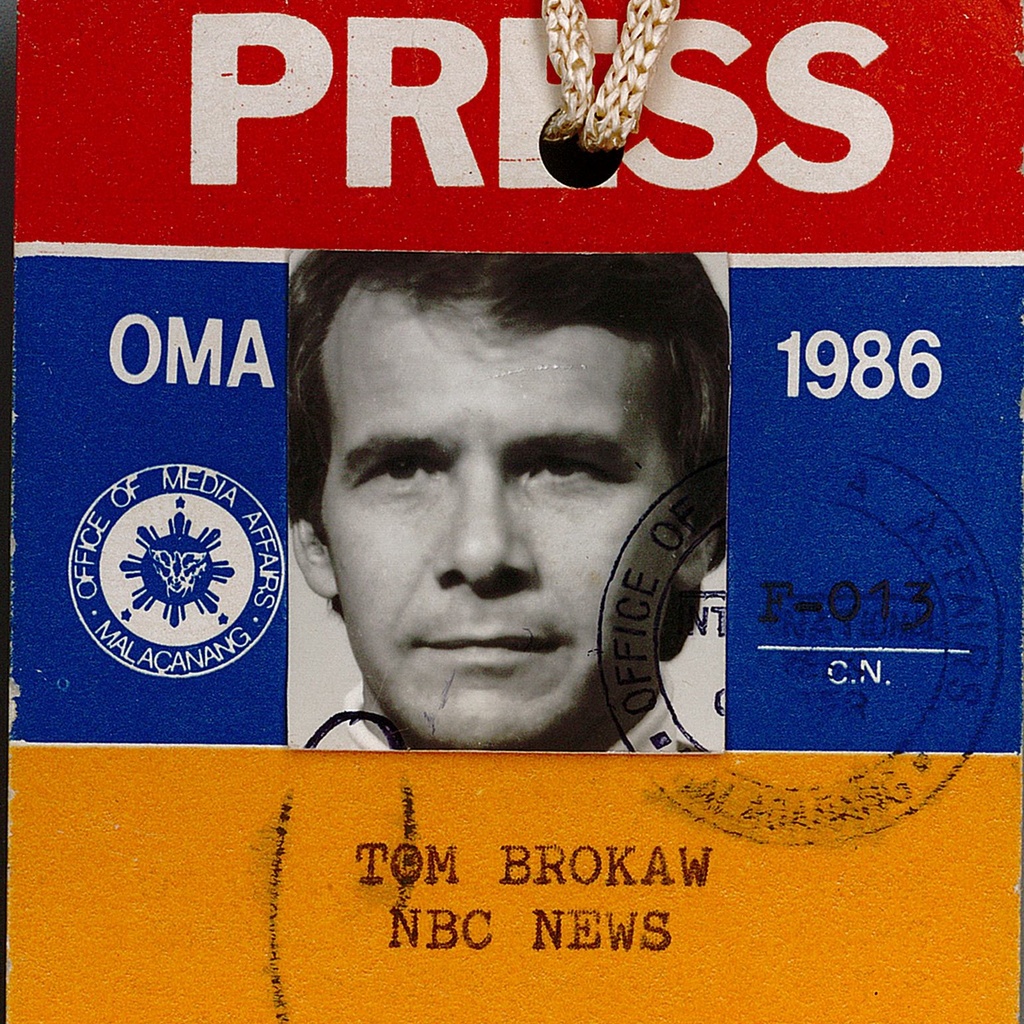
A press pass with a man's face, dated 1986.

HPG Intern Brings Brokaw Press Passes to Life

In 2016, journalist Tom Brokaw donated his papers to The University of Iowa Libraries Special Collections and Archives. The collection includes notes and drafts for several of Brokaw's books (including from his best-known work, The Greatest Generation), letters from heads of states and other media figures, photographs, awards, and appointment calendars. Librarian Liz Riordan spent hours untangling the press passes that arrived in an old Pan-Am bag. Amongst the many boxes of papers was a worn blue Pan-Am bag that had a handwritten note on its side: “Trove of press passes.”
Daria Fisher Page headshot

Beyond Times New Roman: Daria Fisher Page makes the case for visual advocacy in law school

In the U.S., where the terms "lawyer" and "attorney" refer to a legal professional, it can be easy to forget that "advocate" is the term more widely recognized across cultures. The word comes from Roman law and the Latin "advocatus," “one called to aid (another); a pleader (on one’s behalf).” The training of advocates also goes back to the Roman Republic, when it was deemed useful to have people outside the priesthood trained in rhetoric and reasoning. To this day, law students receive extensive training in oral and written advocacy. During three intensive years, they are taught how to make clear and concise arguments in both formats. But what about communication through images? Daria Fisher Page, a professor in the UI College of Law and a Fall 2021 Obermann Fellow-in-Residence, believes that today’s legal professionals also need training in visual advocacy.
Margaret Beck in the field

Searching for Red with Margaret Beck

An anthropological archaeologist, Margaret Beck is continually searching—sometimes physically, for artifacts or geological samples, but always intellectually—to understand how people once lived, how they prepared and served food, taught and learned craftwork, used local resources, moved within their landscapes, and spread their traditions. Currently, she’s studying red-painted archeological ceramics and iron-rich geological samples to discover how Native peoples created and applied the color red in the central United States. The answers aren't always easy to find centuries later. "Throughout Native North America," says Beck, Associate Professor of Anthropology and a Fall 2021 Obermann Fellow-in-Residence, "red is a powerful, strong, and often sacred color.” Indigenous people in the Midwest and Great Plains used red paint for daily grooming, to ornament household objects, and to make the mundane sacred in religious ceremonies. When Beck moved to Iowa in 2007 and began looking at archeological ceramics from Iowa and Illinois, she noticed that their red pigments differed from those found in archeological sites elsewhere in North America. The red coatings (paints or slips) were often thinner and more powdery, with lighter or more yellow shades of red. Beck surmised that these differences were due to regionally distinct raw materials and pigment application techniques—but this was something she’d have to find out for herself. "In the Great Plains and the American Bottom, I found that this was an overlooked subject," she says. "Scholars know relatively little about sources of red pigment or ochre there"—in contrast to, say, chippable stone, the location of which has been widely studied in the region.

Recent Events

Not So Straight & Narrow: Managing Our Rural & Urban Waterways—An Obermann Conversation promotional image

Not So Straight & Narrow: Managing Our Rural & Urban Waterways—An Obermann Conversation

Thursday, September 12, 2019 4:00pm to 5:00pm
Riverfront Crossings Park

Craig Just, water quality expert and UI professor of civil & environmental engineering, and Rai Tokuhisa, Water Resource Engineer Intern with RDG Planning & Design—which was involved with the waterway project that runs behind Iowa City's Big Grove Brewery & Taproom—will lead a walking conversation about restorative watershed management. Craig and Rai have been involved in both rural and urban projects and will speak to this site specifically, as well as Craig's two new EPA grant projects.

This...

How to Stop Giving Graduate Students Bad Advice: Mentoring Workshop promotional image

How to Stop Giving Graduate Students Bad Advice: Mentoring Workshop

Friday, May 17, 2019 9:00am to 4:00pm
English-Philosophy Building

This interactive workshop asks formal and informal mentors of graduate students in the humanities and across the humanistic disciplines to take stock of the short and long term impact of the advice offered by departments, faculty members, and others. How would mentoring change if we started with the premise that “being a professor” was only one — and an increasingly less likely — reason to undertake advanced studies in the humanities?  If we thought of mentoring as a shared responsibility for...

Scoring the Screen: The Power of Music in Film promotional image

Scoring the Screen: The Power of Music in Film

Wednesday, April 17, 2019 4:00pm
Iowa City Public Library

How do composers, producers, and directors use music in film? How does it help to tell stories, complicate plots, create atmosphere, and manipulate audiences' emotional responses? How is it selected, scored, and recorded? Join Kaitlyn Busbee (independent filmmaker), Corey Creekmur (Professor of Cinematic Arts), Rebecca Fons (Programming Director at FilmScene), and Nathan Platte (Professor of Music) as they discuss the role—and the power—of music in film.

Kaitlyn Busbee is an independent...

Misfitting Humanities Symposium: Closing Roundtable Reflections promotional image

Misfitting Humanities Symposium: Closing Roundtable Reflections

Saturday, April 6, 2019 4:15pm to 4:45pm
Iowa City Public Library

On April 4-6, the 2019 Obermann Humanities Symposium, Misfitting: Disability Broadly Considered, will bring leading disability scholars from diverse disciplines to discuss the relevance and importance of disability to their respective fields. The symposium will consider the pervasive (though often unnoticed) influence of disability on and in the performing, visual, and literary arts, in philosophy and religion, in political and economic life, and in everyday language, as we explore when and how...

Misfitting Humanities Symposium Lecture: "Cultural Representation of Idiocy in a Modernist (Eugenic) Era" promotional image

Misfitting Humanities Symposium Lecture: "Cultural Representation of Idiocy in a Modernist (Eugenic) Era"

Saturday, April 6, 2019 3:00pm to 4:15pm
Iowa City Public Library

On April 4-6, the 2019 Obermann Humanities Symposium, Misfitting: Disability Broadly Considered, will bring leading disability scholars from diverse disciplines to discuss the relevance and importance of disability to their respective fields. The symposium will consider the pervasive (though often unnoticed) influence of disability on and in the performing, visual, and literary arts, in philosophy and religion, in political and economic life, and in everyday language, as we explore when and how...

Misfitting Humanities Symposium Panel: Technology + Arts + Design: Retrofitting Worlds and Bodies promotional image

Misfitting Humanities Symposium Panel: Technology + Arts + Design: Retrofitting Worlds and Bodies

Saturday, April 6, 2019 1:30pm to 2:30pm
Iowa City Public Library

On April 4-6, the 2019 Obermann Humanities Symposium, Misfitting: Disability Broadly Considered, will bring leading disability scholars from diverse disciplines to discuss the relevance and importance of disability to their respective fields. The symposium will consider the pervasive (though often unnoticed) influence of disability on and in the performing, visual, and literary arts, in philosophy and religion, in political and economic life, and in everyday language, as we explore when and how...