REPORTING ON THE WORK OF THE UNIVERSITY OF IOWA'S OBERMANN CENTER FOR ADVANCED STUDIES
UI Awarded Grants for Humanities Research
The University of Iowa Obermann Center received two grants for academic research in the humanities from the Andrew W. Mellon Foundation.
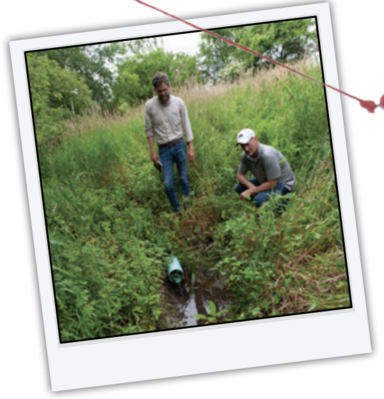
Intersecting Land, Water, Farmers, and Consumers
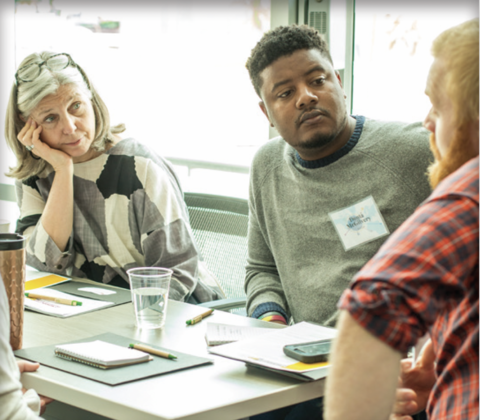
This visit served as the inspiration for Graduate Fellows Dellyssa Edinboro and Lauren Pass to create a mental health writing workshop for teens.
The historic Johnson County Poor Farm sits at an intersection of urban agriculture and social justice history. Established in 1855 on the western edge of Iowa City, the 160-acre farm was part of a statewide
system to care for the indigent, developmentally disabled, and mentally ill. In that era, every county in Iowa had a "poor farm" to house, employ, and care for this population. The Johnson County Poor Farm is the only intact example left in the state, including its late nineteenth-century horse barn, cemetery, and "insane" wing. Until recently, the land was rented out for large-scale agricultural production.
Craig Just (Civil & Environmental Engineering, College of Engineering) first encountered the Poor Farm during his co-directorship of the Obermann Graduate Institute on Engagement and the Academy in 2016. The Johnson County Board of Supervisors was in the midst of re-envisioning the farm's purpose when the Institute students visited. Preserving the site's history, providing small-scale farming plots or low-income housing for farmers and artists, and serving as a greenspace were all on the drawing board.
The Institute toured the farm on a startlingly cold day in January, learning from local experts about lowa City housing equity and food security, as well as historical representations of mental health. Just was struck by the confluence of public health history, governmental management, and agricultural practices.
So, when the EPA announced a water quality grant in 2018 to help farmers improve practices that would ultimately benefit the Gulf of Mexico, Just seized the opportunity. He applied, naming the Poor Farm an ideal demonstration site-a place where improvements could be made to the farm's water practices and shared with both farmers and consumers.
"Though the Farm is close to an urban area, it's facing many of the same issues that other agricultural land is," Just says-namely, waterway contamination caused by drainage tiling.
"Barbara Eckstein planted this idea for me," says Just of his former Graduate Institute co-director, "when she said that lowa is really suburb of the Gulf, given the effects that our farming practices have on the area."
Drainage tiling–or, colloquially, "tile"–is a system of underground pipes (originally made of clay tile) that drains excess water from cropland. Tile allowed lowa farmers to create some of the most productive land in the world. More than two million miles of tile span lowa, enough to reach to the moon and back four times.
Though it creates arable land and boosts crop yields, tiling also flushes nitrates-those applied by farmers as well as organic nitrogen-into nearby waterways. "Tiles shortcut Mother Nature," explains Just. "Unsaturated soils contain more oxygen than saturated soils. Bacteria use that oxygen to convert the ammonia to nitrate, which is held in the porous space of the soil. Then, when a rain comes, the nitrate is washed to the tile; the soil does not need to be saturated for this transport to occur. And, if there were no tile, the nitrate would just keep going down in the soil, potentially threatening shallow groundwater."
Grow: Johnson County, the organization that farms the Johnson County Poor Farm and is dedicated to producing food for local foodbanks, made the tough decision to tile the land a few years ago. Just says the worn-out, over-farmed land is now soggy and unable to produce without tiles, leaving growers with fewer and more difficult choices.
Just's project, "Connecting Rural and Peri-urban Farmers to Demonstrate and Disseminate Innovative Nutrient and Sediment Reduction Practices," garnered $1,064,927 from the EPA. Reducing nitrate in the exiting water is one of the project's key goals, along with the creation and strengthening of farmer-to-farmer and farmer-to-consumer connections.
"This project brings together dedicated farmers and consumers from lowa and Johnson Counties who are committed to improving the health of our agricultural landscape to create measurable water quality improvements for all lowans to enjoy," says Just.
As so often happens at the Obermann Center, a conversation with community partners connected the dots among continuing relationships, teaching opportunities, and grant applications.
The Obermann Center serves all research faculty at the University of lowa, across colleges. Just served as the co-director of the Obermann Graduate Institute for two years. He partnered with Institute co-director Jennifer Kayle (Dance, CLAS) and Institute alumna Jessica Anthony when their Dancers in Company project explored water quality issues. He currently works with two community partners he met via the Institute's partnership with the Poor Farm, farmer Shanti Sellz and consultant Vanessa Fixmer-Oraiz. Additionally, Just is part of a Community Resiliency Action Plan in Vinton, IA, that English PhD candidate Paul Schmitt worked on as part of the Obermann Center's Humanities for the Public Good Summer Internship program.
Media Clown: A Clown Walks into the Matrix...
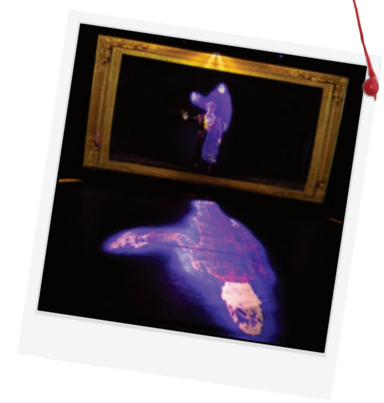
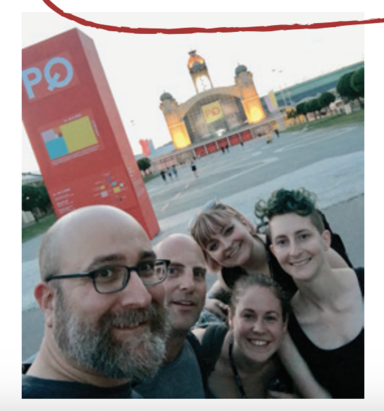
Paul Kalina is wearing a suit with three kinds of technology embedded in it. He is a clown who has performed bedside for kids in hospitals and on the barest of stages. But in June 2019, he is in Prague for the world's largest festival of theater and stage design, the PQ, or Prague Quadrennial. He is going onstage ostensibly to play a ukulele and perform comic shenanigans.
The energy to fuel the tech for the dance production that closed the 2015 Obermann Humanities Symposium Energy Cultures in the Age of the Anthropocene, choreographed by Jennifer Kayle (Dance, CLAS), was created by performers biking on stage.
But really, he is about to enter a dance with technology–which is where the fancy suit comes into play. Paul will be "sucked" into a screen. The LED lighting embedded in the suit will light up. He will affect the technology and it will affect him.
Media Clown was developed by Kalina (Theatre Arts, CLAS) and Daniel Fine, a faculty member of Theatre Arts and the Public Digital Arts Cluster, during a Summer 2018 Obermann Interdisciplinary Research Grant. Fine says, "How a performer interacts with technology is the holy grail of live entertaining right now." Although many performers have introduced technology as a relatively stable element in productions, such as dancing with a projected image, those on the furthest edges want to relate with technology in real time without choreographing a set outcome.
This kind of exploration invites an inquiry into our relationship with technology. Rather than merely enhancing an experience, technology becomes a player in the production, raising innumerable questions, including how it shifts, amplifies, or interferes with century-old analog practices.
Kalina brought his rich knowledge of commedia dell'arte, a 16th-century Italian progenitor of modern cloy ning, to an earlier Obermann-sponsored collaboration. The strength of live clown performances," he says, "lie in their ability to adapt to the response of the audience in real time. The performer must be able to read the audience and shift on a dime, to tailor the performance to the needs of the audience that night in order to create a communal experience."
As the contemporary performance space expands beyond the stage to include audience members' smartphones, emerging technologies, and special digital media effects, Kalina and Fine wonder how "the clown's role as societal mirror and creator of community changes in the digital age, where many communities exist in digital realms."
Crescendo, the jazz and mask production Kalina created with School of Music faculty John Rapson, was a comical and sharp-edged inquiry into the current state of education.
This kind of technology is expensive-the two suits used in the show cost $95,000, so Kalina and Fine used their time at Obermann to apply for major grants as they considered ideas for a performance about how to humanize technology. Their hard work paid off when they were invited to present their work-in-progress at the 2019 Prague Quadrennial of Performance Design and Space, a prestigious international exhibit and festival.
The Media Clown team, including theatre graduate students Courtney Gaston, Chelsea Regan, and Sarah Hamilton, headed to the United Kingdom for a stint at the Backstage Academy, a tech school in a conglomeration of theatre and stage organizations that produce scenery for large-scale shows (for artists like Hugh Jackman). Together, they created a high-tech clown show using Hologauze, a holographic effect screen that made it appear that Kalina was clowning in a virtual world.
Digital Student Artists Digital Arts Cluster
Their adventures continued in Prague. At the first show, technical difficulties pushed back their start time by an hour, and one of Kalina's props broke. These "disasters," though, got a huge laugh and the team improvised: "It's interactive comedy," says Fine. "It changed every night."
PQ was a success, but it was only the beginning for Media Clown. Kalina and Fine are searching for a rehearsal space with technology that can send Kalina as well as the audience into the screen. How can a clown swim in the ocean and walk on the ceiling, changing his relationship to space? What is the combined digital and physical playground where audience and clown meet? The two are, in short, still on a journey toward that holy grail.
Humanities and Public Life Book Series
Curating Public Stories
Soon after participating in the 2008 Obermann Graduate Institute on Engagement and the Academy, Bridget Draxler curated an exhibit about British women writers at the Old Capitol Museum. At the time, she was a PhD candidate in the UI English Department and had never curated anything–but her inexperience proved to be a benefit, giving her the moxie to take on a project that might have otherwise overwhelmed her.
Draxler wrote about that experience and other adventures in publicly engaged work in Engaging the Age of Jane Austen: Public Humanities in Practice. Co-authored by Danielle Spratt, associate professor of English and director of faculty engaged practices and service learning at California State University- Northridge, Engaging the Age of Jane Austen was one of two new titles that appeared in 2018 as part of the Humanities and Public Life book series, a collaboration between the Obermann Center and the University of lowa Press. The series, co-edited by Teresa Mangum and Anne Valk, captures significant publicly-engaged arts and humanities collaborations from the perspectives of faculty, students, community members, and organizational partners.
The other new book in the series this year is Contested City: Art and Public History at New York's Seward Park Urban Renewal Area by artist and urban scholar Gabrielle Bendiner-Viani.
Draxler traces the book's origins to her involvement in the Obermann Graduate Institute. "It was a time," she recalls, "when I was falling in love with publicly engaged work and was trying to figure out what it means to be in my field and how this work can show up."
In one chapter, Draxler looks back on the unexpected benefits of curating the 2009 British women writers exhibition: "Curating the exhibit began as an escape from traditional scholarly work, but it became an exercise in research and synthesis on a grand scale... I was tying together textual analysis with historical and biographical context to build evidence and create persuasive case studies. I learned the aesthetic and practical habits of intellectual work that I needed to learn as a graduate student, and this learning was deep because it was contextualized. I was, in a sense, writing a dissertation without realizing it at the time: a dissertation for a committee of diverse public readers."
Draxler and Spratt are passionate about helping academics enter the often messy fray of publicly engaged work, much of which happens in the locations that anchor the book's chapters: The Street, The Library, The Museum, The Archives.
Throughout the book, the authors provide myriad examples of using Austen and other eighteenth-century writers to engage undergraduates and public audiences in conversations about race, class, and gender. They also do not shy away from less successful examples of public engagement.
Draxler shares the story of her attempt to include students in interviewing Latinx community members for a local museum exhibit. Despite a tremendous amount of time and effort by the students, museum staff, and interviewees, the exhibit never opened. "I think we can all learn as much from mistakes as from successes," writes Draxler, "and I want productive failure to be part of the discourse of the humanities." She cites some of the project's failures, including not adequately acknowledging that there was no single Latinx community in the city, and placing inordinately high expectations on undergraduate students.
Draxler has frequently attended and presented at Imagining America's National Conference. The Obermann Center has been part of this consortium, which promotes public scholarship and cultural organizing, since its inception.
To the authors' delight, the book has received as much attention from general audiences as it has from fellow academics. Draxler especially treasures a piece of "fan mail" she received that thanks her for writing about "productive failure" and breaking the wall of silence that surrounds failure in academia, especially in the humanities. The authors have been invited to Jane Austen Society of America events and have appeared on the literary podcast Bonnets at Dawn.
From Mangum's perspective, having a former Obermann Graduate Fellow and English PhD student involved in the series was a delightful, full-circle experience: "As Graduate College Dean John Keller frequently reminds me, Bridget once held a room full of graduate deans at a national meeting in thrall as she described the power of public engagement to wake kids, students, book groups, and community members up to the deeply enriching impact of literature. I'm so proud of Bridget's success and so grateful to Dean Keller for generously supporting the Graduate Institute throughout its fourteen-year history."
STEVE WARREN
Taking it to Cedar Rapids
In Spring 2018, Melissa Porter, the Museum Program Manager for Brucemore, a historical house museum in Cedar Rapids, visited the Obermann Center to discuss an upcoming event and possible collaborations with Ul scholars and classes. May 2019 would mark the 100- year anniversary of the explosion and fire at the Douglas Starch Works plant, which belonged to one of Brucemore's former owners. One of the deadliest events in eastern lowa history, the explosion killed 44 people and damaged numerous buildings.
Inspired by Ruth Sergel's See You in the Streets: Art, Action, and Remembering the Triangle ShirtwaistFactory Fire, a book in the Humanities and Public Life series, Porter wanted to have community members chalk the names of those who died in the explosion onto pavement near the original factory. It was part of a series of commemorative activities the museum was planning.
History Corps, State Historical Society of Iowa, UI History Department, Eastern Iowa History
After hearing Porter's presentation at the Obermann Center, Steve Warren, a professor in the UI History Department and chair of American Studies, dedicated his spring 2019 class Introduction to the History Major to creating an exhibit and podcast about the history and tragedy of Douglas Starch Works. Using sources from the State Historical Society of lowa, students created an exhibit that was displayed at the Cedar Rapids Public Library, as well as a podcast.
"Any time our research is publicly engaged, it imparts importance to it," says Warren. The students' research is part of a continuing online exhibit: brucemore.org/events/douglas-starch-works.
Mariola Espinosa: You Give Me Fever
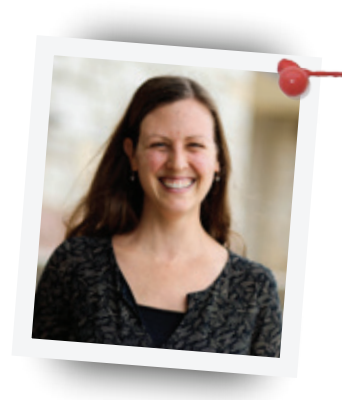
"As soon as I heard that I was awarded a History Department Mid-Career Fellowship, I thought of the Obermann Center," says Spring 2019 Obermann Fellow-in-Residence Mariola Espinosa. The prestige of a residential fellowship coupled with having a dedicated space for research appealed to Espinosa, a professor in the History Department, who also directs the Ul's Global Health Studies program, a task she continued during her Obermann residency.
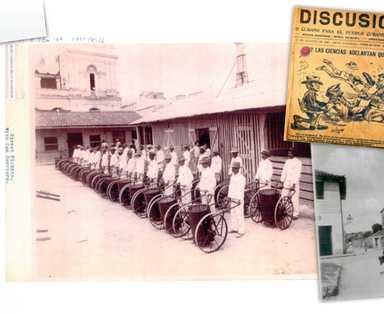
During her four months at the Obermann Center, Espinosa worked on her book, Fighting Fever in the Caribbean: Medicine and Empire, 1650-1902. The project continues the medical humanist's examination of colonial power relations through the lens of public health and expands on the ideas of her first book, Epidemic Invasions, which focused on the U.S. sanitation campaigns in Cuba.
Espinosa was one of several faculty who shared their expertise on the island's legal status at an Obermann Conversation following Hurricane Maria in 2017.
Espinosa's interest in yellow fever began serendipitously. When she was an undergraduate history major at Princeton University, a professor who was also a Puerto Rican native suggested that Espinosa research the namesake of the street on which she'd grown up in San Juan: Ashford Avenue. "It turned out that [Ashford] was a military physician who dedicated his life to understanding and curing tropical diseases," says Espinosa, who, as a kid, often walked by the doctor's house where his widow still lived. "The project placed me in the space where I'd grown up."
Yellow fever was once a terrifying killer that took the lives of half of the people who contracted it. Workers building canals, soldiers engaged in sieges, and investors on fact-finding missions all succumbed. In 1793, some three-fifths of British troops died of fever while trying to seize Haiti from France. And in 1878, an epidemic that began in Mississippi and made its way to Illinois was traced to a ship from Cuba.
Espinosa continues to be drawn to this history of humans, microbes, and ideas. Diseases affected the whole of the Caribbean, and medical history is a vehicle that moves scholars beyond the usual area studies approach.
Newspaper's pictures
"One can stand on a mountain in Puerto Rico and see islands that are not part of the Spanish-speaking Caribbean," Espinosa notes. "The Caribbean is not bound by imperial and linguistic barriers. Disease and microbes are not alone in their disregard for national boundaries in the region."
Espinosa's new book will draw upon more than 300 primary sources from Britain, France, Spain, the United States, Cuba, Colombia, Haiti, Jamaica, and Mexico, including government documents, memoirs, travel accounts, medical treatises, dissertations, and newspapers. Using digital text-scraping tools, Espinosa is cracking the secrets of this data. She is exploring the region's patterns of migration, political skirmishes, and transfers of medical and scientific information as she traces how "concurrent mentions of race and yellow fever increase over time as empire expands in the Caribbean."
This digital work was influenced by her participation in a 2016 weeklong institute, "Making Meaning with Data in the Humanities and Social Sciences," part of the Mellon-funded Digital Bridges for Humanistic Inquiry, a partnership between the Obermann Center and Grinnell College. She built on this work during her Obermann residency by attending the first of several workshops sponsored by the Journal of Social History at the Roy Rosenzweig Center for History and New Media at George Mason University. She is using her training to visualize cross-cultural communication regarding racial immunities to yellow fever as part of her larger historical argument.
A collaborative Mellon-funded project between Grinnell College and the Ul with a focus on the Digital Liberal Arts, this project was housed at the Obermann Center between 2015 and 2019.
In these early stages of her project, Espinosa says that her time at the Obermann Center gave her much needed traction. She found informal daily check-ins with History Department colleague Lisa Heineman–also a Spring Fellow-in-Residence–especially helpful. "They really helped compartmentalize the work and maximize my time, since I knew the clock on the residency was running," she says.
Heineman, who co-directed the 2017 Obermann Humanities Symposium "Germans in the Midwest," spent her Obermann residency working on a book project, "Children, Transported," about her father's Kindertransport experience.
Working Groups: A Community of Scholars
In 2012, The Obermann Center established its Working Groups program to give scholars, artists, advanced graduate students, staff, and community members space and time to dive deeply into shared interests. In the past seven years, the groups have served hundreds of participants who have spent time reading, talking, workshopping, and planning around topics such as lowa City's housing shortage, children and autism, and racial bias in computer algorithms.
Deborah Whaley
The Comparative Ethnic Studies Working Group was one of the first groups to form, under the guidance of Deborah Whaley (American Studies and African American Studies, CLAS). "I wanted a community of scholars to be in conversation with," recalls Whaley, who says that the group was an important space not only for scholars associated with African American Studies but also for those whose work focused on Latinos and Asian Americans.
Along with Naomi Greyser (American Studies, English, and GWSS, CLAS) and Jeff Bennett (formerly of Communication Studies), Whaley directed the 2014 Obermann Humanities Symposium, "Affect and Inquiry: Emotion, Embodiment, Empiricism."
"On Sympathetic Grounds" Book
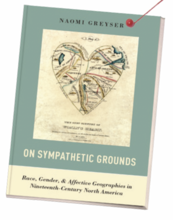
Studying books like Robin DiAngelo's White Fragility, the group has also workshipped members' writing, including an award-winning article by Omar Valerio-Jimenez, "Racializing Mexican Immigrants in lowa's Early Mexican Communities," published in the Annals of lowa (2016); Darrel Wanzer- Serrano's book proposal for The New York Young Lords and the Struggle for Liberation; and a draft of Naomi Greyser's On Sympathetic Grounds: Race, Gender, and Affective Geographies in Nineteenth-Century North America.
"It was generative to be in conversation about my book-in-progress with people thinking about racial-ethnic formations across historical contexts as well as across identities and social groups," says Greyser, whose book was published by Oxford University Press in 2017. "I am grateful to have gotten to work with readers committed to racial justice in diverse ways, coming out of those different traditions."
The group also hosted visiting scholars for public talks and meetings with its members, including Joseph Heathcott, Associate Professor of Urban Studies at The New School and author of Capturing the City: Photographs from the Streets of St. Louis, 1900-1930, and Josue David Cisneros, Associate Professor of Communication at the University of Illinois and author of The Border Crossed Us: Rhetorics of Borders, Citizenship, and Latina/o Identity.
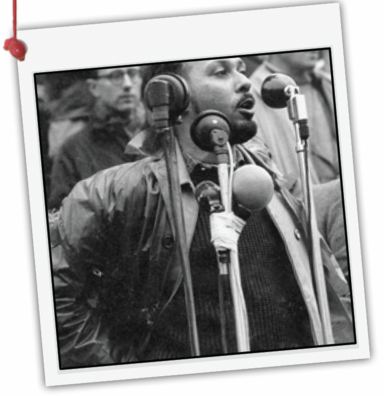
In the fall of 2018, Whaley's group focused on the works of the late cultural studies scholar Stuart Hall, who wrote about race, culture, photography, film, and music. Whaley sent out a call to colleagues across campus to engage in a discussion about Duke University Press's new series on Hall, which includes out-of-print work and previously unpublished pieces. "I sent the message hoping for five or six responses," recalls Whaley, "but everyone said yes!"
Following a rich conversation about how Hall's ideas spoke to research and pedagogy, Whaley suggested that group members write short essays in pairs with the aim of making Hall's ideas more widely accessible. Inspired by her involvement with an Obermann-hosted OpEd Project workshop, Whaley asked for brief, 1,500-word pieces. She saw this as true to the work of Hall, who taught in community colleges and gave up a prestigious university position to teach at the more egalitarian Open University.
Since the OpEd Project workshop, several participating faculty have published Op-Eds in major media outlets, including Sherry Watt (Higher Education & Student Affairs), Jessica Welburn (Sociology), and Lisa Heineman (History).
But where to house the writings? Whaley, who also serves as the Senior Scholar at the UI Libraries' Digital Scholarship and Publishing Studio, reached out to Studio director Tom Keegan, who suggested that the group consider publishing an open-source journal. Launched in April 2019, the first issue of Addressing the Crisis: The Stuart Hall Project includes articles by Ul faculty Greyser, Loren Glass, and Tom Oates, as well as a video essay by current Ul undergraduate Wylliam Smith. Whaley and Mark Anderson of the Studio, who serves as the journal's associate editor, are recruiting an international editorial board and soliciting contributions for the second issue with a plan to publish biannually. Whaley is delighted that they've received submissions from non-academics, including a young lowa politician.
Stuart Hall
Stuart Hall has a small but meaningful connection to the University of lowa. In 1985, he was an Ida Beam Visiting Professor as part of a cultural studies conference hosted by the School of Journalism and Mass Communication. Conference attendees and others collected writing by scholars inspired by Hall, which became the widely used anthology, Stuart Hall: Critical Dialogues in Cultural Studies. Whaley, who teaches a graduate course on Hall, says that his work is important not only because he was influential in the development of cultural studies as an international discipline but also because he had an "original way of theorizing living and learning together in more useful and humane ways."
All of this activity has launched a new Obermann Working Group, Addressing the Crisis: The Stuart Hall Project, which will begin meeting in fall 2019 in lieu of the Comparative Ethnic Studies Working Group. Whaley is certain that Hall's work will attract a new and diverse group of participants. She looks forward to facilitating critical dialogue and working toward a daylong symposium in March 2020 called "Digitizing Blackness."
Humanities for the Public Good: A cross-country conversation
Obermann Center Director Teresa Mangum loves a good conversation–especially about the future of graduate education. In a single year, she literally criss-crosses the country (and beyond) talking to fellow leaders of graduate education, sharing her knowledge with other colleges and universities, and participating in major humanities conferences as an expert in the area of publicly engaged humanities.
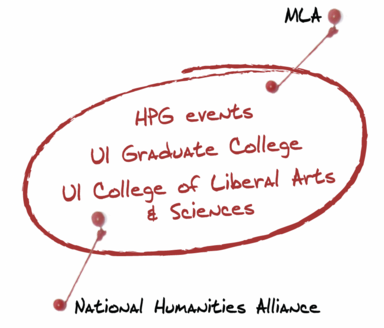
Mangum's long-term efforts toward engaged public humanities culminated in a grant application that, in October 2018, received $1,341,000 in funding from The Andrew W. Mellon Foundation. The Mellon Humanities for the Public Good (HPG) initiative will serve students who want to pursue ideas across disciplines and to balance coursework with experiential, engaged work and research in their communities.
The initiative, which the Obermann Center is working on in concert with the College for Liberal Arts and Sciences and the Graduate College, is already yielding promising results. In March 2019, a gathering of national leaders in graduate education- many of whom Mangum met while presenting on other campuses-included representatives from more than a dozen universities. The first cohort of HPG Summer Interns worked on community-wide projects that ranged from developing pedagogical approaches for an upcoming exhibition of the Underground Railroad to pitching–literally and figuratively–for the yard game of rolle bolle, long ago imported from Belgium to lowa.
The first HPG event occurred in March 2019. National Experiments in Career Diversity included 13 speakers who presented work in engaged graduate education from their campuses, which included Georgetown University, University of Michigan, and the University of California-Irvine, as well as National organizations such as the Council of Graduate Schools.
In 2019-20, the Obermann Center will host a second HPG symposium, as well as visits from Ul humanities PhD alumni and additional workshops with visiting facilitators who will help the HPG advisory committee of 26 faculty, staff, and graduate students reimagine issues of curriculum, mentorship, and evaluation.
Teresa Mangum with peers
Ann Ricketts, Senior Assistant Vice President for Research at the University of lowa, provided input during the application process, noting that Humanities for the Public Good promises to transform graduate education in the humanities at the University of lowa and lay a national roadmap for preparing students for diverse and enriching careers. "The Mellon-funded project is just the latest in Teresa's campaign to promote the humanities' contributions to research, culture, and civic dialogue," says Ricketts. "HPG builds on the Obermann Center's pioneering Graduate Institute on Engagement and the Academy and Teresa's visible leadership on these issues in the National Humanities Alliance and Imagining America."
"The Humanities Lab could not have found better keynote speaker than Dr. MANGUM. From her talk to her work with the students throughout the day, she left ASU students inspired to apply their humanities scholarship for the public good. One Attendee wrote of the workshop that she learned that 'the humanities and the public Are Not separate. I want to look more into opportunities for public engagement and Assisting in public dialogues that might work with my research interests."
Monica Boyd, Program Coordinator at ASU's Humanities Lab
In the last few years, the Obermann Center has been extremely grateful for the many ways The Andrew W. Mellon Foundation has supported humanities scholarship at the University of lowa. Between 2015 and 2018, Digital Bridges for Humanistic Inquiry. A Grinnell College/University of lowa project led by Teresa Mangum and Grinnell English professor Erik Simpson welcomed faculty and students into digital research and teaching. The Obermann Center hosted summer institutes, cross-campus collaborations, fellows-in-residence, visiting speakers, and workshops on a host of pedagogical approaches and digital tools, often in collaboration with the Ul Libraries' Digital Scholarship and Publishing Studio. Digital Bridges culminated in an exciting symposium that brought some of the nation's leading digital scholars to campus and featured the accomplishments of our own faculty.
A successful 2016-17 Mellon Sawyer Seminar, "Cultural and Textual Exchanges," paved the way for a new Sawyer Seminar, "Imagining Latinidades in Global and National Perspective," which will bring a stunning roster of guest speakers to campus this academic year.
The Obermann Center has also been one of fifteen university partners in one of Mellon's most ambitious projects to date, the Humanities Without Walls consortium. Headed by Antoinette Burton, Professor of History and Director of the Illinois Program for Research in the Humanities, the $7,000,000 grant has funded six years of cross-campus research teams and four three-week summer workshops on career diversity for graduate students. Humanities Without Walls has invited the Obermann Center to be the host site for a showcase event in fall 2020.
Teresa's Travels
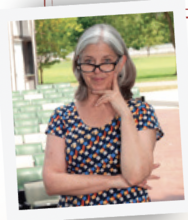
Teresa Mangum
The kind of networking that helped to secure the Mellon grant takes time and travel. At Syracuse, Kentucky, and UW-Milwaukee, all three of which received National Endowment for the Humanities Next Generation PhD grants, Mangum met with graduate deans and Next Generation working committees, acting as a sounding board as faculty reimagined every corner of graduate education, from community- based classes to career planning.
Here is a snapshot of some of the talks and workshops that Teresa Mangum led this year associated with the topic of publicly engaged graduate education.
JANUARY: CHICAGO
Presented on panels focused on graduate education at the Modern Language Association and the American Historical Association's national conferences.
APRIL: LEXINGTON
Gave a lecture, "The Humanities PhD and the Work of the 21st Century," at the University of Kentucky.
MAY: MILWAUKEE
Gave a lecture, "The Humanities PhD and the Work of the 21st Century," at the University of Wisconsin- Milwaukee.
MAY: TEMPE
Worked with Arizona State University graduate students to propose a semester-long, project-based course in which undergraduates could draw on literature, history, and technical knowledge to forge possible solutions to local problems.
MAY: ANN ARBOR
Worked with a dozen faculty and students in a new Mellon-funded Public Engagement and the Humanities Workshop at the University of Michigan, and gave a talk, "What Would We Call Anti- Public Scholarship? A Spectrum for Engaged Humanities Scholars."
JULY: CHICAGO
Traveled back to Chicago as the keynote speaker at the Mellon-funded Humanities Without Walls Career Diversity Symposium, "Inventing the University of lowa's Humanities for the Public Good PhD."
SEPTEMBER: SYRACUSE
Gave a lecture, "The Humanities PhD and the Work of the 21 st Century" at Syracuse University.
2019-20 Calendar
Fall 2019
Sept. 13-14: Humanities Graduate Education for the World's Work—A Humanities for the Public Good Symposium.
Sept. 19-21: Imagining Latinidades in Global and National Perspective—A Mellon Sawyer Seminar Conference.
Sept. 26: How to Write Effective Letters of Recommendation—A Get It Done Workshop with Teresa Mangum.