
Cancer Neuroscience
This group sits at the intersection of the Holden Comprehensive Cancer Center (HCCC) and Iowa Neuroscience Institute (INI) to take advantage of the robust expertise housed at the University of Iowa. Group members aim to coalesce the array of expertise at the University of Iowa and make significant, unified advancements in both primary and metastatic brain tumors.
Co-directors: Michael Petronek (michael-petronek@uiowa.edu) and Gustavo Godoy Almeida (gustavo-godoyalmeida@uiowa.edu)

Chinese Humanities & Arts Workshop
This working group brings together scholars from a variety of disciplines, including history, art history, literature, religious studies, and translation. We envision our group as a sort of arts and humanities lab with a focus on premodern China, covering nearly three thousand years (from 10th c. BCE through 19th c. BCE). Members will share in-progress research with each other, provide critical feedback, and read related scholarship together, hoping to learn what intersections and synergies exist across their research interests and projects. The group aims to serve as a regional hub for premodern Chinese studies.
Co-directors: Newell Ann Van Auken (newellann-vanauken@uiowa.edu) and Amy Huang (amy-huang-2@uiowa.edu)

Comparative Global Heritage Cultures
This group will study and host workshops with invited speakers on the subject of global heritage cultures, which has emerged as an important field at the intersection of disciplines in the humanities and social sciences. Drawing on a range of methodologies, cultural heritage studies often frame material, expressive, and visual cultures and mass media within anthropological approaches to specific locations. Recent investigations, for example, illuminate the rich histories of places that have been shaped by longstanding patterns of colonialism, travel, trade, resource extraction, and industrialization. In the US and globally, heritage studies are also unfolding complex stories about labor, migration, and cultural interactions.
Director: Elke Heckner (elke-heckner@uiowa.edu)
Evolution of Cognition
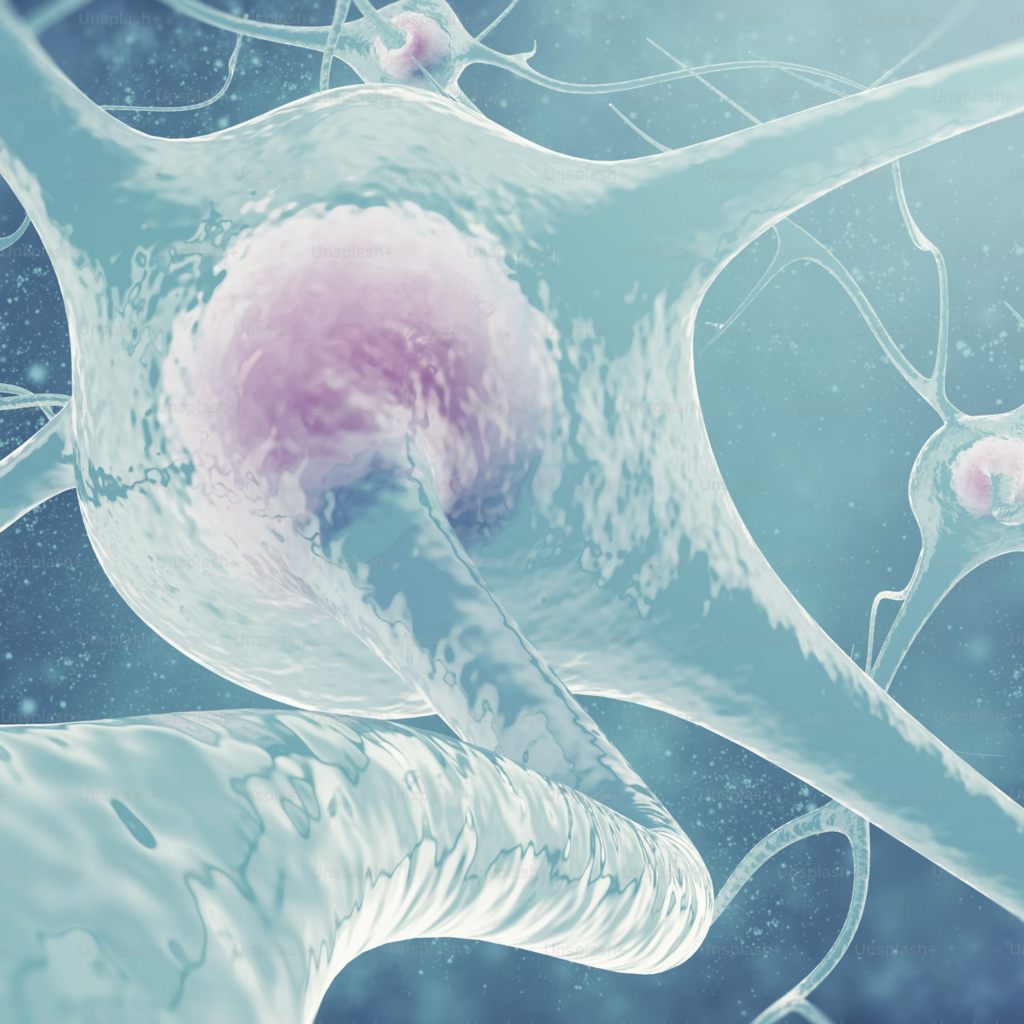
This group is organized to promote interdisciplinary interest and research into the phylogeny of cognition. It includes people, academic units, and research areas from across the university. The phylogeny of cognition is about the evolutionary origins, radiation, and differentiation of cognitive abilities throughout phylogeny, from the earliest forms of learning, memory, and communication to present-day abilities in numerous species (including humans). Burgeoning comparative cognition research in recent decades has revealed cognitive abilities in species throughout the tree of life. While this research is still in its relative infancy, the data that has been generated so far calls for rethinking our approach to cognition from a phylogenetic, rather than anthropocentric, perspective. This is a matter of theoretical development as well as empirical investigation. Those who have direct or indirect interests in this area include philosophers, biologists, anthropologists, and psychologists, and within these disciplines neuroscientists, evolutionary biologists, behavioral and comparative psychologists, and philosophers of science.
Director: Carrie Figdor (carrie-figdor@uiowa.edu)

Global Media Studies
This group seeks to enhance our understanding of both enduring and emerging challenges in global media research. It aims to create a dynamic environment that fosters interdisciplinary collaboration across the humanities and social sciences to examine media systems within diverse global contexts.To focus on the intersection of media, culture, technology, epistemology, and globalization, members intend to emphasize the following key research themes: the dynamics of information flows between the global north and south, comparative studies of media systems, policy shaping and emerging trends in global media governance, and the inequities characterizing knowledge production routines among the several existing intellectual circuits worldwide.
Director: Jamil Marques (jamil-marques@uiowa.edu)

Human-Animal Interactions for Wellbeing Collaborative
The Human-Animal Interactions for Wellbeing Collaborative will bring together faculty, staff, students, and community experts—including those in counseling, recreational therapy, Student Care and Assistance, UI Hospitals and Clinics, public safety, and community-based organizations—to explore the role of animals in supporting human health and wellness. As an applied research and practice group, our mission is to bridge evidence-based knowledge with practical implementation. Our group welcomes faculty, staff, students, and community members across disciplines who are interested in advancing scholarship and practice in human-animal interaction, ensuring that interdisciplinary expertise informs the responsible and effective incorporation of animals in human services, education, and health systems.
Co-directors: Katy Schroeder (kathryn-schroeder-1@uiowa.edu) and Adrienne Johnson (adrienne-johnson@uiowa.edu)

Iowa Volunteer Lawyers for the Arts
This group envisions a cross-campus collaboration that provides students and faculty in the arts access to usable legal templates and educational programming about issues of copyright, fair use, licensing, contractual obligations, complex tax topics, and even immigration-related challenges. The group will also explore the intersections of arts, culture, and the law and facilitate the application of concepts within this intersection.
Director: Dave Bright (david-bright@uiowa.edu)

Mapping Environmental Justice in Transnational Iowa and the Global Midwest
This group works to understand and represent environmental injustice impacting life in Iowa, the Midwest region, and how these issues and phenomena connect us to other places and regions. "Environmental injustice" refers to the unequitable distribution of environmental benefits and harms, and its disparate health burdens on racialized and low-income communities in the U.S. and transnationally.
The group takes a bottom-up approach to mapping environmental (in)justice, co-created with community partners. Participants have ongoing relationships with external stakeholders, such as Global Food Project and GROW Johnson County. They will continue to identify key stakeholders, document and engage with how they perceive and understand environmental (in)justice and otherwise map how Iowa’s political landscape and unique history and development illuminate some of the key drivers of contemporary environmental problems.
Director: Emerson Cram (e-cram@uiowa.edu)

Museum Futures
This group aims to take up conversations about museums’ colonialist origins and legacies, the exhibition and/or repatriation of objects taken from colonized people, and museums’ and communities’ efforts to increase public access to and engagement with collections. The larger aim of the working group is to garner interest in examining the ways museums have functioned in the past and to examine the ways they are and will continue to transform. The group will explore historical topics as well as those germane to current museum practice through shared readings, vibrant conversation, and presentations of works in progress.
Co-directors: Anny Dominique Curtius (anny-curtius@uiowa.edu) and Cory Gundlach (cory-gundlach@uiowa.edu)

Race Workshop
This group aims to create a university-wide intellectual community for faculty, graduate students, and research staff who are interested in scholarship that centers race and ethnicity. The group hopes to support scholars across the university by creating a place for collaboration, networking, and critical engagement with new and relevant race scholarship. To this end, it will host speaking events that showcase race scholarship by researchers within and outside of the university. These events will highlight scholarship that centers Black, Indigenous, and other people of color. The group will also host professional and research development workshops for members.
Co-directors: Louise Seamster (louise-seamster@uiowa.edu) and Amber Joy Powell (amber-powell@uiowa.edu)

Reconceptualizing the Mental Health Crisis in Higher Education: A Mindful Journey
This group engages participants, across the campus and beyond, to explore trauma-informed pedagogy, positive psychology, and the philosophy of the health promoting university (via the Okanagan Charter). These lenses are used to analyze the complex issues connected to well-being and mental health in higher education. The group aims to provide a cross-disciplinary space for faculty, graduate students, staff, and community members to explore culturally informed strategies and resources. These will be used to cultivate a culture of care, critical empathy, gratitude, and metacognitive awareness with the intent of addressing experiences such as impostor phenomenon, burnout, compassion fatigue, discrimination, grief and loss, and languishing.
The group's goals are to discuss how to embed mental health and wellbeing awareness in various aspects of higher education, examine cohesive frameworks of holistic well-being that support structural changes in academic culture, and reconceptualize the mental health crisis toward a positive psychology paradigm,
Co-directors: Barry Schreier (barry-schreier@uiowa.edu) and Dusty Persinger (dusty-persinger@uiowa.edu)

Teaching with Writing
This group provides a space for faculty and staff to come together to talk and learn about teaching with writing in the disciplines through reading and research and by consulting with Writing across the Curriculum (WAC) experts from other universities. As an “action research” group, we also plan and implement programming: formal and informal talks with instructors in different Iowa departments; Institutes for Teaching with Writing; and a possible intensive Teaching with Writing pilot in selected CLAS departments. Because our goals are now closely focused on academic-writing infusion in different disciplines, the group is now composed of a diverse range of instructors and staff from departments and colleges across the UI campus.
Co-directors: Carol Severino (carol-severino@uiowa.edu) and Deirdre Egan (deirdre-egan@uiowa.edu)

Therapeutic Singing and Parkinson's Disease: Interdisciplinary Research, Practice, and Community Engagement
This group brings together scholars, clinicians, artists, students, and community partners who share an interest in therapeutic singing and associated health outcomes for individuals with Parkinson's disease (PD). Singing-based interventions have demonstrated potential for supporting voice function, breath control, mood, movement, cognition, and quality of life among people with PD, while also fostering community and reducing social isolation.
Working group meetings will provide space for participants to share current research, clinical practices, pedagogical innovations, community-engaged work, and future directions for interdisciplinary scholarship on therapeutic singing and Parkinson's disease.
Director: Abbey Dvorak (abbey-dvorak@uiowa.edu)

Translation Theory and Practice
Across the humanities, translation has always been either an object or a mode of inquiry. Many U.S. scholars who work with non-English sources often incorporate passages they translate into their published work, and of course continuously do their own translations for their research and teaching. Scholars who do translation come from a wide range of disciplines, such as Classics, Philosophy, Religious Studies, History, English, Art History, various area studies, and of course, Literary Translation. However, most such scholars have little or no training in translation studies and often do their translations in a somewhat unreflective way. The purpose of this working group is to cultivate a learned and thoughtful community of scholars who do translation at the University of Iowa and that supports both the professional development of each faculty member as well as translation as an interdisciplinary field of practice and study.
Director: Jan Steyn (jan-steyn@uiowa.edu)

Unbound: Learning without Limits
This group is designed to support faculty, staff, students, and other interested individuals in investigating how learning, instruction, and learner and educator support is facilitated in informal learning environments such as maker spaces, wilderness areas, museums, libraries, community centers, and out-of-school-time youth clubs and organizations. The group is a reading and discussion group whose efforts will focus on better understanding and applying research on learning in informal environments to members' own individual work.
Co-directors: Kay Ramey (kay-ramey@uiowa.edu) and Amanda Case (amanda-case@uiowa.edu)

Water, Society, & Global Change
Water is at the center of many of the most pressing 21st century sustainability challenges. How do we ensure safe and accessible water for all? How do we mitigate and adapt to changes in the frequency and severity of droughts and floods in a changing climate? This working group brings together scholars from multiple disciplines—including from the humanities, social sciences, and natural and physical sciences—to discuss challenges in the face of water scarcity/abundance, and societal responses to water stress in the past, present, and future.
Co-directors: Elise Pizzi (elise-pizzi@uiowa.edu) and Matt Dannenberg (matthew-dannenberg@uiowa.edu)
Legacy Working Groups
The following groups have successfully convened for at least five years as funded Obermann Working Groups. They continue their work and their affiliation with the Obermann Center but, per our new Working Group five-year life-cycle guidelines, no longer receive Obermann funding.

Center for Publics, Platforms, & Personalization
This group brings together scholars from the humanities, social sciences, and computational sciences to explore the political, social, and cultural implications of algorithms used by social media platforms. The goal is for humanists and social scientists to get a better idea of how social media algorithms function, while introducing computational scientists to some of the emerging critiques of big data and algorithmic culture in the humanities and social sciences.
Co-directors: Brian Ekdale and Rishab Nithyanand

Contemporary Literary & Film Theory
This group explores the ways in which debates in contemporary literary theory and film theory do and do not overlap. While the disciplines of literary studies and film studies have developed in parallel since the 1970s, the theoretical debates in each discipline have a more varied trajectory. For example, the disciplines have considered the relation between print and audiovisual culture and processes globalization from quite different perspectives, even though the concept of transnationalism has been a key term in both disciplines for at least decade. Likewise, both disciplines have reevaluated the relation between ethics, politics, and the arts, but have come to different conclusions regarding central aspects of the relation. Finally, matters of digital or new media have prompted both disciplines to reconsider previous theoretical work on narrative and discourse.
Director: Kathleen Newman

The Project on Rhetoric of Inquiry (POROI)
The Project on Rhetoric of Inquiry (POROI) is an interdisciplinary institute for research and public engagement housed at the Obermann Center. Its mission is to explore how scholarship and professional discourses are conducted through argument, how paradigms of knowledge are sensitive to social-political contexts, and how the presentation of scholarly and professional findings involves the recognition and negotiation of audiences.
Since its founding in 1980, POROI has provided resources for strengthening academic inquiry, creativity, and communication in the arts, humanities, sciences, and professions. It is especially interested in communicative opportunities and problems that arise at the intersections between disciplines as well as between academia and diverse publics. In these respects, POROI applies the art of rhetoric to the conduct of inquiry. Its concerns range from the invention and construction of arguments to a marked interest in how discourse is interpreted, received, and disseminated in both technical and public spheres of argumentation.
Director: Naomi Greyser