What does it mean to live with a sound that has no external source? For millions worldwide, this is the daily reality of tinnitus—a complex auditory symptom that can range from a minor annoyance to a deeply distressing condition. This "universe" of sound is the primary focus of Anna Carolina Marques Perrella de Barros, an audiologist and researcher from the Tinnitus and Sound Intolerance Group at the Universidade Federal de São Paulo in Brazil. Her pursuit of advanced clinical management strategies and research collaboration brought her to the University of Iowa this spring as an Obermann International Fellow.
“Tinnitus is like a universe,” Barros explains. “The more you study it, the more you learn and encounter new variables. While it has been the subject of extensive research for a long time, there is still so much more to study.”
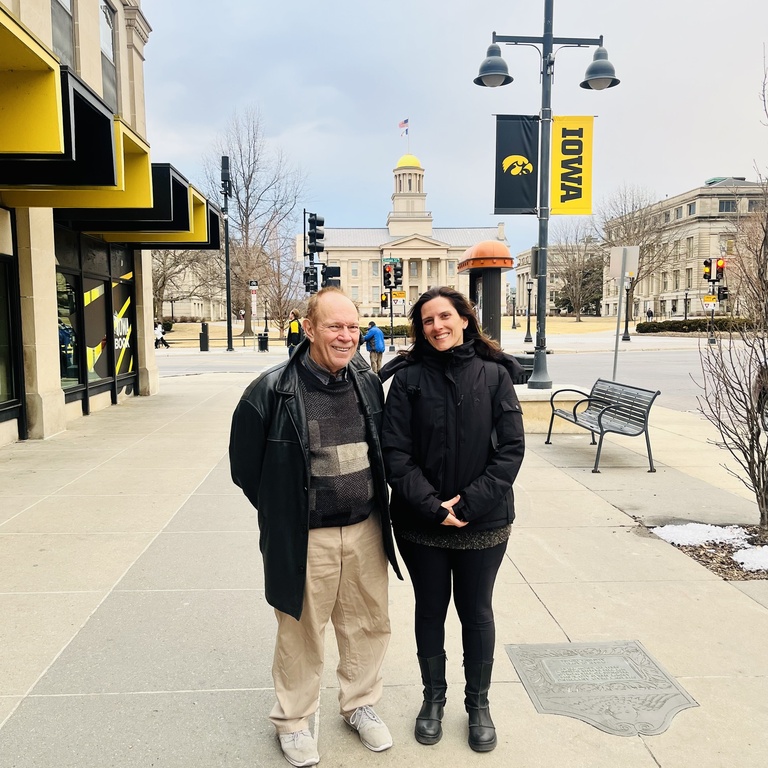
With a global prevalence of approximately 15 percent, tinnitus—the perception of ringing, buzzing, or hissing in the ears—is frequently associated with hearing loss. In fact, says Barros, 90 percent of people with tinnitis also experience hearing loss. Despite its commonality, the condition remains notoriously difficult to treat. “Currently, we do not have a medication or a surgical procedure that effectively eliminates tinnitus,” Barros says. Instead, her work focuses on multi-dimensional management and improving quality of life. For some, she notes, "the 'cure' may simply be the ability to live and work normally, remaining independent of the perception of the sound.”
Barros chose the University of Iowa specifically for its expertise in the field, primarily around the work of Professor Richard Tyler in the Department of Otolaryngology and the Department of Communication Sciences and Disorders. Professor Tyler is globally recognized for developing the "Tinnitus Activities Treatment," a foundational framework for clinical management that Barros came to study firsthand.
During her two weeks in Iowa City, Barros immersed herself in the UI's research culture. Beyond her collaboration with Professor Tyler, she connected with researchers like Joel Berger in the Department of Neurosurgery and attended classes for PhD students. These interactions provided fresh perspectives on the operational and team structures necessary for world-class research.
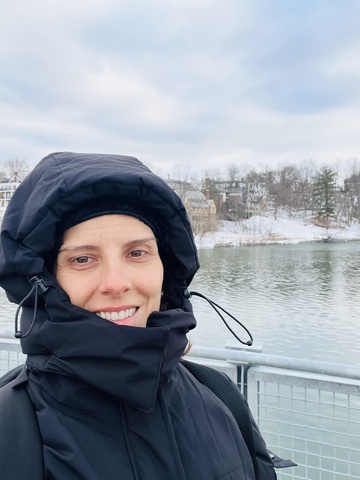
The stay also allowed Barros to experience Iowa City's unique atmosphere. “The city is fascinating, and the people here are so kind; I am truly grateful to everyone I've met,” she reflects. “Beyond the academic work, the cultural exchange made this a truly life-changing experience; I don't think I will ever be the same."
While the short duration of her visit was a challenge, given her high expectations, Barros remains fully engaged with the connections she made, planning to continue her collaborations remotely from Brazil, where she teaches postgraduate specialization courses for audiologists.
Barros encourages other scholars to pursue similar international opportunities: “An international fellowship is a transformative experience,” she says. “The cultural exchange is fantastic, and the opportunity to study alongside one of the world’s leading experts truly fosters both professional and personal growth."