Texto en español a continuación.
Storytelling is intrinsic to the human experience. Since prehistoric times, we have made sense of our lives—and of ourselves—through narrative. Today, that enduring power of literature lies at the heart of “Mass Migrations: Personal Voices,” a research project co-funded by the Obermann Center for Advanced Studies at the University of Iowa and the Consortium of Humanities Centers and Institutes.
This international collaboration brings together the University of Iowa and the Universidad de la República, Uruguay’s principal public university. Led by Luis Martín-Estudillo, director of the Obermann Center, and Fernando Ordóñez of the Universidad de la República, the project centers on a population both vulnerable and remarkably resilient: Venezuelan migrant women who have arrived in Montevideo, Uruguay, seeking refuge from an ongoing humanitarian crisis.
Exporting the “Iowa Model”
The University of Iowa has long demonstrated that writing is not only an art but a craft that can be taught, cultivated, and refined. Its renowned workshop model, built on sharing works-in-progress, critical dialogue, and revision, has shaped generations of writers. “Mass Migrations” draws on this tradition, extending it beyond academic walls and reimagining it as a tool for community integration.
Through a series of eight creative writing and oral history workshops, twenty Venezuelan migrant women in Montevideo are invited to explore and articulate their personal narratives. In doing so, they transform complex, layered life experiences into language, reclaiming agency over their identities. The workshops are grounded in an intersectional framework, acknowledging that each participant’s story is shaped by the interplay of gender, class, ethnicity, and migration status, rather than treating migrant experiences as uniform.
The project launched in November 2025 with a visit from Bolivian writer Camila Urioste to the Universidad de la República. A graduate of both the University of Iowa’s MFA in Spanish Creative Writing and the Iowa Writers’ Workshop, Urioste delivered lectures on literary pedagogy and led writing sessions with the participating women, offering both technical guidance and creative inspiration.
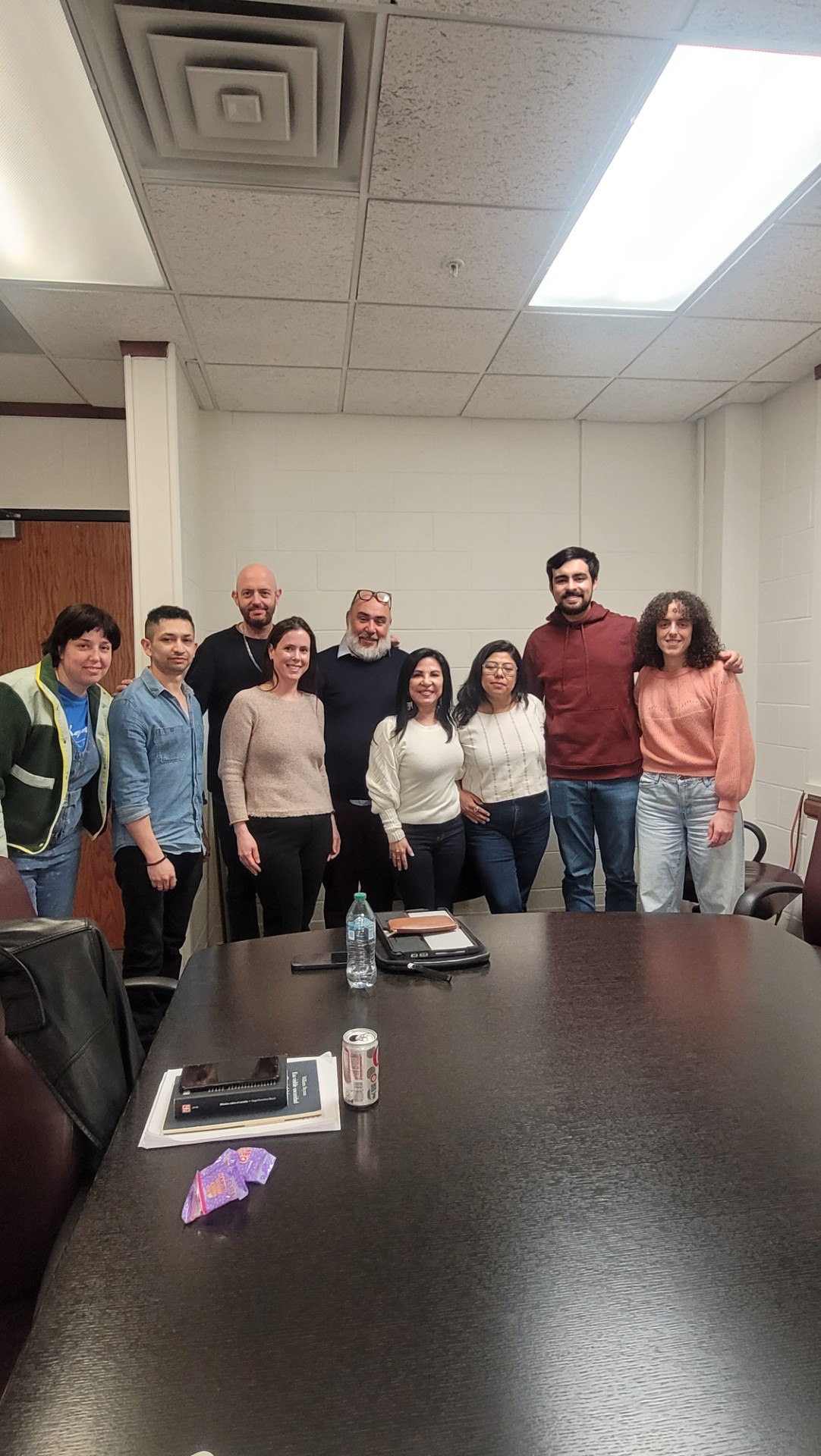
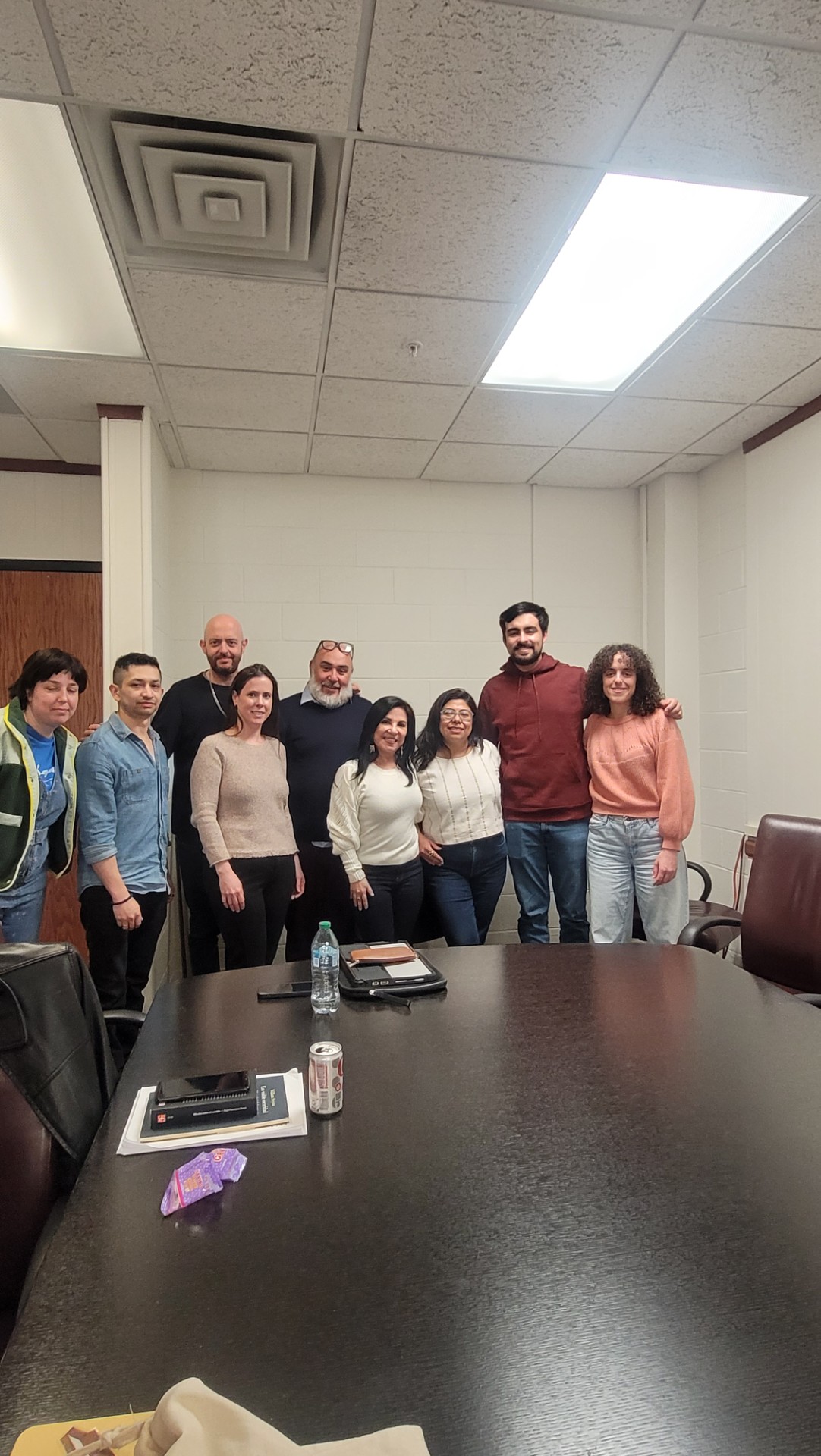
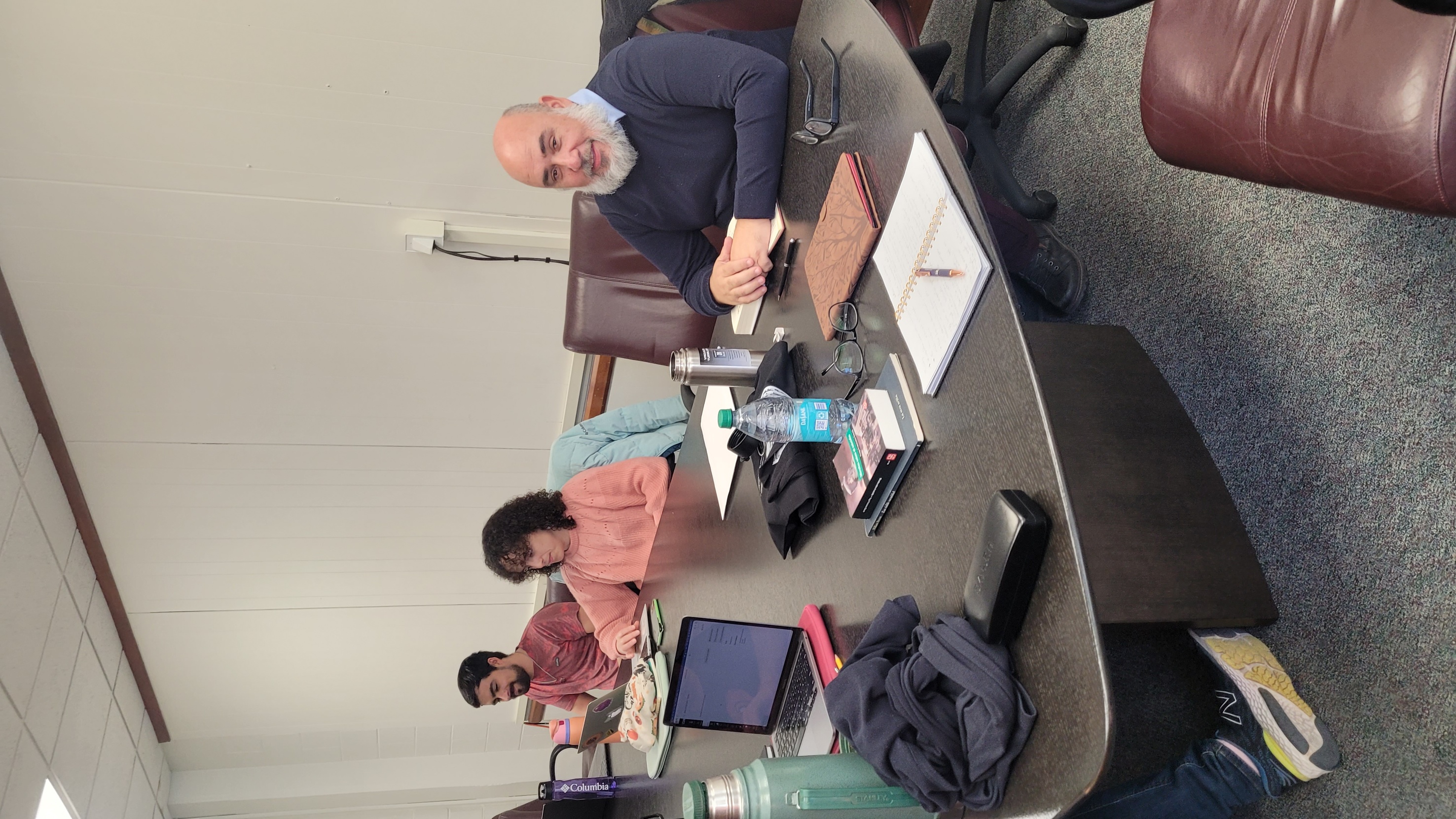
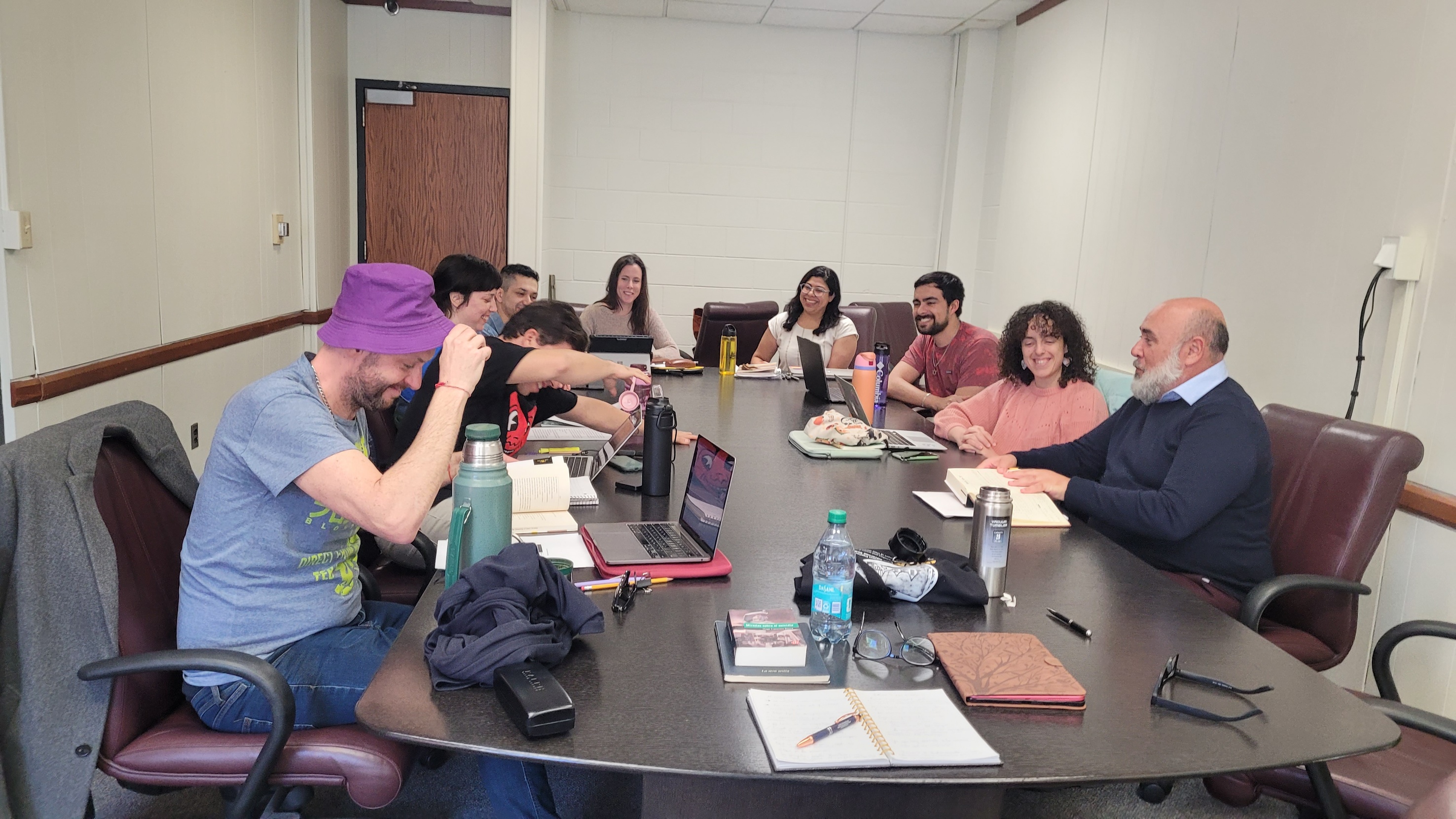
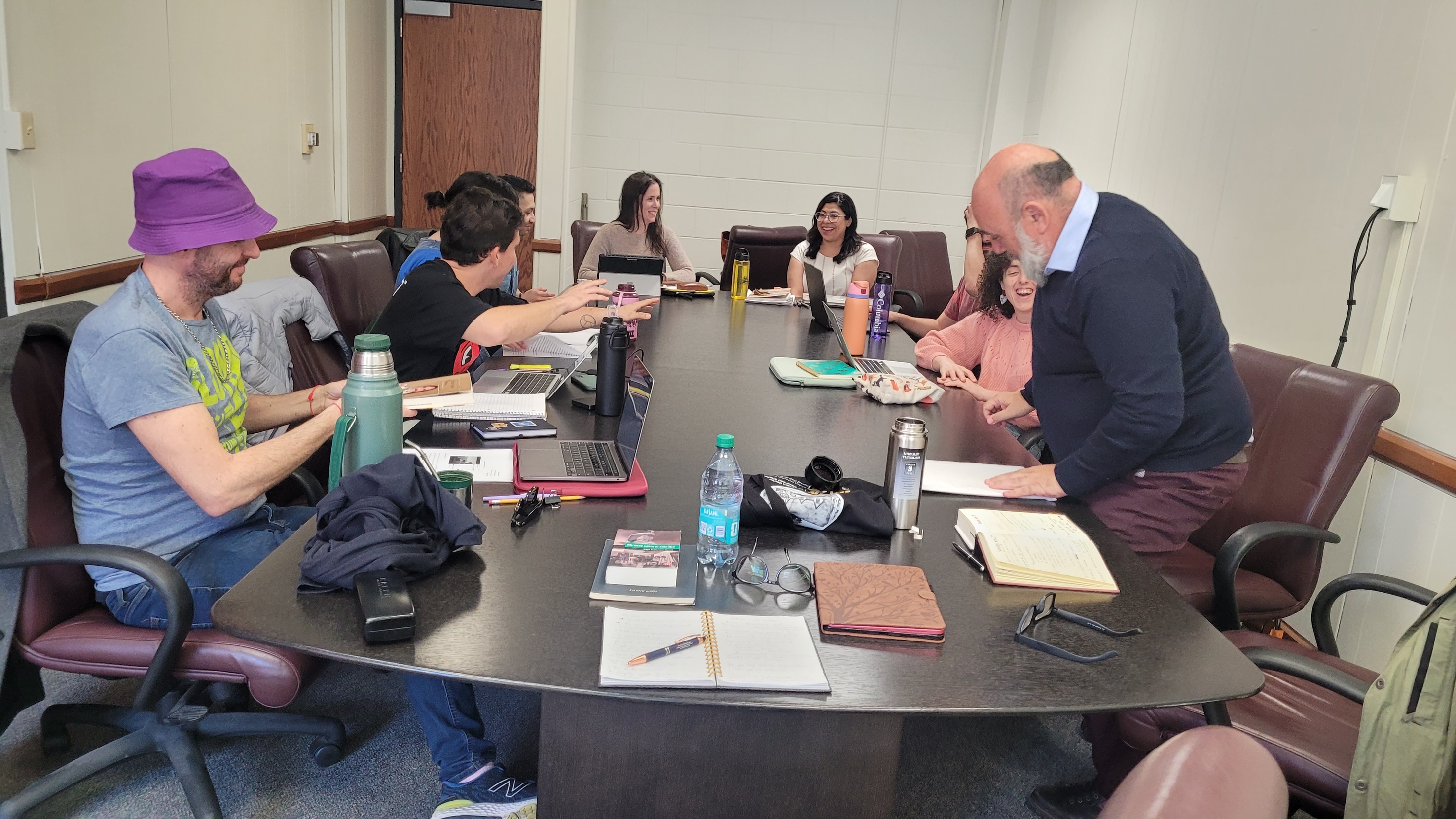
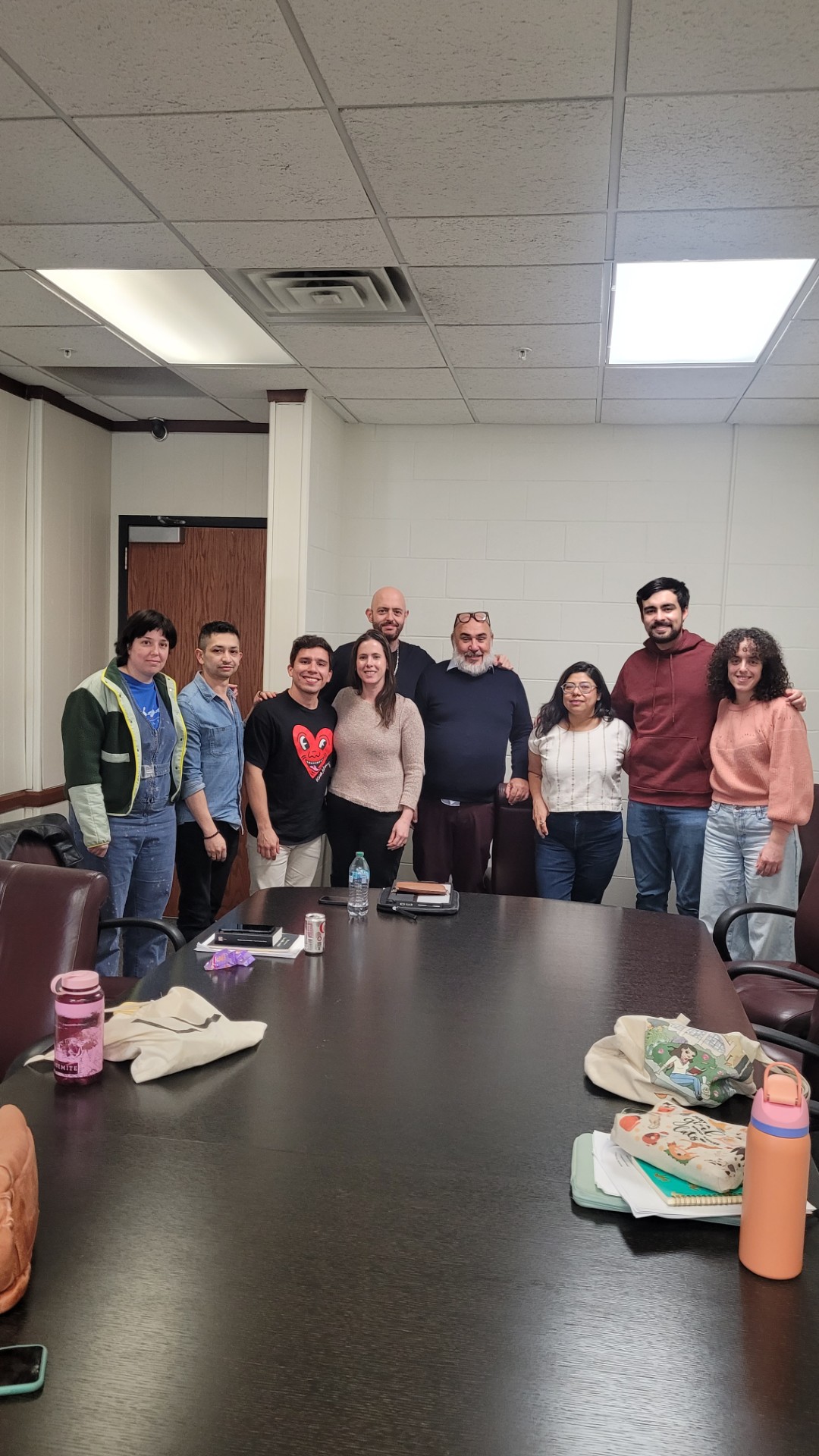
To deepen this exchange, co-director Fernando Ordóñez spent the Spring 2026 semester at the University of Iowa, observing creative writing workshops, including those led by Professor Giovanna Rivero (see photos below). His aim was to study the nuances of the workshop model and adapt it to new cultural and social contexts, testing its potential as a mechanism for integration.
Literature as a Tool for Integration and Community
Migrant Voices is not designed to produce professional writers. Rather, it offers participants a means of expression—tools to name, shape, and share their experiences. Each session begins with a reading from a contemporary female writer, often addressing themes of identity, belonging, and the liminal space between cultures. These texts serve as catalysts, prompting participants to craft their own narratives.
While the workshops are not explicitly therapeutic, they carry a clear secondary aim: fostering connection and mutual support. As Martín-Estudillo notes, “Transforming life stories—often marked by trauma—into poetry or fiction can make the experience of migration more bearable.” In this sense, storytelling becomes both an individual and collective act of resilience.
Writing the Future: The Social Power of Literature
Beyond its immediate impact on participants, “Mass Migrations” advances both scholarly inquiry and community engagement. By centering the voices of migrant women, the project contributes to a richer, more nuanced understanding of migration—one that foregrounds lived experience over abstract data.
As Martín-Estudillo and Ordóñez emphasize, the humanities are too often mischaracterized as static repositories of the past. Projects like this instead reveal their dynamic role in the present. By bridging university and community, and by using literature as a vehicle for empathy and connection, “Mass Migrations” affirms that imagining the future requires more than technological innovation. It requires human insight, care, and a commitment to keeping people and their stories at the center.
“Voces Migrantes”: El modelo de escritura de Iowa cruza fronteras para empoderar a mujeres venezolanas en Uruguay
El acto de narrar es una necesidad intrínseca del ser humano. Desde tiempos prehistóricos alrededor del fuego, contar historias ha sido nuestra forma de procesar la vida y entender quiénes somos. Hoy, ese poder fundamental de la literatura es el motor de “Voces Migrantes: Tejiendo Identidades”, una iniciativa de investigación-acción participativa que forma parte del proyecto más amplio “Mass Migrations: Personal Voices” cofinanciado por el Obermann Center for Advanced Studies de la Universidad de Iowa y el Consortium of Humanities Centers and Institutes.
Esta colaboración internacional conecta a la Universidad de Iowa con la Universidad de la República en Uruguay. Liderado por los profesores Luis Martín-Estudillo, director del Obermann Center y Fernando Ordóñez, de la Universidad de la República, el proyecto se centra en un grupo vulnerable pero profundamente resiliente: mujeres migrantes que han llegado a Montevideo, Uruguay, huyendo de la crisis humanitaria en Venezuela.
Exportando el "Modelo Iowa"
La Universidad de Iowa tiene una larga y prestigiosa historia demostrando que la escritura literaria puede ser enseñada y aprendida en un aula. El proyecto busca adoptar esta metodología de taller (o workshop) e inspirarse en ella, llevándola fuera de la academia tradicional para que funcione como una herramienta de integración comunitaria.
Para lograrlo, la iniciativa combina metodologías cualitativas de las humanidades—específicamente la historia oral y la escritura creativa—con un enfoque interseccional. A través de ocho talleres, 20 mujeres migrantes explorarán sus narrativas identitarias en un espacio seguro que atiende las dimensiones de género, clase y condición migratoria.
Las actividades del proyecto iniciaron en noviembre de 2025 con la visita de la escritora boliviana Camila Urioste a Montevideo. Como graduada de la Maestría en Escritura Creativa en Español de la Universidad de Iowa y del prestigioso Iowa Writers' Workshop, Urioste fue la encargada de introducir esta metodología al impartir conferencias sobre pedagogía literaria y guiar talleres de escritura creativa con el grupo de mujeres migrantes venezolanas.
Para nutrir este proyecto, Fernando Ordóñez visitó la Universidad de Iowa durante el semestre de primavera de 2026. Allí observó directamente las dinámicas de talleres creativos como el de la profesora Giovanna Rivero para luego adaptar el modelo a otros contextos. El objetivo final es experimentar cómo este enfoque puede funcionar como una herramienta de integración para grupos específicos.
Literatura como herramienta de integración y comunidad
En la práctica, el proyecto no busca convertir a las participantes en escritoras profesionales, sino ofrecerles herramientas expresivas. La dinámica de los talleres está cuidadosamente diseñada: cada encuentro comienza con la lectura de un texto activador escrito por autoras contemporáneas que suele explorar temáticas como la identidad, el sentido de pertenencia y el fenómeno de sentirse “en el medio” de dos culturas. A partir de estas lecturas, se invita a las mujeres a producir sus propios textos.
Aunque el propósito de los talleres no es estrictamente terapéutico, sí existe un meta-objetivo claro: la construcción de lazos y redes de apoyo entre las participantes. Transformar historias de vida, a menudo traumáticas, en poesía o ficción puede hacer que la experiencia de la migración sea más llevadera a la hora de expresarla y compartirla.
Escribir el futuro: El poder social de las letras
Más allá de la experiencia personal de cada participante, “Mass Migrations: Personal Voices” tiene una ambición social. El proyecto busca generar un conocimiento nuevo que recupere la voz específica de la mujer migrante, ofreciendo una aproximación estética y humana frente a los meros datos estadísticos.
Como señalan Luis y Fernando, las humanidades a menudo son vistas erróneamente como un archivo pasivo del pasado. Sin embargo, proyectos comunitarios como este demuestran su vitalidad en el presente. Al llevar la universidad hacia la comunidad y utilizar la literatura como vehículo para la empatía, el proyecto reafirma que un futuro centrado únicamente en la tecnología sería un futuro deshumanizado. El mundo necesita del rigor, el cuidado y las herramientas narrativas de las humanidades.