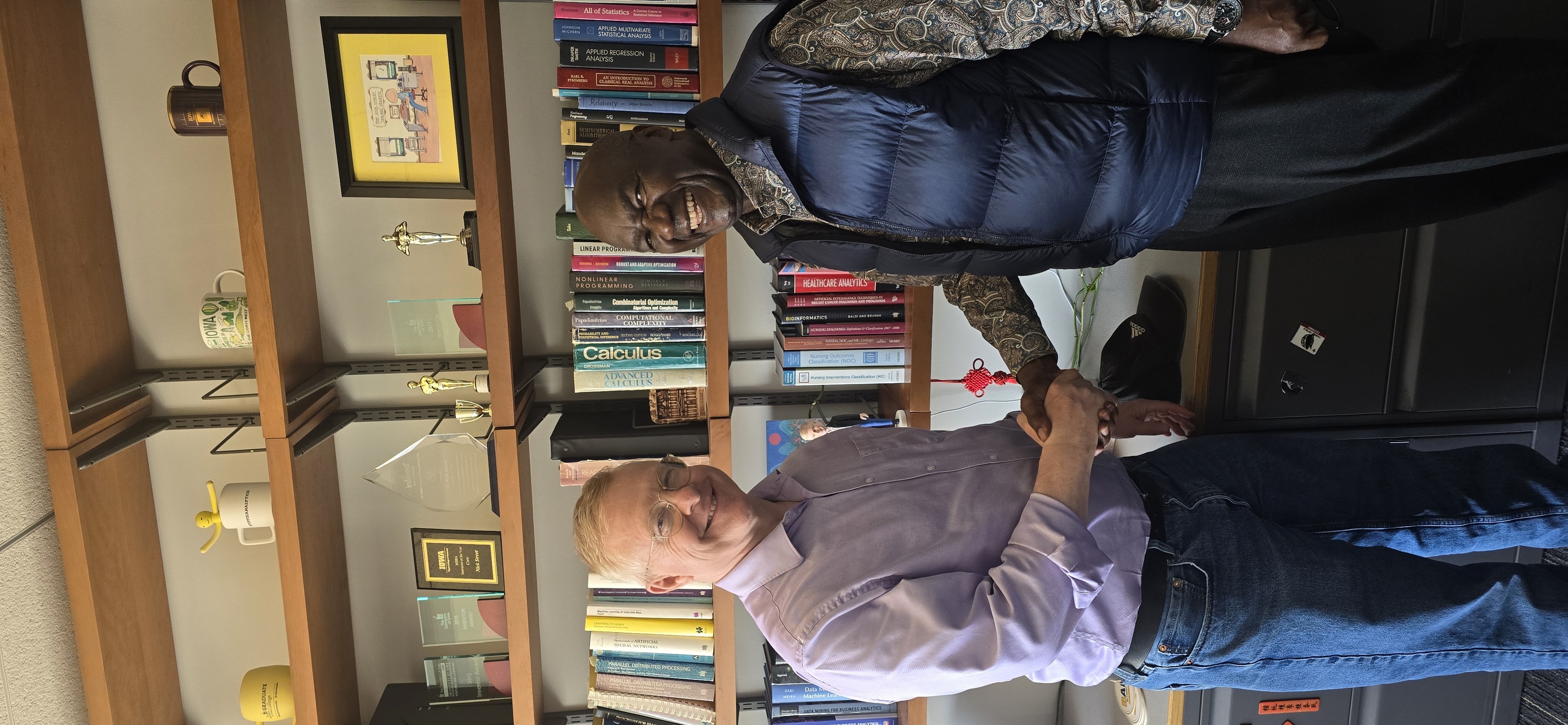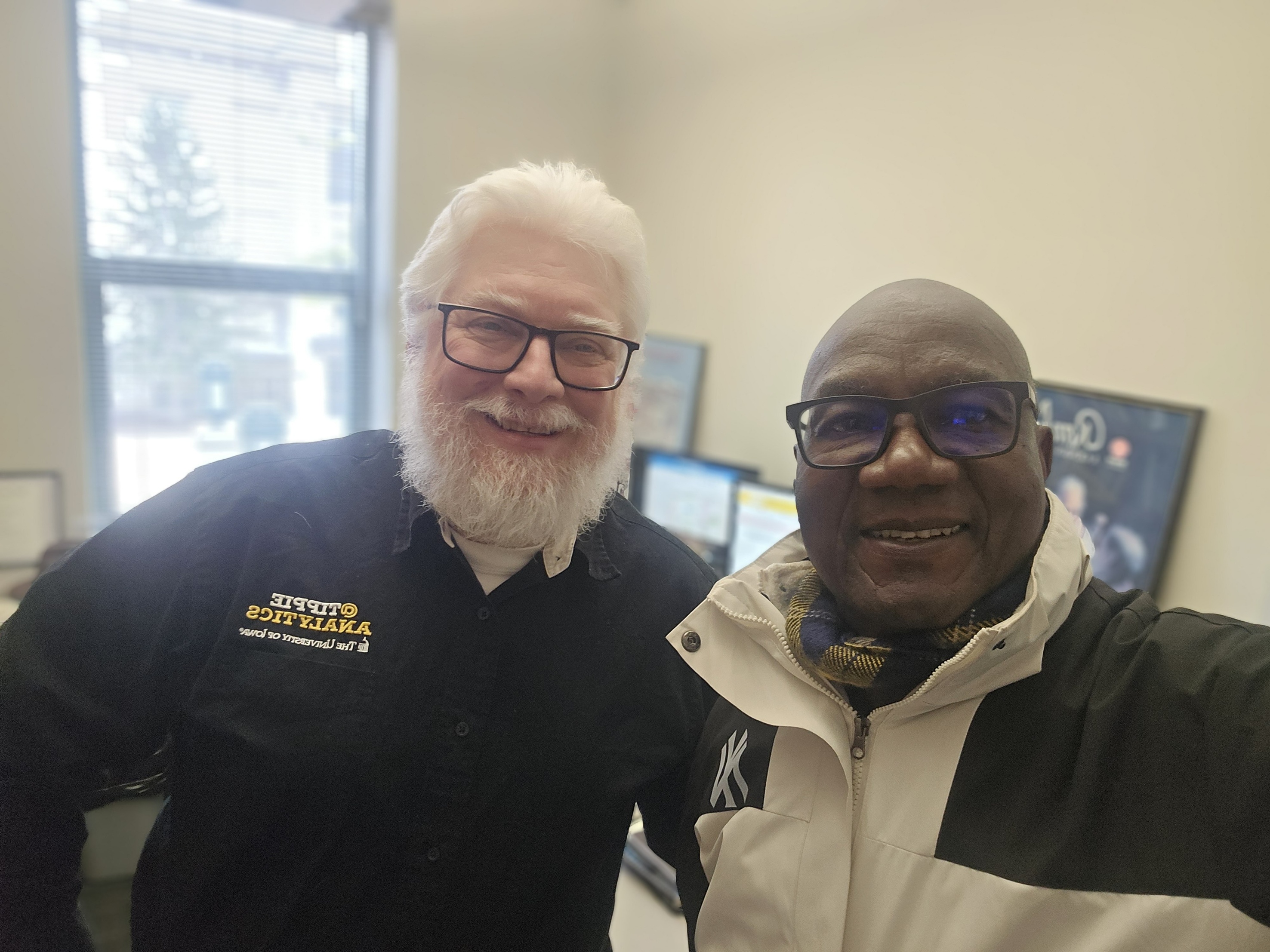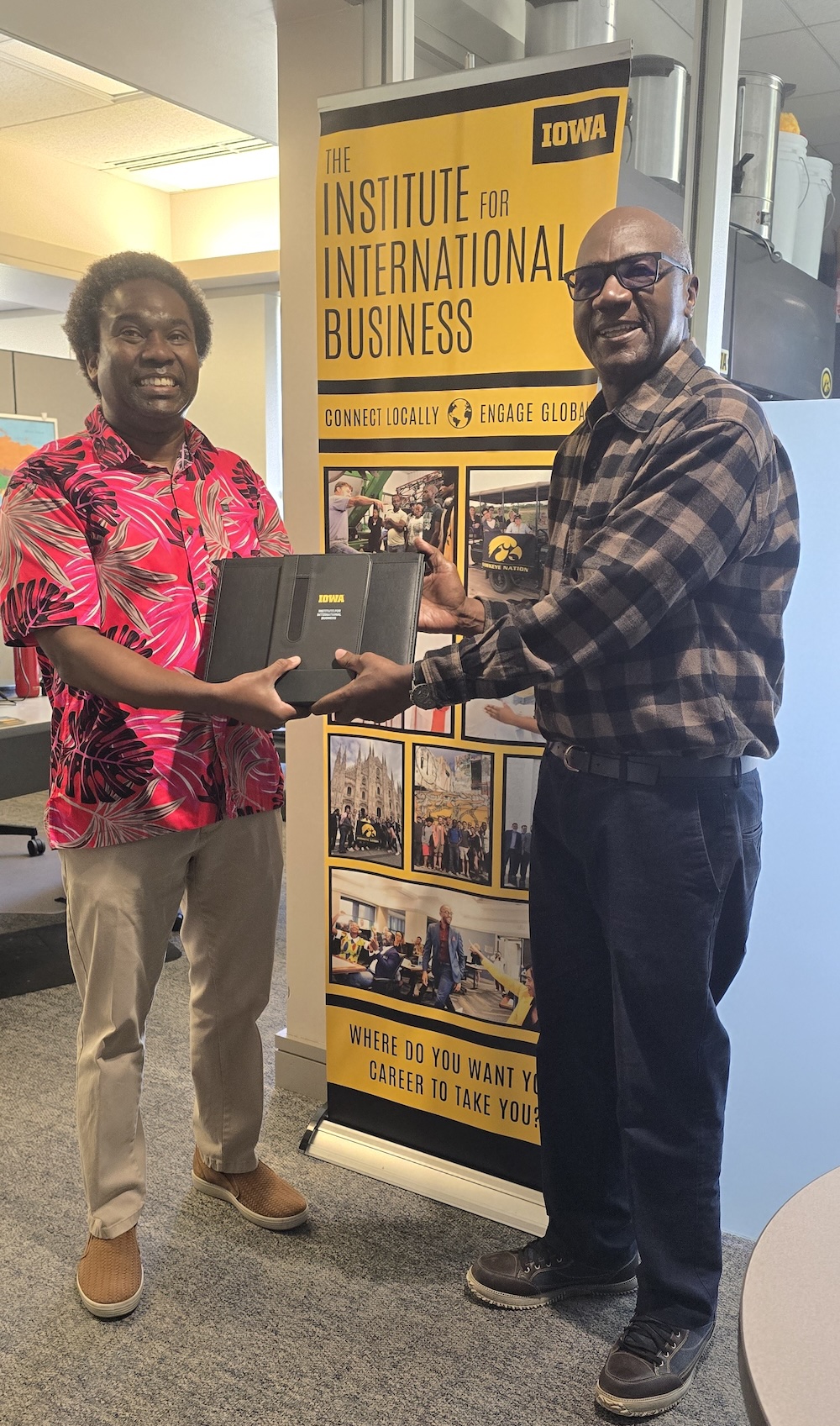
This spring, the Obermann Center for Advanced Studies welcomed Professor Washington Okeyo as an Obermann International Fellow. A retired university Vice-Chancellor, Okeyo holds a PhD in Entrepreneurship and Strategic Management, an MBA in Finance, and a BSc in Mathematics and Computer Science from the University of Nairobi, complemented by executive training in leadership, governance, and higher education management.
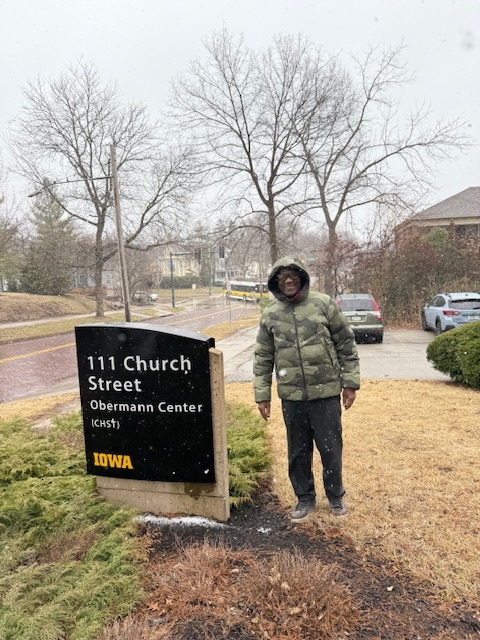
Prof. Okeyo arrived in Iowa City from Kenya on March 2, 2026, and his first weeks brought a series of memorable surprises. His arrival coincided with his 70th birthday, and before long he had encountered the full range of Midwestern spring weather: unexpected snow, a tornado warning, and warm, sunny days, all within a matter of weeks.
Working closely with the Tippie College of Business, Okeyo used his fellowship to explore a rapidly evolving frontier: the integration of artificial intelligence (AI) into entrepreneurship education.
A comparative look at AI in education
During his two-month fellowship, Okeyo’s primary objective has been to advance research on AI integration through a comparative Kenya–Iowa lens. His goal is to generate evidence-based insights that can inform policymaking, teaching, and institutional innovation, ultimately helping universities prepare practical, market-ready graduates.
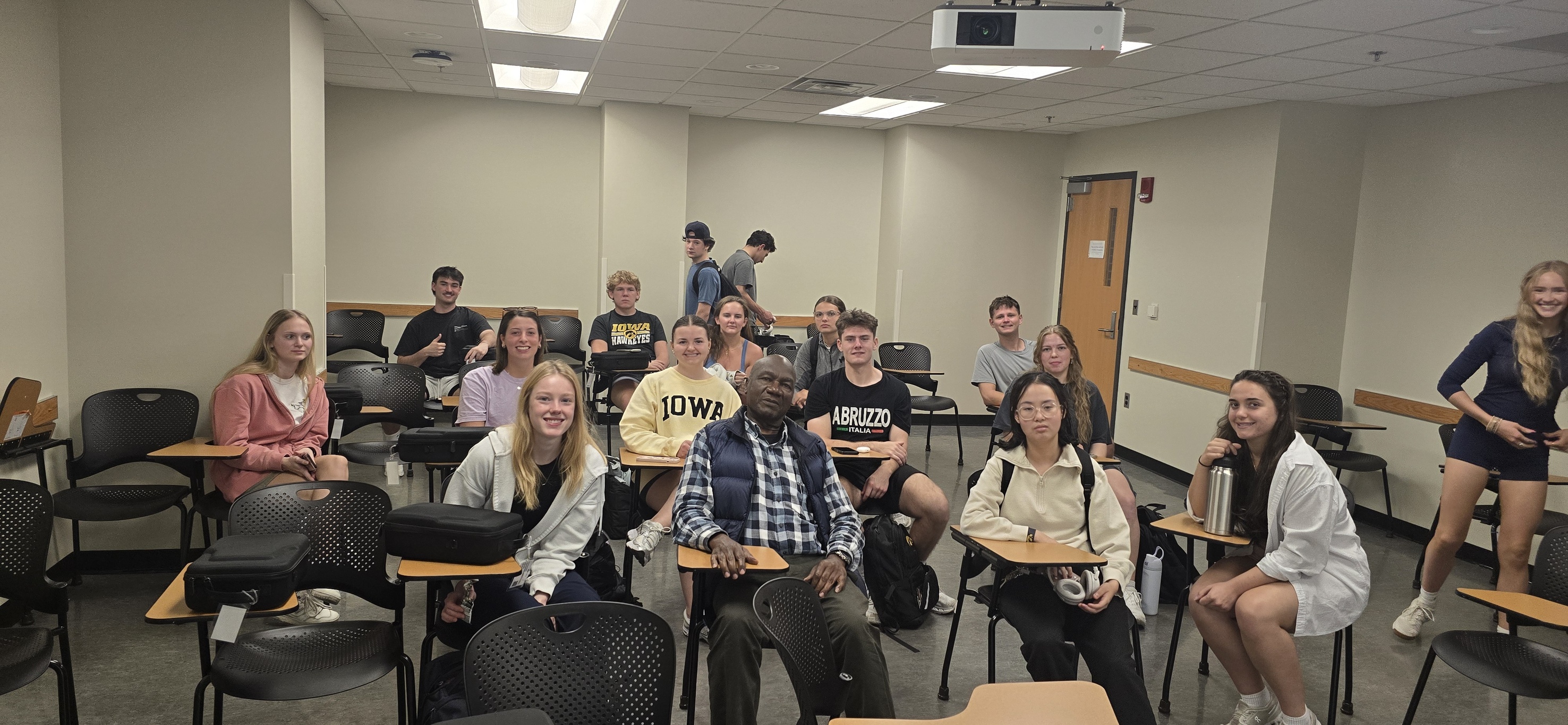
Okeyo arrived with data he had previously collected from five participating universities in Kenya. At the University of Iowa, he conducted interviews with faculty and administrative staff, observed AI-integrated classes, and navigated the rigorous process of securing Institutional Review Board (IRB) approval for his local study.
One discovery that stood out to him was the widespread but largely unstructured use of generative AI by UI instructors. While he did not encounter a rigid, overarching AI policy, he found that academic freedom allowed faculty to experiment creatively with AI tools. Some instructors, for example, have used AI to reduce turnaround times for student feedback.
Navigating the AI “shortcut”
A significant theme in Okeyo’s conversations with UI faculty was the double-edged nature of AI for students. He noted a common concern that students might use AI to “jump through the hoops of the class” rather than engage deeply with the material.
For Okeyo, the challenge is not to keep students away from AI, but to teach them to use it responsibly. AI, he emphasized, should simplify the process of reaching a goal, but the critical thinking must still come from the student. “The whole process of how you want to achieve it must be in the mind,” he explained. Universities, he argued, have a responsibility to help students use AI in ways that are ethical, thoughtful, and human.
Local and global impacts
Although Okeyo’s work is rooted in Kenya, he sees important implications for Iowa as well. By helping align education with changing labor market needs, his research supports the development of a future-ready workforce for the state’s economy. AI-driven tools can also empower entrepreneurs in rural areas by improving market access, streamlining operations, and reducing urban-rural economic gaps. Equipping students and community members with these tools may also strengthen innovation in local sectors such as agriculture and retail.
Looking to the future
As he prepares to return to Nairobi, Prof. Okeyo is already looking toward the next steps in his research, which he envisions unfolding in three phases.
Phase I: May–October 2026
This phase will focus on completion and dissemination. It includes a strategic meeting with Kenyan partners on May 11, the publication of journal articles, and the conceptualization of a scholarly book.
Phase II: November 2026–December 2027
The second phase will move from research to implementation. Okeyo hopes to establish AI-supported learning and innovation centers at partner universities, where his research findings can be piloted and applied.
Phase III: 2027–2029
The final phase will focus on expansion. Okeyo plans to scale the study to selected universities across Africa and build a multi-country research consortium.
To bring this vision to life, Okeyo is actively exploring funding opportunities through the Kenyan business community, partner institutions, and international organizations such as the Mastercard Foundation.
What stood out most to Okeyo during his time in Iowa was the warmth of the community. Having previously navigated large cities such as Washington, D.C. and New York, he found the University of Iowa and the surrounding community to be especially receptive, helpful, and friendly. Reflecting on his fellowship, he expressed deep gratitude for the financial and logistical support provided by the Obermann Center and the Tippie College of Business.
His advice to anyone considering an international fellowship is clear: “Embrace the opportunity wholeheartedly. It is a life-changing experience that broadens academic perspectives, exposes you to new cultures, and challenges you to grow intellectually and personally.”