Upcoming Events & Deadlines

Planning and Writing Successful Grant Proposals in the Creative Arts, Social Sciences, and Humanities Seminar promotional image

Planning and Writing Successful Grant Proposals in the Creative Arts, Social Sciences, and Humanities Seminar

Thursday, January 14, 2027 8:30am to 12:30pm
Iowa Memorial Union (IMU)

The Research Development Office is hosting an in-person grant writing seminar, Planning and Writing Successful Grant Proposals in the Creative Arts, Social Sciences, and Humanities, that will be held on Wednesday, Jan. 13 from 1:00 p.m. to 5:00 p.m. and Thursday, Jan. 14 from 8:30 a.m. to 12:30 p.m. in the IMU. The seminar is presented by AtKisson Training Group.

This seminar will cover fundamental concepts of proposal planning and writing for the Arts and Humanities faculty backed by concrete...

Application Deadline: Small Important Project Grants promotional image

Application Deadline: Small Important Project Grants

Thursday, April 1, 2027 5:00pm
111 Church Street

This new Obermann Center program offers modest yet swift support for those portions of research and creative endeavors by UI scholars that are important toward advancing a project but do not have enough funding from other sources. We will grant 10 awards of $500 or less per academic year. Note that funds need to be spent by June 30 of each year.

Eligibility: Open to all University of Iowa faculty and staff researchers who have not received a SIP award in the past academic year.

Application...

Application Deadline: Obermann Working Groups (2027–30) promotional image

Application Deadline: Obermann Working Groups (2027–30)

Wednesday, April 7, 2027 5:00pm
111 Church Street

Obermann Center Working Groups provide space, structure, and discretionary funding for groups led by faculty that may include advanced graduate students, staff members, and community members with a shared intellectual interest.

Groups have used this opportunity to share their work in progress or draw up a set of readings they want to undertake and discuss. Others have organized conferences, applied for grants together, written articles together, designed new courses, taken field trips, organized...

View more events

Spacer

News

Performance from the Dance.Draw series at UNC-Charlotte, by Rob Singh-Latulipe.

Designing the Digital Future: Highlighting Informatics Work in the Arts and Humanities
Search “informatics” on Wikipedia and you’ll get a hint of the very wide swath that this relatively new field has already cut: bioinformatics, irrigation informatics, legal informatics, music informatics, cheminformatics, and disease informatics are just a few of its subfields. An idea that has been around for barely a half century...
2014 Imagining America PAGE Fellows

Reflections on Imagining America from UI’s PAGE Fellows

Moving the Middle — Reflections on Imagining America’s national conference by Heather Draxl: The theme of this year’s Imagining America conference, held in Atlanta, Georgia, was “Organizing. Culture. Change.” Those three words were intended to “represent concentrations of energy and activity across higher education and within the IA consortium” and played a role in one of the conference’s primary...
Crescendo poster

Obermann-Incubated Project Comes to a Crescendo

Masks give us permission to explore new ideas or to more bravely enact ways of being that we don’t usually give ourselves permission to pursue. They invite playfulness, humor, parody, and even a bit of mischief. Think Halloween costumes and masquerade balls. All of the qualities that masks allow and invite also make them a clever tool for exploring social issues, which is the aim of a new UI...
Bruce Gronbeck

Remembering Longtime Obermann Scholar Bruce Gronbeck

In January 1986, just days before the nation and the University of Iowa were scheduled to celebrate Martin Luther King Day as a national holiday for the first time, the Obermann Center was asked if we could “put together something” as part of the University’s observance. I was panicked, but then remembered that Bruce Gronbeck, a new guy at the Obermann Center, had been talking at...
One of thousands of photos that have been digitized as part of the Ft. Madison Prison Memory Project.

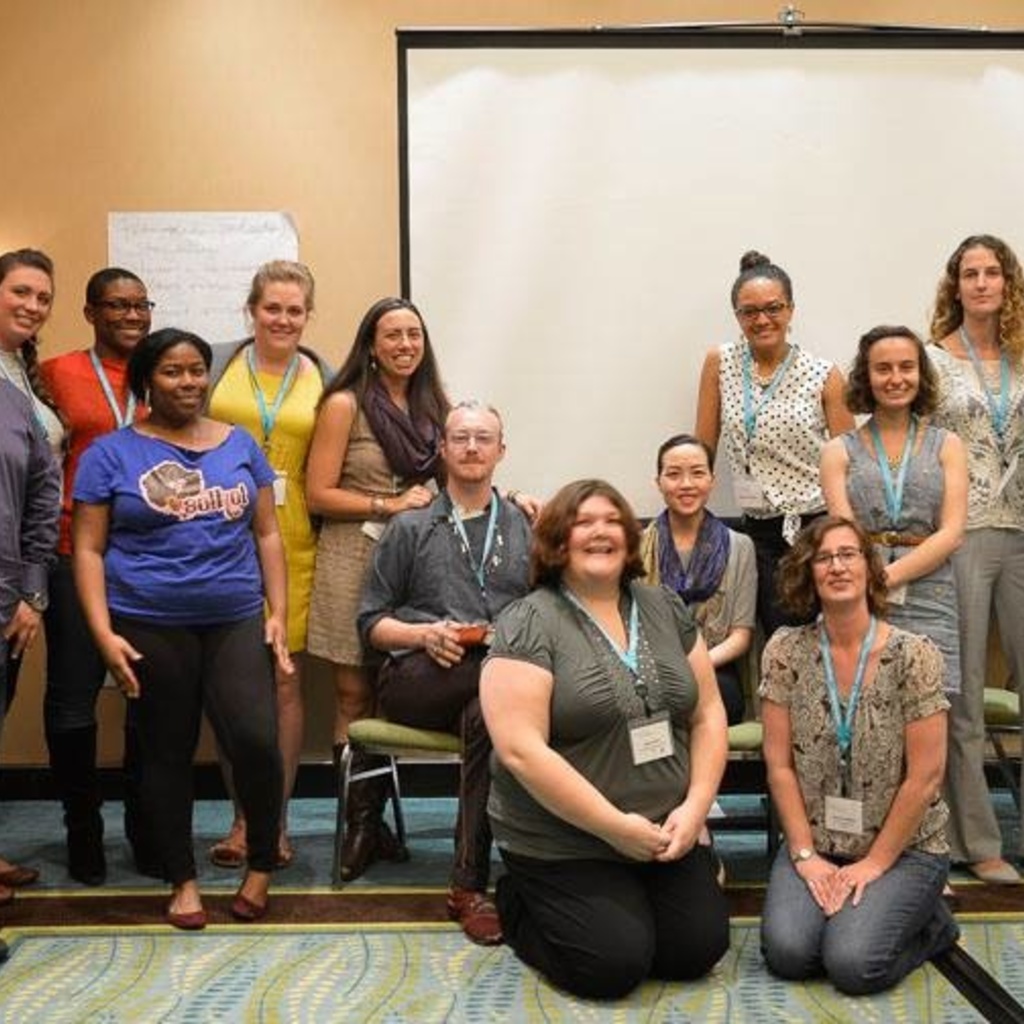
Incarcerated in Iowa - Relationship Forged at the Obermann Graduate Institute Results in Prisons Project and Symposium
Conversation Begins at Obermann Graduate Institute: Kathrina Litchfield, recent SLIS grad and a current PhD candidate in Language, Literacy, and Culture (College of Education) and Gemma Goodale-Sussen (English, CLAS) met for the first time last January as Fellows of the Obermann Graduate Institute on Engagement and the Academy. As they shared their respective public engagement projects, each woman...
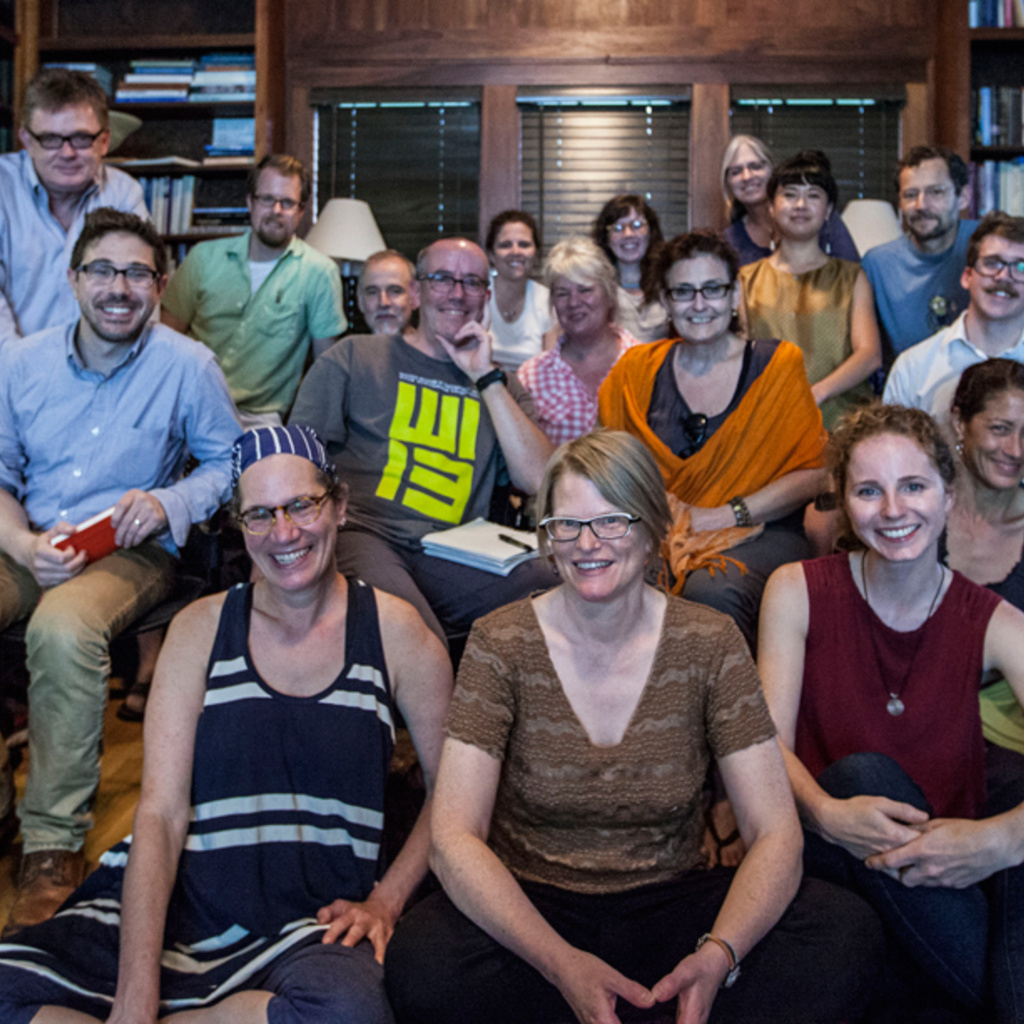
SumSem_group2_1.jpg

Social Practice Art: Engaging Multiple Perspectives

The role of art in society has long been debated. If an artist works in a university and in combination with community partners, that definition becomes murkier yet.As part of the Obermann Center’s Summer Seminar, “Problem Solving Social Practice in Art,” a group of scholars, community organizers, and artists cast a wide net on the idea of “social practice in art,” examining and exposing gaps in...
HWW logo

Humanities Without Walls — Opportunities for Humanities Faculty and Graduate Students

Andrew W. Mellon–funded Grand Challenge — The Global Midwest As we announced last year, the Obermann Center is one of 15 centers in the $3,000,000 Mellon-funded Humanities Without Walls Consortium headed by Professor Dianne Harris of the University of Illinois Program for Research in the Humanities. Applications are welcome from faculty at two or more consortial universities whose scholarship...

"Obermann Afternoons" Line Up Announced
Obermann Afternoons, the Obermann Center's informal speakers series, launches again this fall. “Anthropocene 101" leads the way on September 17 from 4:00 to 5:30 pm, as Barbara Eckstein (English, CLAS), Bradley Cramer (Earth & Environmental Sciences, CLAS), and Tyler Priest (History, CLAS) give a preview of their spring Humanities Symposium, Energy Cultures in the Age of the Anthropocene. They will...
Food for thought poster

Food for Thought, First Theme Semester

Obermann Co-sponsors Next Year's "Food for Thought"—First University of Iowa Theme Semester. It began with a small group of people and a big idea: rallying academic, arts, and community events around a common theme, connecting people and programs in original ways. Over the last few months, that idea has taken root. Next spring, it’ll bear fruit with a collection of initiatives under the banner...

Designing Technologies for Children

Seven years ago when Juan Pablo Hourcade (Computer Science, CLAS) published a review article about designing technologies for children, smartphones were not widespread, the iPad hadn’t been introduced, nor had motion-sensing gaming devices like Kinect. A lot has changed in terms of how children can access technology and what they can do it with. And yet there still is not a succinct overview of...

Recent Events

What Can Museums Become: "Future Media of Museums" promotional image

What Can Museums Become: "Future Media of Museums"

Saturday, March 7, 2020 2:00pm to 3:30pm
Art Building West

The 2020 Obermann Humanities Symposium, "What Can Museums Become?", will bring together a distinguished group of museum directors, curators, educators and artists who will reflect on the transformative work that museums perform in the twenty-first century.


The closing keynote lecture on Saturday will be delivered by Michelle Kuo, who is the Marlene Hess Curator of Painting and Sculpture at the Museum of Modern Art. In "Future Media of Museums," she will explore the evolving impact of...

What Can Museums Become? —2020 Obermann Humanities Symposium promotional image

What Can Museums Become? —2020 Obermann Humanities Symposium

Saturday, March 7 to Monday, March 9, 2020 (all day)

Museums have never been mere containers for objects, nor should they be. How might we draw strength from existing institutions to enable vibrant futures? How can we expand the communities who feel a sense of belonging within and around museums? What must we confront and transform to make this possible? Join the artists, curators, historians, educators, and thinkers who are asking, "What Can Museums Become?"

Keynote speakers include Johanna Burton, Director of the Wexner Center for the Arts at...

What Can Museums Become, Relationality and Performance: A Critical Genealogy promotional image

What Can Museums Become, Relationality and Performance: A Critical Genealogy

Friday, March 6, 2020 7:00pm to 8:00pm
University of Iowa Main Library

The 2020 Obermann Humanities Symposium, "What Can Museums Become?", will bring together a distinguished group of museum directors, curators, educators and artists who will reflect on the transformative work that museums perform in the twenty-first century.

Friday’s Keynote lecture: “Relationality and Performance: A Critical Genealogy” will be delivered by Amelia Jones, a feminist curator who is also the Robert A. Day Professor and Vice Dean of Research at the Roski School of Art and Design at...

What Can Museums Become? —2020 Obermann Humanities Symposium promotional image

What Can Museums Become? —2020 Obermann Humanities Symposium

Friday, March 6 to Monday, March 9, 2020 (all day)

Museums have never been mere containers for objects, nor should they be. How might we draw strength from existing institutions to enable vibrant futures? How can we expand the communities who feel a sense of belonging within and around museums? What must we confront and transform to make this possible? Join the artists, curators, historians, educators, and thinkers who are asking, "What Can Museums Become?"

Keynote speakers include Johanna Burton, Director of the Wexner Center for the Arts at...

What Can Museums Become: "Museum: Space, Trace, or Place?" promotional image

What Can Museums Become: "Museum: Space, Trace, or Place?"

Thursday, March 5, 2020 4:10pm to 5:00pm
Old Capitol Museum

The 2020 Obermann Humanities Symposium, "What Can Museums Become?", will bring together a distinguished group of museum directors, curators, educators and artists who will reflect on the transformative work that museums perform in the twenty-first century.

The first keynote speaker will be Johanna Burton, whose expertise in performance studies has inflected her work as a curator, educator, scholar, and now as the Director of the Wexner Center for the Arts at The Ohio State University—one of the...

What Can Museums Become? —2020 Obermann Humanities Symposium promotional image

What Can Museums Become? —2020 Obermann Humanities Symposium

Thursday, March 5 to Monday, March 9, 2020 (all day)

Museums have never been mere containers for objects, nor should they be. How might we draw strength from existing institutions to enable vibrant futures? How can we expand the communities who feel a sense of belonging within and around museums? What must we confront and transform to make this possible? Join the artists, curators, historians, educators, and thinkers who are asking, "What Can Museums Become?"

Keynote speakers include Johanna Burton, Director of the Wexner Center for the Arts at...