Upcoming Events

Planning and Writing Successful Grant Proposals in the Creative Arts, Social Sciences, and Humanities Seminar
Thursday, January 14, 2027 8:30am to 12:30pm
The Research Development Office is hosting an in-person grant writing seminar, Planning and Writing Successful Grant Proposals in the Creative Arts, Social Sciences, and Humanities, that will be held on Wednesday, Jan. 13 from 1:00 p.m. to 5:00 p.m. and Thursday, Jan. 14 from 8:30 a.m. to 12:30 p.m. in the IMU. The seminar is presented by AtKisson Training Group.
This seminar will cover fundamental concepts of proposal planning and writing for the Arts and Humanities faculty backed by concrete...
Spacer
Upcoming Application Deadlines
Upcoming Application Deadlines


News

Seeking Humanities/Arts PhD Student for Program Coordinator Position, '26-'27
The Obermann Center for Advanced Studies seeks an advanced (ABD) humanities or arts PhD student to work with Obermann staff to support programs and events and tell the stories of the exciting research projects and initiatives supported by the Center during the 2026–2027 school year.
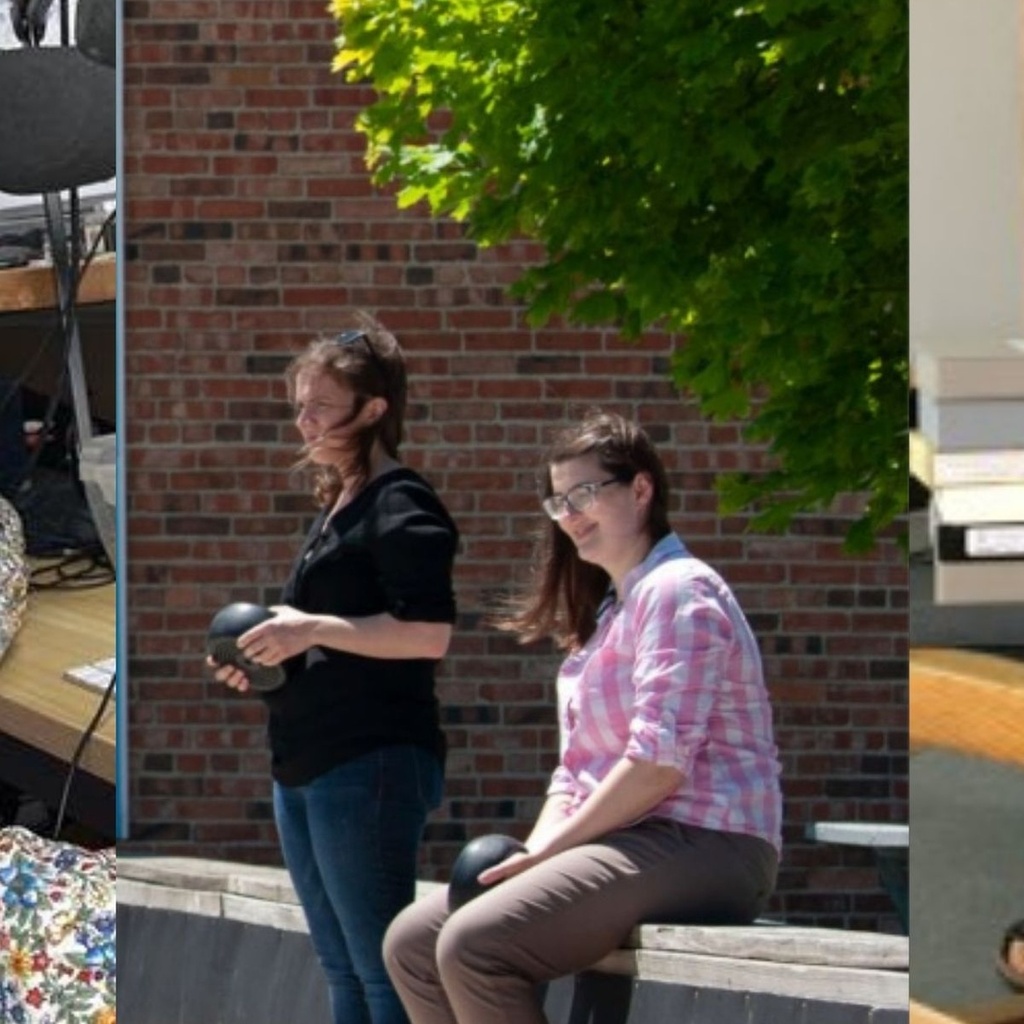
Six paid summer internships available to humanities grad students through new grant
As a graduate student in film and media, internships were a formative experience for Lauren Burrell Cox, associate director at the Obermann Center for Advanced Studies. They helped her define her values and identify meaningful professional roles where her skills could be put to use across the humanities ecosystem. Now, she’s received a grant from Humanities Without Walls (HWW) to provide six paid internship opportunities with local nonprofits for UI humanities graduate students this summer.
“My goal is to make sure that humanities graduate students are equipped with robust, transferrable skills and access to pathways that lead to secure and fulfilling work,” says Cox.
The three selected nonprofits have hosted successful internships and externships in the past, through the Obermann Center’s Mellon-funded Humanities for the Public Good initiative and the Obermann Humanities Without Walls Faculty Externship. Each site will host two HWW interns this June and July.

The Texture of Memory: Pervin Saket's Project to Preserve Parsi Heritage
Imagine a small boat on large, dark sea. Imagine families of refugees, with small children and smaller bundles of belongings. Imagine them braving storms and starvation and shipwreck. It sounds like something from yesterday’s news report, but this historical exodus took place between the 8th and 11th centuries CE, when Arab Muslims conquered the once-expansive Persian Zoroastrian empire. Faced with religious persecution, groups of Zoroastrians escaped in boats and landed on the shores of Gujarat in India. Pervin Saket’s project as an Obermann International Fellow focuses on this community, her community, in modern-day India.

Allies in Healing: Katy Schroeder and the Human-Animal Interactions for Wellbeing Collaborative
The first time Katy Schroeder truly understood the positive impact of connecting people with animals in therapy, she wasn’t sitting in a lab or behind a desk. She was standing beside a horse. “I realized how passionate I was about integrating human-horse interactions into mental health treatment,” she recalls. “It was such a powerful realization.”
At the time, Schroeder was living in Bend, Oregon, and pursuing her master’s degree in clinical mental health counseling. The idea of incorporating animals into therapy wasn’t new — but it also wasn’t widely studied or regulated. Still, something about it clicked. It lit a path she hadn’t seen before. “I caught the research bug,” she says. Encouraged by a mentor, Schroeder stayed on to earn her doctorate at Oregon State University, where she discovered her second calling: teaching. “That’s really when everything started to come together for me.”
That clarity eventually led her to the University of Iowa, where she now serves as an associate professor in the College of Education's Clinical Mental Health Counseling Program in the Department of Counselor Education. There, she’s quietly reshaping how students — and the field—understand the relationship between humans and animals in mental health care.

From the Hank Lab to the Streets of Romania: A Conversation with Patricia Marga
In a nation confronting one of the highest rates of traffic accidents in Europe, the simple act of crossing the street is a critical public health challenge. This issue is the driving force behind the work of Patricia Marga, a PhD student in public health from Romania. She's on a mission to tackle this crisis by exploring how virtual reality can be harnessed to study and improve pedestrian safety for the most vulnerable: elderly citizens crossing busy city streets and children navigating crowded school zones. Her pursuit of research methods on injury prevention brought her to the University of Iowa this fall as an Obermann International Fellow.

A Language in Motion: Jordan Gigout and Dance Notation
How do you write down a dance? To capture the body’s expressions, scholars have long turned to Kinetography Laban, a system for recording and analyzing movement that uses abstract symbols to define the direction of movement and the parts of the body that perform it, among other parameters. But what happens when that language of symbols is itself a historical artifact, reflecting the biases of its time? Can a system built on a specific vision of the body ever truly capture the full diversity of human movement, or does it inevitably shape what it records? This is the critical and creative realm of Jordan Gigout, a dancer and dance-notation scholar from Essen, Germany. His research explores how this historical language for movement can continue to evolve and inspire new ways of thinking about choreography today. This fall, we welcomed him as an Obermann International Fellow.


