Upcoming Events & Deadlines

Application Deadline: Small Important Project Grants promotional image

Application Deadline: Small Important Project Grants

Thursday, April 1, 2027 5:00pm
111 Church Street

This new Obermann Center program offers modest yet swift support for those portions of research and creative endeavors by UI scholars that are important toward advancing a project but do not have enough funding from other sources. We will grant 10 awards of $500 or less per academic year. Note that funds need to be spent by June 30 of each year.

Eligibility: Open to all University of Iowa faculty and staff researchers who have not received a SIP award in the past academic year.

Application...

Application Deadline: Obermann Working Groups (2027–30) promotional image

Application Deadline: Obermann Working Groups (2027–30)

Wednesday, April 7, 2027 5:00pm
111 Church Street

Obermann Center Working Groups provide space, structure, and discretionary funding for groups led by faculty that may include advanced graduate students, staff members, and community members with a shared intellectual interest.

Groups have used this opportunity to share their work in progress or draw up a set of readings they want to undertake and discuss. Others have organized conferences, applied for grants together, written articles together, designed new courses, taken field trips, organized...

View more events

Spacer

News

Sports, Power, & Resistance: Legacies and Futures

Exploring the Intersection of Sports, Media, and Culture
In the ever-evolving landscape of sports, media, and culture, two distinguished University of Iowa scholars, Tom Oates (American Studies and Journalism) and Travis Vogan (Journalism and American Studies), have been instrumental in shaping critical discussions and interdisciplinary explorations. As part of their ongoing commitment to advancing the understanding of sports within broader societal contexts, the two are directing the Obermann Center’s 2023 Arts and Humanities Symposium, “Sports, Power, and Resistance: Legacies and Futures.” With a shared vision of bringing together diverse perspectives, their efforts highlight the important role of sports in contemporary culture and politics. Below is a Q&A with co-directors Thomas Oates and Travis Vogan.
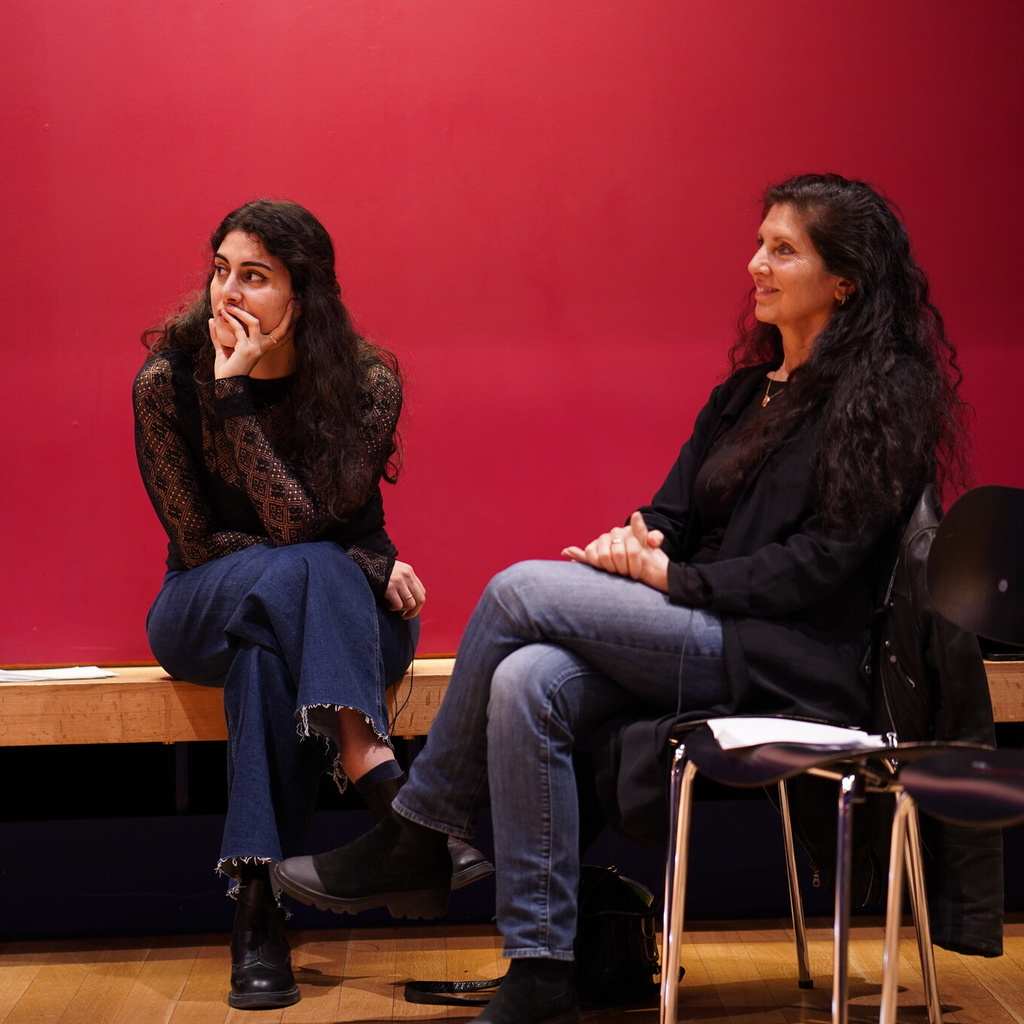
Lisa Schlesinger and Layale Chaker

Exploring Trauma and Imagination: "Ruinous Gods: Suites for Sleeping Children" Opera Takes Shape
Obermann Interdisciplinary Research Grant recipients Layale Chaker and Lisa Schlesinger (Theatre Arts) are deep in the creative process, weaving together the intricate threads of music, storytelling, and stagecraft to bring to life their ambitious opera, Ruinous Gods: Suites for Sleeping Children. The project, commissioned by Spoleto Festival USA, centers on the experiences of displaced children grappling with resignation syndrome—a rare trauma response to displacement—and seeks to carve out a space for imagination and empowerment within the realm of opera.
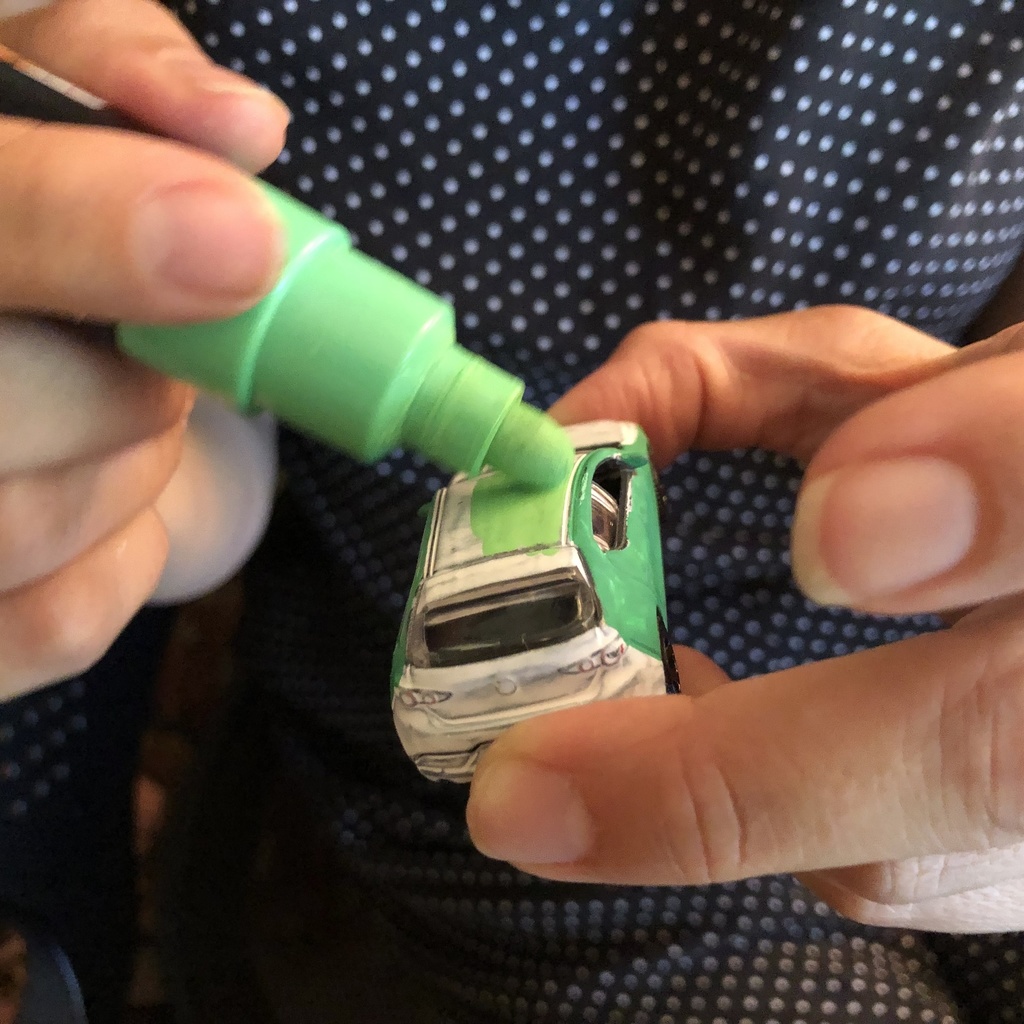
hands painting a toy car

Scholars Create Demo Derby as Comment on U.S. Political Discourse

A green car with the words “climate change” emblazoned on its doors slams into the back of a red car with the word “healthcare” on it, crumpling the bumper. Other cars with the terms “gun control,” “free speech,” and “abortion” repeatedly crash into each other in the muddy arena at the county fair, until one car emerges victorious. Just Crushing is an artwork taking the form of a demolition derby to embody American political discourse as a spectacle of competitive wreckage. The Interdisciplinary Research Group (IDRG) consists of Allison Rowe (Teaching & Learning), Maia Sheppard (Teaching & Learning), and Nancy Nowacek (Stevens Institute of Technology). Drawing upon the theatrics of Carnivale, the hometown grandiosity of state fairs, and the rich history of destructive art, vehicles representing critical issues in American politics will brutalize one another as the crowd cheers and jeers them on. Through its live, winner-takes-all battle, this project stands in opposition to the polarizing debates of stylized dialogue across partisan media. In this way, Just Crushing literalizes us-versus-them culture and reveals the absurd extremes to which political discourse has arrived: where every issue must fight for a public and a platform. 
Aged hand holding child hand

Exploring Healthy Aging across the Life Course

Health happens in families and yet many health promotion interventions are not tailored for the family as a unit. Multigenerational households (i.e., families that consist of three or more generations) have become a more prevalent family structure in the U.S. and provide essential caregiving functions. This summer, as part of their Obermann Interdisciplinary Research Grant, "Healthy Aging across the Life Course: Engaging Multigenerational Families Living with Chronic Conditions," Ebonee Johnson (College of Public Health), Duhita Mahatmya (College of Education), and Kimberly Dukes (Internal Medicine) utilized the principles and practices of community engagement to better understand health and healthy aging in multigenerational families experiencing chronic illness and disability. 
Marissa Good (left) and Selveyah Gamblin (right) at the Student Undergraduate Research Festival, April 2023 (photo by Louise Seamster)

Data Justice for Flint: Seamster Leads Effort to Build Accessible Archive with Humanities Without Walls Grand Research Challenge Project

For seven years, the Obermann Center has been a partner in the Mellon-funded Humanities Without Walls consortium led by Professor Antoinette Burton at the University of Illinois Urbana-Champaign. Our graduate students have attended HWW’s Career Diversity Summer Workshops, and several faculty members have worked with cross-institutional Grand Research Challenge teams. This year, we are delighted that Assistant Professor Louise Seamster (Departments of Sociology & Criminology and African American Studies) was selected as the P.I. of a team focused on "The Flint Water Disaster Public Archive." The ”Flint Water Disaster Public Archive” will re-home public data that has been largely inaccessible to Flint communities—a form of data justice that is of urgent relevance to the history, present, and future of those communities. The project is a collaboration among the University of Iowa, University of Michigan–Flint, and the Flint Democracy Defense League. Below is Obermann Assistant Director Lauren Burrell Cox’s interview with Louise Seamster about the project.
FilmScene exterior

Obermann Center symposium’s ‘Frequências’ film festival explores Afro-Brazilian cinema

The door of no return; the reinvention of belonging; Blackness in Brazil; these topics and more were the focus of this year’s Obermann Humanities Symposium. Presented in Iowa City by the Obermann Humanities Symposium & International Programs Major Project Award, the “Frequências” festival displayed lectures, cinema screenings, interventions, exhibits, and performances by contemporary Afro-Brazilian artists and scholars discussing Black diaspora.

Recent Events

The Art & Science of Attention — An Obermann Conversation promotional image

The Art & Science of Attention — An Obermann Conversation

Wednesday, March 25, 2020 4:00pm to 5:00pm
Iowa City Public Library

NOTICE: This event has been postponed. We hope to reschedule soon. Please check back.

Please join us for this free, public Obermann Conversation about attention and focus. We are living in an age of distractibility. Understanding how our brains attend and focus, as well as what we can do to cultivate attention, is necessary for our effectiveness and happiness. 

Shaun Vecera's (Psychological and Brain Sciences) overarching work attempts to understand the basic yet complex mechanisms of...

Canceled
What Can Museums Become: "Future Media of Museums" promotional image

What Can Museums Become: "Future Media of Museums"

Saturday, March 7, 2020 2:00pm to 3:30pm
Art Building West

The 2020 Obermann Humanities Symposium, "What Can Museums Become?", will bring together a distinguished group of museum directors, curators, educators and artists who will reflect on the transformative work that museums perform in the twenty-first century.


The closing keynote lecture on Saturday will be delivered by Michelle Kuo, who is the Marlene Hess Curator of Painting and Sculpture at the Museum of Modern Art. In "Future Media of Museums," she will explore the evolving impact of...

What Can Museums Become? —2020 Obermann Humanities Symposium promotional image

What Can Museums Become? —2020 Obermann Humanities Symposium

Saturday, March 7 to Monday, March 9, 2020 (all day)

Museums have never been mere containers for objects, nor should they be. How might we draw strength from existing institutions to enable vibrant futures? How can we expand the communities who feel a sense of belonging within and around museums? What must we confront and transform to make this possible? Join the artists, curators, historians, educators, and thinkers who are asking, "What Can Museums Become?"

Keynote speakers include Johanna Burton, Director of the Wexner Center for the Arts at...

What Can Museums Become, Relationality and Performance: A Critical Genealogy promotional image

What Can Museums Become, Relationality and Performance: A Critical Genealogy

Friday, March 6, 2020 7:00pm to 8:00pm
University of Iowa Main Library

The 2020 Obermann Humanities Symposium, "What Can Museums Become?", will bring together a distinguished group of museum directors, curators, educators and artists who will reflect on the transformative work that museums perform in the twenty-first century.

Friday’s Keynote lecture: “Relationality and Performance: A Critical Genealogy” will be delivered by Amelia Jones, a feminist curator who is also the Robert A. Day Professor and Vice Dean of Research at the Roski School of Art and Design at...

What Can Museums Become? —2020 Obermann Humanities Symposium promotional image

What Can Museums Become? —2020 Obermann Humanities Symposium

Friday, March 6 to Monday, March 9, 2020 (all day)

Museums have never been mere containers for objects, nor should they be. How might we draw strength from existing institutions to enable vibrant futures? How can we expand the communities who feel a sense of belonging within and around museums? What must we confront and transform to make this possible? Join the artists, curators, historians, educators, and thinkers who are asking, "What Can Museums Become?"

Keynote speakers include Johanna Burton, Director of the Wexner Center for the Arts at...

What Can Museums Become: "Museum: Space, Trace, or Place?" promotional image

What Can Museums Become: "Museum: Space, Trace, or Place?"

Thursday, March 5, 2020 4:10pm to 5:00pm
Old Capitol Museum

The 2020 Obermann Humanities Symposium, "What Can Museums Become?", will bring together a distinguished group of museum directors, curators, educators and artists who will reflect on the transformative work that museums perform in the twenty-first century.

The first keynote speaker will be Johanna Burton, whose expertise in performance studies has inflected her work as a curator, educator, scholar, and now as the Director of the Wexner Center for the Arts at The Ohio State University—one of the...