Upcoming Events

Registration Deadline: Junior Faculty and Graduate Student Session with Walter Biggins, Obermann Editor-in-Residence
University of Iowa junior faculty and graduate students at all stages are invited to join Walter Biggins—editor-in-chief at the University of Pennsylvania Press—for a light breakfast and a conversation about turning an article, thesis, or dissertation into a book on Tuesday, Oct. 6, from 9–10:30 a.m. at the Obermann Center for Advanced Studies library. Please bring any questions you have about that process or about scholarly publishing in general.
Register by Wednesday, September 30.
Biggins is...

AI Is Not Your Friend: Cautions and Vents about Its Uses and Abuses in the Creation of Scholarly Publications — public lecture by Walter Biggins, Obermann Editor-in-Residence
On Tuesday, Oct. 6, from 3–4 p.m. at the Obermann Center for Advanced Studies, Walter Biggins, editor-in-chief at University of Pennsylvania Press—will offer his perspective as both a longtime acquiring editor and as a writer on how the advent of AI affects the present and possible futures of scholarly publishing. In particular, he will discuss how the emerging technology creates concerns and unresolved tensions—ethical, legal, and otherwise—in publishing around intellectual property, peer...

Holding Space: Stories of Interdisciplinary Collaboration — Counterpoint event featuring Stephanie Miracle
Join us to celebrate the interdisciplinary work of University of Iowa choreographer and assistant professor of dance Stephanie Miracle, recipient of the 2026 Obermann Interdisciplinary Achievement Award.
Miracle will bring together dance, engineering, and the humanities in a new choreographed work featuring dancers performing alongside robots built by the University of Iowa College of Engineering, with narration by Eric Gidal.
A conversation among Miracle, Gidal, and engineering collaborator Deema...

Planning and Writing Successful Grant Proposals in the Creative Arts, Social Sciences, and Humanities Seminar
The Research Development Office is hosting an in-person grant writing seminar, Planning and Writing Successful Grant Proposals in the Creative Arts, Social Sciences, and Humanities, that will be held on Wednesday, Jan. 13 from 1:00 p.m. to 5:00 p.m. and Thursday, Jan. 14 from 8:30 a.m. to 12:30 p.m. in the IMU. The seminar is presented by AtKisson Training Group.
This seminar will cover fundamental concepts of proposal planning and writing for the Arts and Humanities faculty backed by concrete...
Spacer
Upcoming Application Deadlines
Upcoming Application Deadlines


News

Meet our new assistant director, Amy Chen
Sure! I went to Iowa as an undergraduate, double majoring in English and political science. I was drawn to campus from my hometown of Wichita, Kansas, by Iowa’s reputation as the Writing University. I did all sorts of things as an undergraduate. I was a resident assistant, Writing Fellow, editor-in-chief of the undergraduate literary magazine, and research assistant on top of writing an honors thesis and taking graduate classes in English. After graduation, I really needed a break! I went away to travel, then pursued my PhD at Emory University and completed a postdoc at the University of Alabama.

Variants of Uncertain Significance

Meet Reid Dempsey
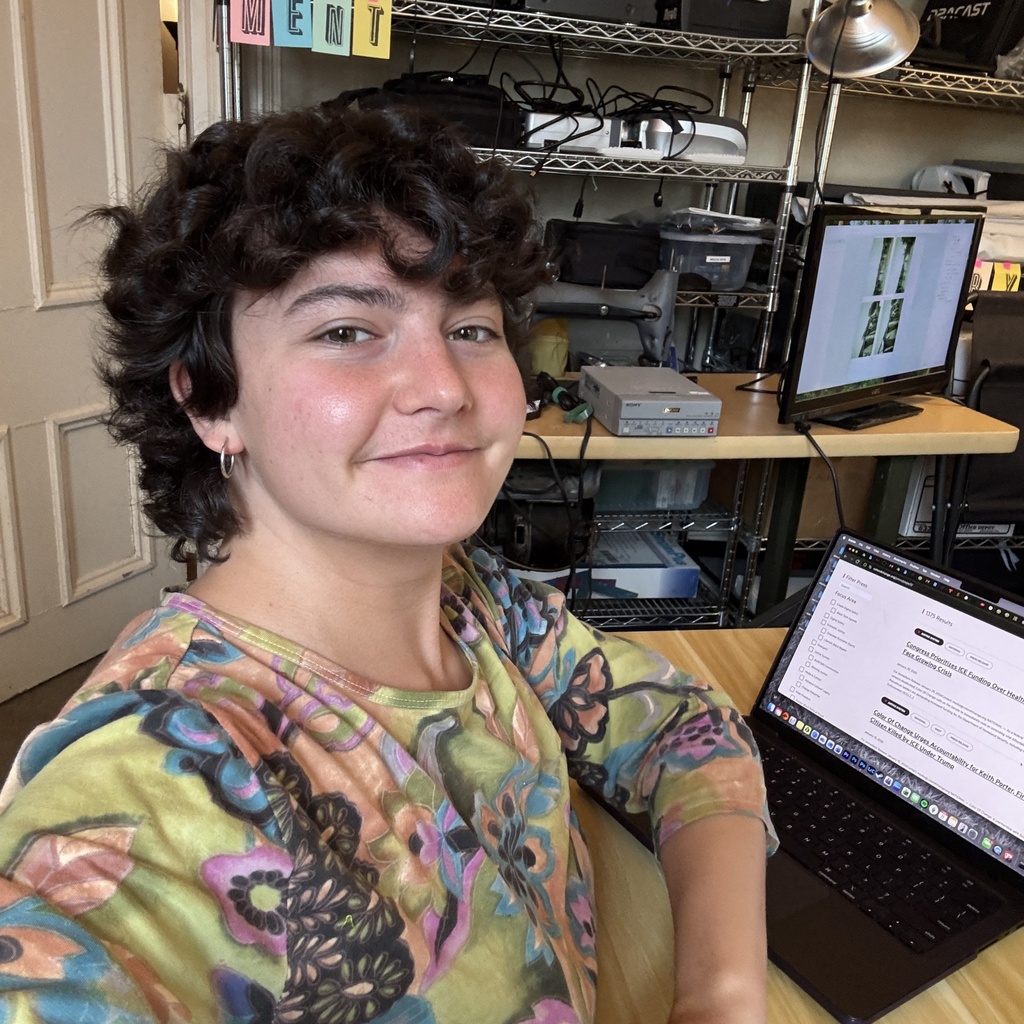
Hi! Certainly. It’s a blend of responsibilities, but mostly communications support. I help with interviews, social media, outreach, and recordkeeping. I’m also learning from the Obermann staff—Jenna, Erin, Amy, and Luis—how an organism like OCAS supports research and intellectual life inside and outside the University of Iowa. Their combined experience and skill set can be a little dazzling, and the work feels special. Not every school has something like the Obermann Center on campus, dedicated to sharing resources, building networks, and thinking about the best ways to make things happen.
Behind the Zines: Learning from Artists at Public Space One

Iowa Library Advocacy: An American Consultant’s Case Study

Connecting to Community Through the Archives

UI launches pilot to expand writing across disciplines

Community, Assessment, and the Work of Showing Up

Where Money Meets the People: What Academics Can Do for Their Community


