Upcoming Events & Deadlines

Application Deadline: Small Important Project Grants promotional image

Application Deadline: Small Important Project Grants

Thursday, April 1, 2027 5:00pm
111 Church Street

This new Obermann Center program offers modest yet swift support for those portions of research and creative endeavors by UI scholars that are important toward advancing a project but do not have enough funding from other sources. We will grant 10 awards of $500 or less per academic year. Note that funds need to be spent by June 30 of each year.

Eligibility: Open to all University of Iowa faculty and staff researchers who have not received a SIP award in the past academic year.

Application...

Application Deadline: Obermann Working Groups (2027–30) promotional image

Application Deadline: Obermann Working Groups (2027–30)

Wednesday, April 7, 2027 5:00pm
111 Church Street

Obermann Center Working Groups provide space, structure, and discretionary funding for groups led by faculty that may include advanced graduate students, staff members, and community members with a shared intellectual interest.

Groups have used this opportunity to share their work in progress or draw up a set of readings they want to undertake and discuss. Others have organized conferences, applied for grants together, written articles together, designed new courses, taken field trips, organized...

View more events

Spacer

News

Margaret Beck in the field

Searching for Red with Margaret Beck

An anthropological archaeologist, Margaret Beck is continually searching—sometimes physically, for artifacts or geological samples, but always intellectually—to understand how people once lived, how they prepared and served food, taught and learned craftwork, used local resources, moved within their landscapes, and spread their traditions. Currently, she’s studying red-painted archeological ceramics and iron-rich geological samples to discover how Native peoples created and applied the color red in the central United States. The answers aren't always easy to find centuries later. "Throughout Native North America," says Beck, Associate Professor of Anthropology and a Fall 2021 Obermann Fellow-in-Residence, "red is a powerful, strong, and often sacred color.” Indigenous people in the Midwest and Great Plains used red paint for daily grooming, to ornament household objects, and to make the mundane sacred in religious ceremonies. When Beck moved to Iowa in 2007 and began looking at archeological ceramics from Iowa and Illinois, she noticed that their red pigments differed from those found in archeological sites elsewhere in North America. The red coatings (paints or slips) were often thinner and more powdery, with lighter or more yellow shades of red. Beck surmised that these differences were due to regionally distinct raw materials and pigment application techniques—but this was something she’d have to find out for herself. "In the Great Plains and the American Bottom, I found that this was an overlooked subject," she says. "Scholars know relatively little about sources of red pigment or ochre there"—in contrast to, say, chippable stone, the location of which has been widely studied in the region.
Hannah Baysinger

Hannah Baysinger Discovers “Next”

Hannah Baysinger had forty-eight hours to leave Paraguay. She had been in the South American country as a Peace Corps volunteer for just six months when the pandemic forced her and other volunteers to leave at the end of March 2020. “I was on the last commercial flight out of Paraguay, and one of the last out of South America,” says Baysinger of the sudden departure she made from a place she intended to call home for two years.  
Three people sitting in a grassy area with trees behind them.

Planting Hope: The Anne Frank Tree Arrives in Iowa
On February 23, 1944, a 15-year-old girl gazed from an attic window at the topmost branches of a tree. The tree had become a sort of friend to her, a reminder of life beyond the small space to which she was confined and one of the few things she could see from the only window that was not blacked out. In her diary that day, she wrote, “I look up at the blue sky and the bare chestnut tree, on whose branches little raindrops shine, appearing like silver, and at the seagulls and other birds as they glide on the wind. As long as this exists…and I may live to see it, this sunshine, these cloudless skies, while this lasts, I cannot be unhappy.” Those words represent the hope that has made their author, Anne Frank, one of the major figures of World War II and a ubiquitous symbol of optimism in the face of unthinkable darkness. On April 29, 2022, the thirteenth Anne Frank Tree will be planted on the northeast corner of the University of Iowa’s Pentacrest. Its arrival is due to the work of Frank scholar and UI German Department faculty member Dr. Kirsten Kumpf Baele. Her proposal to bring a tree to Iowa City was accepted a year and a half ago by the Anne Frank Center USA; however, the pandemic postponed the original planting ceremony, which is now slated for April 29, 2022.
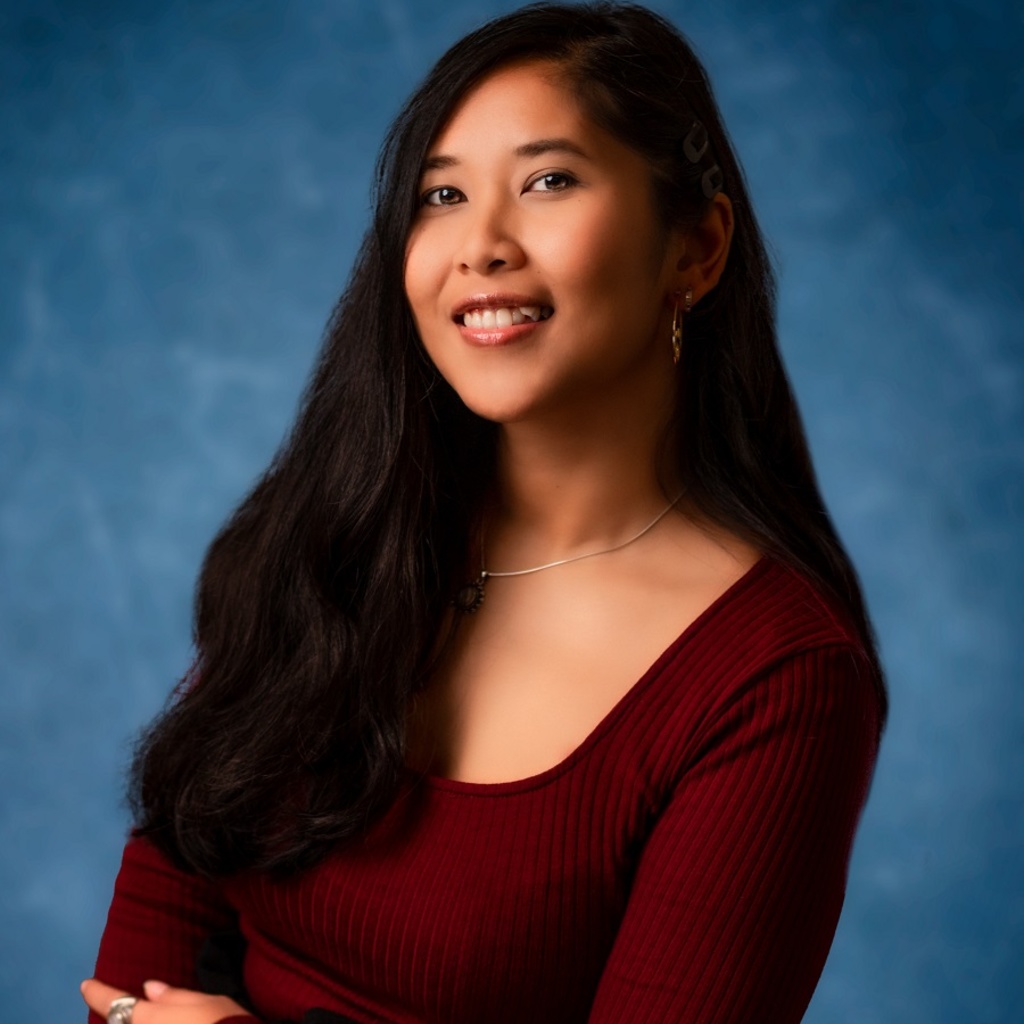
Headshot of woman in maroon shirt with long hair and arms crossed.

Bethanny Sudibyo Wins 2021 Humanities 3MT

Bethanny Sudibyo (Spanish & Portuguese, CLAS) won the 2021 Obermann Humanities 3MT for her presentation “Imperial Imaginings: Representations of Religion, Race, and Gender in 19th-Century Spanish Philippine Novels.” Sudibyo's win earned her a place in the campus-wide 3MT finals, the winner of which will be announced on November 12.
Ana Merino, Corey Creekmur, and Rachel Williams

University of Iowa Awarded 2022-23 Mellon Sawyer Seminar

The University of Iowa Obermann Center for Advanced Studies in the Office of the Vice President for Research is pleased to announce the award of a grant totaling $225,000 from The Andrew W. Mellon Foundation to host a Mellon Sawyer Seminar on “Racial Reckoning and Social Justice Through Comics” at the University across the academic year 2022-23.
Graduate Engagement Corps logo

Goodbye, Gradate Institute. Hello, Graduate Engagement Corps!

The Obermann Graduate Institute on Engagement and the Academy was started fourteen years ago at a time when public engagement was not a well-known practice on university campuses. More than 200 University of Iowa graduate students have participated in this program, many of them going on to lead or participate in community engaged projects. We count the alumni of this program as friends, many of whom have shared with us the exciting work they are doing in other locales—including in Philadelphia, the Black Hills, and Boulder—and with other organizations, such as NPR, the National Park Service, and our own Center for Teaching. The Institute has also had 11 faculty co-directors who have shared their expertise from fields as disparate as dance and engineering, and with project expertise that ranges from working with incarcerated populations to directing a camp for deaf teens.

Recent Events

Obermann Center 45th Anniversary Celebration, Featuring Keynotes by Joy Connolly & Antoinette Burton promotional image

Obermann Center 45th Anniversary Celebration, Featuring Keynotes by Joy Connolly & Antoinette Burton

Monday, May 6, 2024 5:00pm
Hancher Auditorium

Please join the Vice President for Research at the Hancher Auditorium's Stanley Café at 5 p.m. on Monday, May 6 to celebrate the 45th anniversary of the Obermann Center for Advanced Studies. The event will feature guests Joy Connolly and Antoinette Burton, prestigious national leaders in the humanities and social sciences. All are invited to the reception afterward to celebrate this important anniversary and the Center’s outgoing director, Professor Teresa Mangum. 

Please RSVP to let us know...

Application Deadline: Obermann Working Groups (2024–25) promotional image

Application Deadline: Obermann Working Groups (2024–25)

Wednesday, May 1, 2024 5:00pm

Obermann Center Working Groups provide space, structure, and discretionary funding for groups led by faculty that may include advanced graduate students, staff members, and community members with a shared intellectual interest. Groups have used this opportunity to explore new work and to share their own research, to organize a symposium, and to develop grant proposals. 

This program allows participants from across the campus and beyond to explore complex issues at a moment when cross...

Film History Now: A Conversation with Pardis Dabashi and Allyson Nadia Field

Tuesday, April 30, 2024 12:30pm to 2:00pm
Virtual

What does the practice of film history look like today? What different methods—from interdisciplinary inquiry to speculative historiography and public humanities projects—are scholars using to tell new stories about film culture? Please join us to discuss these and other questions with two highly accomplished scholars: Pardis Dabashi (Bryn Mawr College) and Allyson Nadia Field (University of Chicago). Dr. Dabashi will discuss her recently published monograph Losing the Plot: Form and Feeling in...

CLIMATE through a Wide Lens promotional image

CLIMATE through a Wide Lens

Thursday, April 25, 2024 4:00pm to 5:30pm
Old Capitol Museum

Rising seas, toxic rivers, deforestation, smoke-filled air—headlines remind us daily of the local, national, and international impacts of climate change. Join us for a wild pecha kucha ride through the effects of climate change with researchers who also tirelessly seek solutions. World-renowned climate scientist, Jerald Schnoor will open with big picture issues. That will set the stage for artist Isabel Barbuzza’s work on South American lithium salt mines, environmental literary scholar Eric...

Journal Publishing Now: A Conversation with Jennifer Bean, Lauren Cramer, and Patricia White promotional image

Journal Publishing Now: A Conversation with Jennifer Bean, Lauren Cramer, and Patricia White

Tuesday, April 23, 2024 12:30pm to 2:00pm
Virtual

Please join us for a panel conversation about academic publishing with three esteemed editors of interdisciplinary journals: Jennifer Bean (University of Washington; Feminist Media Histories), Lauren Cramer (University of Toronto; liquid blackness), and Patricia White (Swarthmore College; Camera Obscura). The panelists will discuss the nuts-and-bolts of journal publishing (for would-be contributors as well as would-be editors), and they will also each reflect on key directions in the fields of...

Public Lecture: “Made to be Seen: Kongo Graphic Writing as a Basis for Rethinking the Transmission of Knowledge” - Bárbaro Martínez-Ruiz, Visiting Scholar, School of Art and Art History promotional image

Public Lecture: “Made to be Seen: Kongo Graphic Writing as a Basis for Rethinking the Transmission of Knowledge” - Bárbaro Martínez-Ruiz, Visiting Scholar, School of Art and Art History

Wednesday, April 17, 2024 5:30pm
Art Building West

Visiting Scholar Professor Bárbaro Martínez-Ruiz will be giving a public lecture titled “Made to be Seen: Kongo Graphic Writing as a Basis for Rethinking the Transmission of Knowledge.”

Professor Martínez-Ruiz is the Tanner-Opperman Chair of African Art History in Honor of Roy Sieber at the Department of Art History at Indiana University. He is also Senior Research Associate in African Art and Its Diaspora at the University of Oxford and Honorary Professor at the University of Cape Town...