Five years ago, I was sitting at a desk a lot like the one I’m sitting at now, doing similar things. In 2021, I taught ESL and adult continuing education classes in Houston, Texas. Teaching both new and established residents made it clear that anybody, from anywhere, could make Houston their home. Working closely with my community, I discovered one of the most important requirements for my students to establish themselves successfully: literacy. Both in language and technology, literacy allowed my students to thrive, get jobs, and build a community. To support our neighbors in this mission, we provided English language classes, adult-focused technology classes like the Microsoft Suite, and free laptops for students and jobseekers alike. My organization couldn’t enhance literacy alone—we relied on community volunteers for tutoring, partenered with local private companies for access to educational programs, and received funding from both state and federal government to purchase and donate laptops.
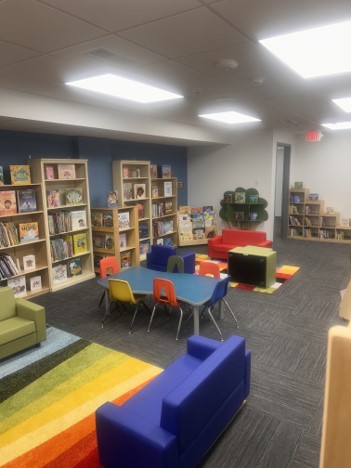
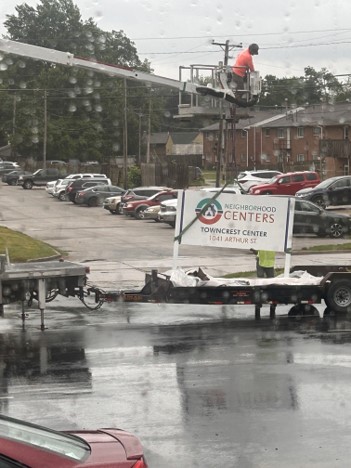
Five years later, I now sit at a desk within the Neighborhood Centers of Johnson County’s new Towncrest Center in Iowa City, Iowa. My current position as a Community Outreach and Program Development Support Intern has me assisting with the Neighborhood Center’s outreach goals for the summer, as well as helping draft guidelines for an important outreach-related role in their organization: the Community Navigator, someone who collects and analyzes surveys on the community’s present needs, like employment and housing assistance. While working at Towncrest, I’ve also had the pleasure of learning about their numerous literacy initiatives. For instance, the Neighborhood Centers will be using an interactive computer program called Wordflight in its after-school programs, designed to help students reach their desired reading levels rapidly. Among its many achievements, the Neighborhood Centers also runs the state of Iowa’s highest-rated preschool program. And just by walking through the halls of the Towncrest Center, you’ll notice its priority on literacy: the new children’s library is fully stocked with the titles elementary and teenage students seek out the most.
But just like in Houston, I’ve found that Neighborhood Centers can’t do this alone: AmeriCorps interns and community volunteers make up their Community Navigators, Wordflight access comes from a partnership with a private tech company, the books in the children’s library were selected by Iowa City librarians and paid for by the local Rotary Club, and even the new Towncrest Center itself was partially funded by a $2 million ARPA federal grant.
As a doctoral history student at the University of Iowa, my training is in understanding and drawing conclusions about partnerships like the one between Neighborhood Centers and the Rotary Club, or the grants it recieves from the federal government. The years I spent studying urban history between working in Houston and at the Neighborhood Centers have given me a more informed perspective on the kinds of partnerships these organizations build to achieve their goals. In my own research on Cleveland, Ohio, I’ve learned that its recovery after the Great Depression would have been impossible without federal intervention, that the thousands of unemployed steelworkers in the 1980s would have been stranded if it weren't for a few key nonprofits, and that many of its small, minority owned businesses on the west side wouldn’t have succeeded without the city’s entrepreneur grant programs in the 2000s. Unlike in Houston, I can now truly appreciate the levels of volunteering, partnership, and intergovernmental aid that go into sustaining a thriving community.

This experience hasn’t just been an academic exercise in understanding community partnerships—it's been more of a crash course in what someone with a liberal arts doctoral education can actually do for a community. We will never be able to provide the same resources as a $2 million federal grant, but we can find our place where the money meets the people—an environment where our expertise in understanding human behavior and systems can really be put to use for the good of the community. For example, University of Iowa students run a mobile clinic for residents who lack access to healthcare; the library’s and Neighborhood Center’s ESL teachers are all volunteers, drawing on an easily transferable skill most academics already have; and the Community Navigator role—a position focused on understanding and addressing community needs—is also open to volunteers. The key to community success seems to be a robust environment for partnerships, and I think most of us in academia fit perfectly into that model.
Aaron Stagner is a PhD student in the Department of History at the University of Iowa.