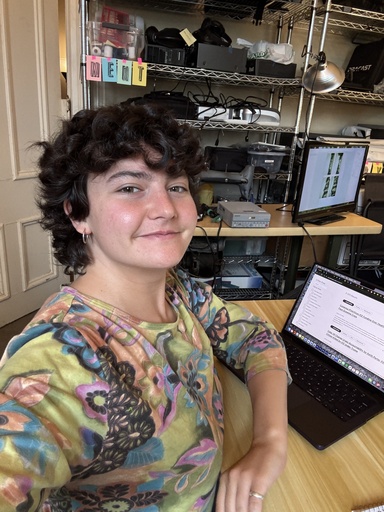
This summer, I had the pleasure of interning at Public Space One (PS1), an artist-led, community-driven contemporary art center, for eight weeks as a student intern supporting grant administration, research, documentation, and publication development for the multi-year Alongside/Banned but Not Silenced project. This grant-funded project aims to resist authoritarian repression, protect artistic expression, and defend vulnerable populations in Iowa by matching artists and activists with students and residents in response to speech restrictions on university campuses passed or proposed by the Iowa legislature and federal government. Summer 2026 marked the midpoint of this two-year initiative. I assisted with organizing and synthesizing materials from the project’s first year and contributed to the design and development of a small publication of zines documenting project activities and outcomes using InDesign. I also met artists hosted by PS1 through the Banned but Not Silenced grant and experienced the relationships a nonprofit like PS1 can build with the artists and curators it hosts and interacts with.

The first zine I made, with John Engelbrecht’s guidance, was in collaboration with Brandon Alvendia, an artist hosted by PS1 in November 2025 through the Banned but Not Silenced grant. Brandon works as an artist, curator, and educator, actively promoting artist-run initiatives across North America. The zine we made documents a talk he presented about the history of artist resistance to societal and political scrutiny by retreating from the mainstream art world in different ways. It also includes documentation of Brandon’s visit to Special Collections in the main library at the University of Iowa. His visit occurred six months before my internship began, so I worked from recordings, photographs, and Zoom conversations with Brandon directly. My main contribution involved developing the overall visual direction and sequencing the information he wanted the zine to contain. I enjoyed collaborating with him and brainstorming how we could create something that best represented what we wanted to communicate.
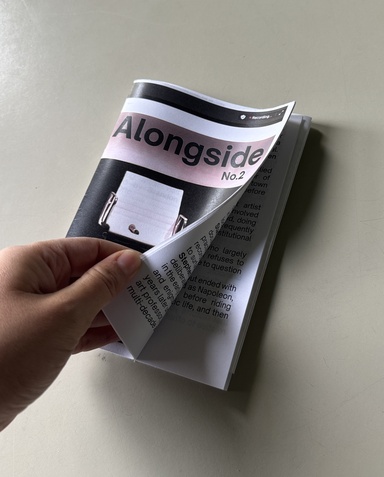
I designed and sequenced a second zine with John, which recounts the complicated origin of the grant and the ways the project shifted because of the current political climate. The research and creation process illuminated challenges that can arise with grant projects and what organizations can do to navigate them. Although this initiative did not unfold as PS1 initially intended, I recognize the steps being taken to make the most of the situation by continuing to use the funds to bring artists to Iowa City, host exhibitions, and encourage community interaction and curiosity about how we can work together to address censorship.
I also had the pleasure of meeting artist duo Aeron Bergman and Alejandra Salinas, who were artists in residence at PS1 for a week during my internship through the Banned but Not Silenced grant. I designed the flyer for their artist talk, which I attended and recorded for later reference. Their talk discussed many books they have published through their publishing company, INCA Press. I participated in their collaborative workshop, which asked attendees to paint ink onto a floor they constructed from cardboard. The results were displayed as an exhibition titled Free Shipping at PS1 Close House.
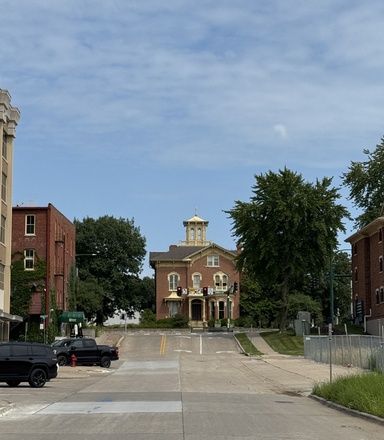
My time at Public Space One was invaluable. I learned about grant-funded programming, fostering artist relationships, publication development, and how public art spaces can function within their communities. I applied for this position hoping to experience what a possible career outside of academia could look like, and I am excited by what I saw. I am grateful to the Obermann Center and PS1 for this opportunity and the influence it has and will continue to have moving forward.
Bella Spilotro is a visual artist pursuing their MFA in photography and a certificate in bookmaking at the University of Iowa.