Upcoming Events

There are currently no events to display.

View more events

Spacer

Upcoming Application Deadlines

Upcoming Application Deadlines

Application Deadline: Obermann International Fellowships (Spring 2027) promotional image

Application Deadline: Obermann International Fellowships (Spring 2027)

Friday, September 18, 2026 11:59pm
111 Church Street

The UI Obermann Center for Advanced studies is accepting applications for Spring 2027 Obermann International Fellowships. This program offers dedicated space, time, and funding for interdisciplinary scholars to collaborate on innovative research at the University of Iowa. Up to eight international fellowships will be granted every academic year. Applicants must be active researchers at an accredited institution of higher learning outside of the United States or independent researchers/artists...

Application Deadline: Book Ends, Obermann Book Completion Workshop promotional image

Application Deadline: Book Ends, Obermann Book Completion Workshop

Wednesday, September 23, 2026 5:00pm
Virtual

Books Ends supports University of Iowa faculty from disciplines in which publishing a monograph is required for tenure and promotion. The award is designed to assist UI faculty members with significant research responsibilities turn promising manuscripts into important, field-changing, published books.

Book Ends brings together a panel of senior scholars for a candid, constructive three-hour workshop on a faculty member’s book manuscript. The award provides a $500 honorarium for two external...

Application Deadline: Obermann Interdisciplinary Research Grants (Summer 2027) promotional image

Application Deadline: Obermann Interdisciplinary Research Grants (Summer 2027)

Wednesday, October 7, 2026 5:00pm
111 Church Street

Obermann Interdisciplinary Research Grants (IDRG) foster collaborative scholarship and creative work by offering recipients time and space to exchange new ideas leading to invention, creation, and publication. IDRG groups work at the Obermann Center for two weeks, usually in July and/or August. Applicants propose work on a project with colleagues from across the University, across disciplines within their own department, or with colleagues from other parts of the country or the world. Projects...

Application Deadline: Obermann Symposium Directorship (2027–28) promotional image

Application Deadline: Obermann Symposium Directorship (2027–28)

Wednesday, October 28, 2026 5:00pm
111 Church Street

Is there a burning topic in your discipline or a topic that cuts across disciplines that we should bring to campus? Is there a format for the conversation that can energize an intellectual community around that topic? That might be the perfect topic for an Obermann Symposium!

In addition to a compelling topic, we invite co-directors to propose national and international speakers who can offer richly diverse perspectives on the symposium theme. We also want to highlight the work of UI and local...

Application Deadline: Obermann Working Groups (2027–30) promotional image

Application Deadline: Obermann Working Groups (2027–30)

Wednesday, April 7, 2027 5:00pm
111 Church Street

Obermann Center Working Groups provide space, structure, and discretionary funding for groups led by faculty that may include advanced graduate students, staff members, and community members with a shared intellectual interest.

Groups have used this opportunity to share their work in progress or draw up a set of readings they want to undertake and discuss. Others have organized conferences, applied for grants together, written articles together, designed new courses, taken field trips, organized...

News

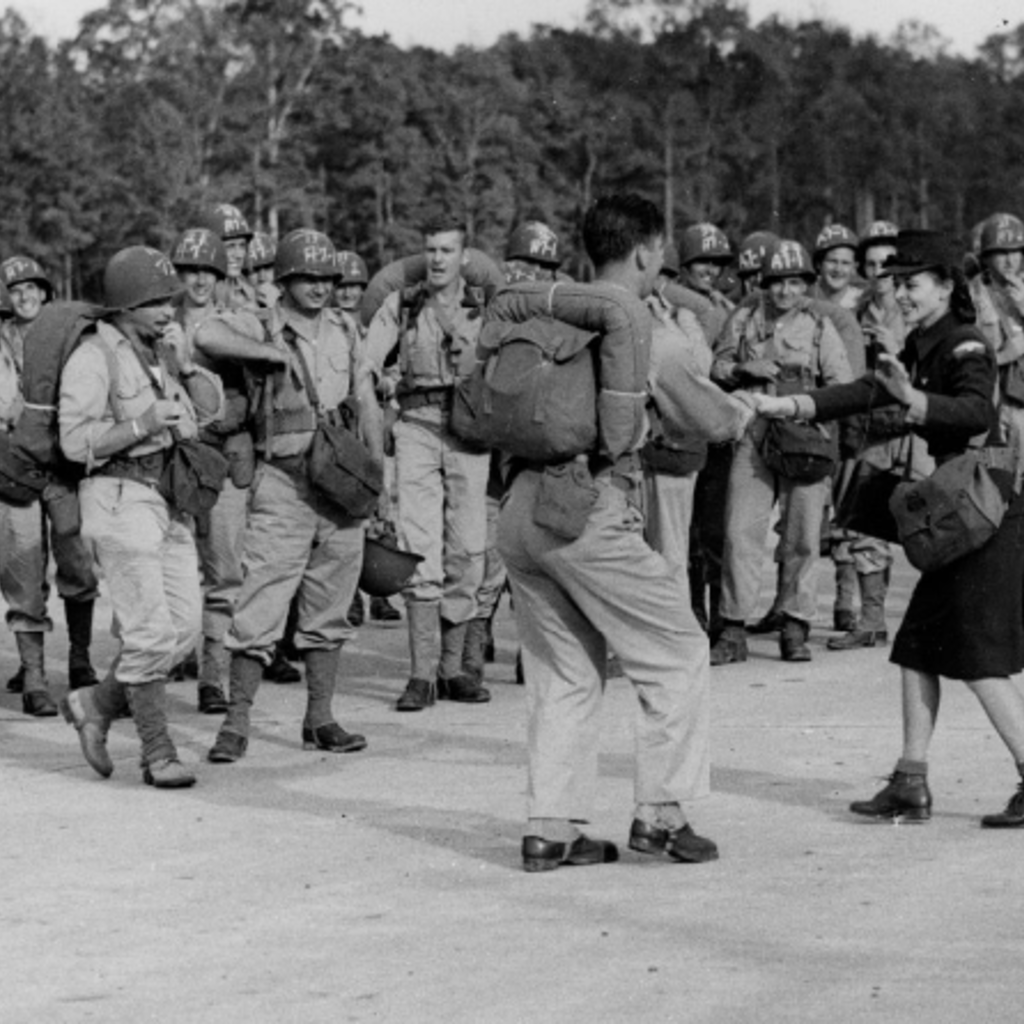
black and white photo of US soldiers swing dancing

Dancing During War: Kowal Explores WWII Photo Archives

“When we think about performance during World War Two, we think about USO shows and famous American performers like Bob Hope and Bette Davis,” says Rebekah Kowal, Spring 2022 Obermann Fellow-in-Residence. On the face of it, these performers were sent to overseas U.S. military camps to uplift soldiers’ spirits by providing a sense of home and “Americanness.” But there were many other forms of movement and performance that served other (rather overt) purposes, from displaying Western cultural dominance and exerting control over subjected people’s bodies to reintegrating the detained, creating a pathway to U.S. citizenship, and serving as a normalcy touchstone for the dancers. Kowal (Dance, CLAS) is deep in research for a new book tentatively titled War Theatre: Dancing American Citizenship and Empire during World War II. After writing about the contribution of American modern dance to aesthetic and social change in the 1950s (How to Do Things with Dance: Performing Change in Postwar America [Wesleyan UP, 2010]) and about globalism and the performance of international dance in the U.S. after WWII (Dancing the World Smaller: Staging Globalism in Mid-Century America [Oxford, 2019]), she figured her next project would move away from the WWII era. But one sleepless night—“one of those bizarre moments during COVID,” she recalls—she pulled up the National Archives’ online catalog and started typing interesting keywords.
close up of hebrew writing

Working Group Spotlight: Jewish Studies

This is part of a series highlighting recently formed Obermann Center Working Groups. Lisa Heineman (History), co-director of the Jewish Studies Working Group with Ari Ariel (History), shared her responses. Thank you, Lisa! If you are interested in starting an Obermann Working Group for 2022-23, the application deadline is April 12.  Q. This is the first year of your Working Group. What led you to start it?  A: Iowa is the only Big 10 school without a Jewish Studies program. Yet Jewish Studies is an incredibly dynamic field of study, with real contemporary relevance—and we have many terrific teachers and scholars of Jewish Studies on our campus. We were hearing from students, alumni, and parents who made clear there was a demand for the field. We decided it was time to get together and think about how to have a more meaningful presence on campus. Q. What kinds of people and from what disciplines are participating in your Group?   A. We have faculty members from History, International Studies, German, GWSS, Classics, Religious Studies, English, Translation, the Maggid Writing Center…. I hope I’m not forgetting anyone! We have emeriti and graduate students with important areas of expertise, and we have community members who play significant roles in Jewish life beyond our campus.
Men of different races sit around a table studying together. They are wearing matching blue shirts.

Working Group Spotlight: Transform(ED) Justice Collaboratory

In order to understand and amplify our Obermann Working Groups and their diverse activities, this spring we are spotlighting a number of newer groups. For this issue, we talk with Heather Erwin, who co-directs the Transform(ED) Justice Collaboratory group along with Daria Fisher-Page (Law).  Q: This is the first year of your Working Group. What led you to start it?  A: This working group evolved from the Liberal Arts Behind Bars (LABB) working group whose goal was to advance the work of serving incarcerated students. With the reinstatement of Pell grant eligibility for incarcerated students and the reimagining campus safety initiative on campus there are many opportunities to work toward building a campus community that prioritizes inclusivity and support for people impacted by the criminal legal system. The mission of the Transform(ED) Justice Collaboratory is to work toward abolition by building supportive communities, based on evidence created through research, and generating policy that creates necessary change.  
Three advertisements posted in a shop window.

The Language of Social Justice: David Cassels Johnson explores educational language policies

A local restaurant posts a help wanted ad for a dishwasher in Spanish, while server positions are advertised in Hangul (Korean). A teacher encourages students to write in the language of their lived experience, using their multilingual resources. A government nullifies Anglicized words from formal communications. A parent tells her children she won’t tolerate violent language. Each of these is a form of language policy. According to David Cassels Johnson, Associate Professor in the Teaching and Learning Department of the University of Iowa’s College of Education and a Spring 2022 Obermann Fellow-in-Residence, “Language policy is any policy that governs the structure, function, use, or education of language.” Each of us is living under numerous language policies. Some at the macro level are decided by institutions; others are created less officially by circles to which we belong. We even make language policies for ourselves when, for instance, we choose not to use some kinds of language or to amplify others.
two college students reading and writing a desk

Working Group Spotlight: Spanish Heritage Speakers in the Classroom

This spring, we're featuring a few of our newer Working Groups. As one of the most popular and largest Obermann Center programs, the Working Groups span a wide range of topics and have members who include emeriti faculty, lecturers, community members, and students, in addition to faculty from both the University of Iowa and other institutions. Here, we speak with Christine Shea (Spanish & Portuguese), who co-directs the Spanish and Heritage Speakers in the Classroom Working Group with Becky Gonzalez (Spanish & Portuguese).  
Two murals on the side of a parking garage with bright colors and African American faces.

Weaponizing Humanities Research: Dellyssa Edinboro and the Oracles Murals

Publicly engaged work never occurs in a vacuum. That’s something Dr. Dellyssa Edinboro shares with her students at Bellevue College as she simultaneously encourages them to actively work to change systems of oppression. “When you move into spaces where you want to make change,” she says, “there are a lot of conversations that need to happen, some of which will have tension and conflict.” Edinboro has firsthand experience of the kinds of twists and turns involved in a successful public project. In 2017, she was part of a small team of students that received a grant to work with the Historic Johnson County Poor Farm to produce a series of creative workshops about mental health. The students devised their project as part of the Obermann Graduate Institute on Engagement and the Academy with encouragement from the County staff member who managed the space. The first twist occurred when a key team member, who was an MFA student in the Dance Department, left the project. Without his expertise, it no longer made sense for the group to focus on movement as their primary form of creative expression; instead, they switched to creative writing.

Recent Events

Winter Institute for Teaching with Writing promotional image

Winter Institute for Teaching with Writing

Tuesday, January 4, 2022 10:00am to 12:00pm
Virtual

This is the first in a series of two workshops on teaching with writing on January 4th and 6th from 10 am to 12 pm. The January 4th workshop will focus on designing meaningful writing assignments, teaching analytical reading skills, and scaffolding students through the writing process. The January 6th workshop will focus on responding to and assessing student writing, and dealing with grammar and mechanics.

Faculty and TAs in all disciplines, departments, and colleges (particularly instructors...

Economic Development as Social Justice — An Obermann Conversation promotional image

Economic Development as Social Justice — An Obermann Conversation

Thursday, December 2, 2021 7:00pm to 8:00pm
Virtual

This summer, a new Story Map of Black-owned businesses in Johnson County was created. It connects users to a rich and ever-growing directory of businesses and entrepreneurs in the eastern Iowa corridor and challenges us to understand the connection between economic opportunities and social justice. Our speakers will help us understand historic barriers faced by BIPOC people interested in starting a business, and why tearing down these barriers matters to all of us.

Speakers:

Daria Fisher...
Understanding Liz Lerman's Critical Response Process: a method for facilitating useful feedback sessions on creative work promotional image

Understanding Liz Lerman's Critical Response Process: a method for facilitating useful feedback sessions on creative work

Thursday, December 2, 2021 11:00am to 12:30pm
Virtual

Vincent Thomas of Towson University worked with Liz Lerman for years as part of the Liz Lerman Dance Exchange and has an intimate and multi-dimensional understanding of how to apply the CRP across disciplines. In this talk, Professor Thomas will introduce the process, guide us through its application, and answer questions about how to adapt the process to all forms of creative work.

Free and open to all. Join us on Zoom.

This event is hosted by the Department of Theatre Arts, with support from...

Misinformation and Media Literacy in Sub-Saharan Africa promotional image

Misinformation and Media Literacy in Sub-Saharan Africa

Friday, November 19, 2021 10:00am to 11:15am
Virtual

Join us for a panel presentation and discussion about teaching media literacy in Sub-Saharan Africa and a theory of misinformation literacy.

Panelists:

Peter Cunliffe-Jones Chido Onumah Cornia Pretorius

Peter Cunliffe-Jones was a journalist for AFP news agency for 25 years from 1990 – in western Europe, the Balkans, Nigeria and Hong Kong, as chief editor Asia-Pacific. In 2012 he founded Africa's first fact-checking organization, Africa Check in South Africa. He is a visiting researcher...

Working with a Literary Agent: An Obermann Get It Done workshop promotional image

Working with a Literary Agent: An Obermann Get It Done workshop

Monday, November 15, 2021 12:00pm
Virtual

Featuring Meenakshi Gigi Durham (UI Ombuds, GWSS, and Journalism & Mass Communication) and Carrie Schuettpelz (School of Planning and Public Affairs).

Increasingly, academic authors are seeking ways to publish books that will have appeal beyond their disciplinary audience. Whether it’s a matter of landing a book contract with a non-academic press or finding avenues toward broader readership, such as through magazines and podcasts, having a literary agent can be very helpful. In this GET IT...

What Do We Mean by Research Now?— Perspectives from Academic Podcasters in the US and Canada promotional image

What Do We Mean by Research Now?— Perspectives from Academic Podcasters in the US and Canada

Friday, November 12, 2021 12:30pm to 1:30pm
Virtual

The UI Obermann Center for Advanced Studies and Humanities for the Public Good are delighted to welcome academic podcasters in the US and Canada for the third round of “What Do We Mean by Research Now?” With the explosion of podcasts across disciplines in the past decade, humanities researchers are finding that podcasts and podcasting can encourage new forms of collaboration, knowledge, and public engagement. But as with any new form of scholarship, podcasts pose challenges for evaluation and...