Upcoming Events & Deadlines

Application Deadline: Obermann Working Groups (2027–30) promotional image

Application Deadline: Obermann Working Groups (2027–30)

Wednesday, April 7, 2027 5:00pm
111 Church Street

Obermann Center Working Groups provide space, structure, and discretionary funding for groups led by faculty that may include advanced graduate students, staff members, and community members with a shared intellectual interest.

Groups have used this opportunity to share their work in progress or draw up a set of readings they want to undertake and discuss. Others have organized conferences, applied for grants together, written articles together, designed new courses, taken field trips, organized...

Application Deadline: Book Ends Book Completion Workshop promotional image

Application Deadline: Book Ends Book Completion Workshop

Thursday, May 31, 2029 (all day)
111 Church Street

Books Ends—Obermann Book Completion Workshop supports University of Iowa faculty from disciplines in which publishing a monograph is required for tenure and promotion. The award is designed to assist faculty members turn promising manuscripts into important, field-changing, published books.

Applications are accepted on a rolling basis.

View more events

Spacer

News

Graduate Engagement Corps logo

Goodbye, Gradate Institute. Hello, Graduate Engagement Corps!

The Obermann Graduate Institute on Engagement and the Academy was started fourteen years ago at a time when public engagement was not a well-known practice on university campuses. More than 200 University of Iowa graduate students have participated in this program, many of them going on to lead or participate in community engaged projects. We count the alumni of this program as friends, many of whom have shared with us the exciting work they are doing in other locales—including in Philadelphia, the Black Hills, and Boulder—and with other organizations, such as NPR, the National Park Service, and our own Center for Teaching. The Institute has also had 11 faculty co-directors who have shared their expertise from fields as disparate as dance and engineering, and with project expertise that ranges from working with incarcerated populations to directing a camp for deaf teens.
John Rapson

John Rapson's Communal Composition: Esteban and the Children of the Sun
In mid-June, a dozen musicians gathered in the basement of one of Iowa City’s oldest homes. There was a blues guitarist, a French mandole player, and a Celtic fiddler. The drummer was sequestered in the laundry room, and an electric guitarist’s amp was routed through a shower stall to limit distortion. In the midst of it all was John Rapson.
Asha Bhandary

The Kindness of Strangers: Philosopher seeks to make caregiving disparities and their effects visible

During the pandemic, many of us have relied on the kindness of strangers. The work of people we didn’t know—store clerks, nurses, childcare providers, delivery people, and warehouse workers—allowed many of us to stay home during the past year and a half. As in the case of Blanche DuBois—she of Streetcar Named Desire fame—this reliance may have helped us in the short run, but it’s not necessarily the best societal approach to receiving care. Frontline workers are inordinately female and people of color....
Andrew Boge

Andrew Boge Reflects on the HWW Career Diversity Workshop
Imagine yourself on the tree-filled University of Michigan campus listening to people with advanced degrees in the humanities talk about their workplaces and career trajectories. One person gives an overview of jobs in university presses, while the next describes her work as a consultant for non-profits. And your task is to soak up information, meet new people, and turn on your imagination.
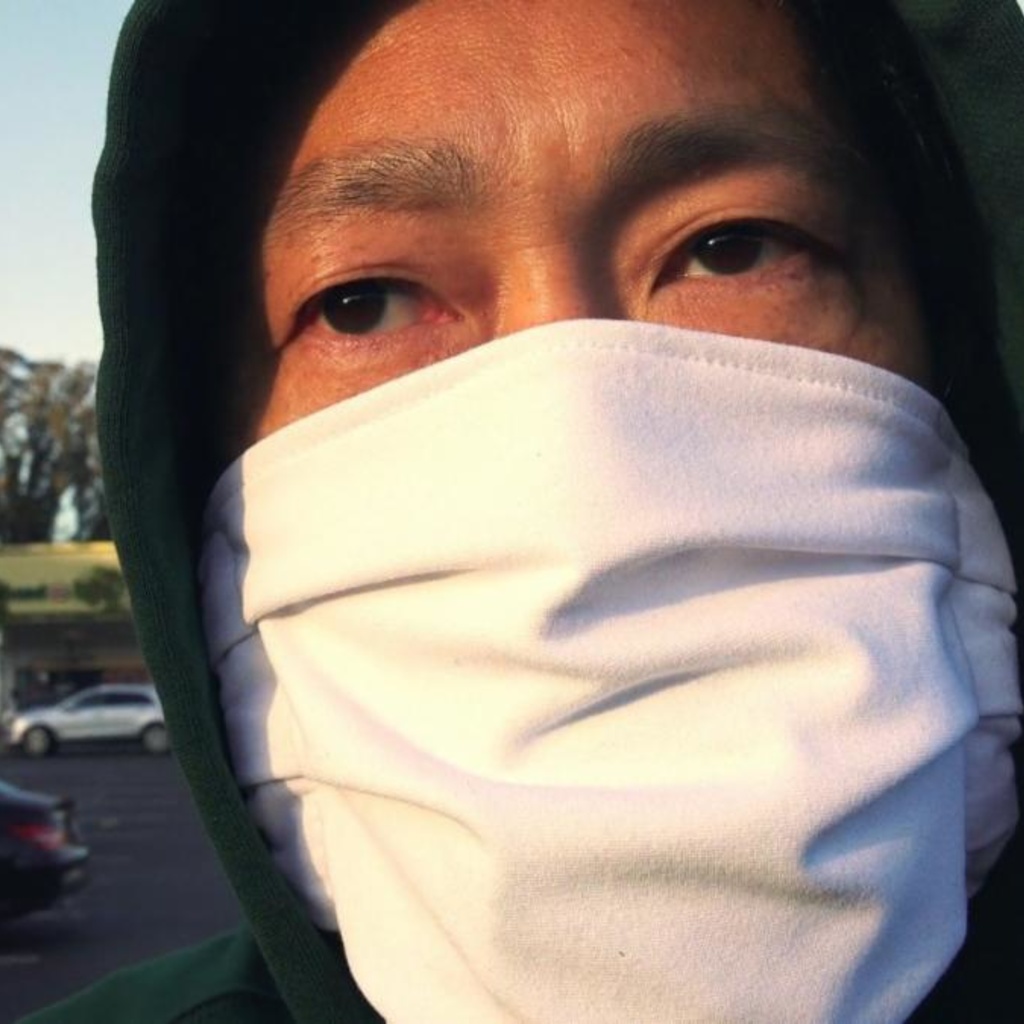
Man in mask

Seeing Asian American Life through the Video Essay

As each of us ponders how to live and work in the face of growing challenges—from pandemics to racist violence to climate change—scholars and artists are reconsidering their research questions, expanding methodologies, and devising forms for varied audiences. This year, the Obermann Center is hosting a series of informal conversations on research. Artists, scholars, social scientists, and scientists will explore what, in this moment, research can be and can do. We were therefore delighted when Professor Hyaeweol Choi asked if the Obermann Center would join the Korean Studies Research Network in inviting filmmaker, critic, and video essayist Kevin B. Lee to share recent video essays. In this innovative form, Lee illuminates Asian American experience by juxtaposing personal history, popular culture, and journalistic accounts of violence against Asian Americans.
Old, rural public library with wooden door

Training Librarians to Preserve Community Memory

Over the past two decades, say Micah Bateman and Lindsay Mattock, recipients of a 2021 Obermann Interdisciplinary Research Grant, library and information science (LIS) graduate programs have privileged information science, data science, and computer science—at several universities even merging with computer science departments—over human- and community-centered practices central to the mission of library and archival sciences. One such practice involves the management of community memory records—everything from genealogical documents to newspaper archives to oral histories. Bateman and Mattock note that at small and rural libraries, these records often go “unmanaged and underused, and reflect only the narratives of majority or dominant populations” because the librarians working with those collections have been largely neglected by LIS training programs that privilege “big data” paradigms.

Recent Events

Application Deadline: Obermann Working Groups (2024–25) promotional image

Application Deadline: Obermann Working Groups (2024–25)

Wednesday, May 1, 2024 5:00pm

Obermann Center Working Groups provide space, structure, and discretionary funding for groups led by faculty that may include advanced graduate students, staff members, and community members with a shared intellectual interest. Groups have used this opportunity to explore new work and to share their own research, to organize a symposium, and to develop grant proposals. 

This program allows participants from across the campus and beyond to explore complex issues at a moment when cross...

Film History Now: A Conversation with Pardis Dabashi and Allyson Nadia Field

Tuesday, April 30, 2024 12:30pm to 2:00pm
Virtual

What does the practice of film history look like today? What different methods—from interdisciplinary inquiry to speculative historiography and public humanities projects—are scholars using to tell new stories about film culture? Please join us to discuss these and other questions with two highly accomplished scholars: Pardis Dabashi (Bryn Mawr College) and Allyson Nadia Field (University of Chicago). Dr. Dabashi will discuss her recently published monograph Losing the Plot: Form and Feeling in...

CLIMATE through a Wide Lens promotional image

CLIMATE through a Wide Lens

Thursday, April 25, 2024 4:00pm to 5:30pm
Old Capitol Museum

Rising seas, toxic rivers, deforestation, smoke-filled air—headlines remind us daily of the local, national, and international impacts of climate change. Join us for a wild pecha kucha ride through the effects of climate change with researchers who also tirelessly seek solutions. World-renowned climate scientist, Jerald Schnoor will open with big picture issues. That will set the stage for artist Isabel Barbuzza’s work on South American lithium salt mines, environmental literary scholar Eric...

Journal Publishing Now: A Conversation with Jennifer Bean, Lauren Cramer, and Patricia White promotional image

Journal Publishing Now: A Conversation with Jennifer Bean, Lauren Cramer, and Patricia White

Tuesday, April 23, 2024 12:30pm to 2:00pm
Virtual

Please join us for a panel conversation about academic publishing with three esteemed editors of interdisciplinary journals: Jennifer Bean (University of Washington; Feminist Media Histories), Lauren Cramer (University of Toronto; liquid blackness), and Patricia White (Swarthmore College; Camera Obscura). The panelists will discuss the nuts-and-bolts of journal publishing (for would-be contributors as well as would-be editors), and they will also each reflect on key directions in the fields of...

Public Lecture: “Made to be Seen: Kongo Graphic Writing as a Basis for Rethinking the Transmission of Knowledge” - Bárbaro Martínez-Ruiz, Visiting Scholar, School of Art and Art History promotional image

Public Lecture: “Made to be Seen: Kongo Graphic Writing as a Basis for Rethinking the Transmission of Knowledge” - Bárbaro Martínez-Ruiz, Visiting Scholar, School of Art and Art History

Wednesday, April 17, 2024 5:30pm
Art Building West

Visiting Scholar Professor Bárbaro Martínez-Ruiz will be giving a public lecture titled “Made to be Seen: Kongo Graphic Writing as a Basis for Rethinking the Transmission of Knowledge.”

Professor Martínez-Ruiz is the Tanner-Opperman Chair of African Art History in Honor of Roy Sieber at the Department of Art History at Indiana University. He is also Senior Research Associate in African Art and Its Diaspora at the University of Oxford and Honorary Professor at the University of Cape Town...

Joseph Graves. A Voice in the Wilderness: A Pioneering Biologist Discusses How Evolution Can Help Us Solve Some of Our Biggest Problems promotional image

Joseph Graves. A Voice in the Wilderness: A Pioneering Biologist Discusses How Evolution Can Help Us Solve Some of Our Biggest Problems

Saturday, April 13, 2024 10:45am to 11:30am
Phillips Hall

Joseph L. Graves Jr. is a professor of biological science at North Carolina Agricultural and Technical State University and former associate dean for research at the Joint School for Nanoscience and Nanoengineering. His research focuses on the genomics of adaptation and evolutionary theories of aging. He has also written two books that address myths of race in the U.S. and is frequently interviewed for articles, podcasts, and documentaries on this topic.